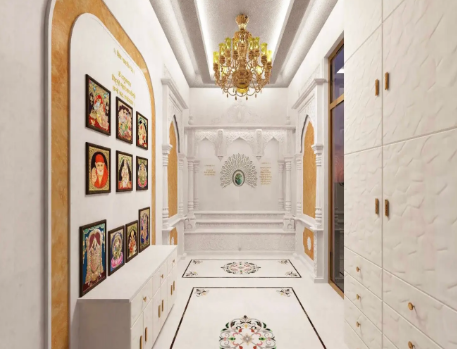
A home temple is not simply a beautiful corner of the house. In fact, for many families it’s a serene space where daily rituals, prayer, and silence become part of their day to day life. The design of home temple has changed considerably over the years. Most of our homes earlier had simple wooden shelves or pooja corners placed close to the wall. These days, cultural & religious inclination of people are exploring exquisitely designed stone temples, marble mandirs, wall mounted units and tailor-made prayer areas which synchronizes beautifully with the modern décor while also maintaining spiritual ambience.
Designing the right stone temple design for home interior is not just about looks. It consists of your space, choosing the type of material, and on how much detailing you want to give, along with whether it fits in with the whole scheme of your house. A good temple design should seem serene, proportioned, and effective in everyday use. You might be Living in a big independent house or a tight little apartment; you can design your sacred corner such that it does not feel choked for space!
Understand the Space Available in Your Home
The first step to a stone temple design for home is knowing where you are going to place it. Every house is different, and the temple must blend organically into the interior of a home, not be an outsize appendage bolted on.
In newer apartments, individuals frequently pick little divider mounted stone sanctuaries or corner mandirs since they consume less floor space. In urban homes, there is generally a limitation of space which makes corner temple designs very useful. For bigger houses, dedicated pooja room where bigger wall to wall, marble temples with pillars & domes, architectural carvings and panels can be accommodated.
You should really measure the height, width and depth of the place carefully before finally settling on a design. Having a big temple at a small room would make the place heavy and cluttered. Conversely a rather significant temple chamber can visually disjoint in a broader area. The right temple design will feel in proportion with the room around it.
Lighting and ventilation also matter. With natural lighting a stone temple can appear more tranquil and welcoming. Most modern home owners prefer to place their temples near windows or use mellow-lighting to generate a controlled tranquility.
Choose the Right Stone Material
The material of the temple plays a major role in both appearance and durability. Stone temples are popular because they are long-lasting, elegant, and easy to maintain compared to some other materials.
Marble remains one of the most preferred choices for home temples. White marble, especially, is often associated with calmness and purity. Many modern temple designs use white marble because it blends easily with both traditional and contemporary interiors. Vietnam White Marble and Makrana marble are commonly discussed in temple craftsmanship because of their smooth finish and timeless appearance.
Makrana marble, sourced from Rajasthan, has been used in famous Indian monuments and temples for generations. It is valued for its strength, durability, and bright white texture.
Apart from marble, some homeowners also choose sandstone or natural stone finishes for a more earthy and traditional look. The choice often depends on the style of the house. Minimal modern homes usually pair well with clean white marble designs, while heritage-style interiors may suit detailed carved stone temples.
Maintenance should also be considered. Polished marble is easier to clean and generally requires less effort in daily upkeep.
Match the Temple Design With Your Interior Style
One common mistake people make is choosing a temple design that does not match the rest of the home. A home temple should feel connected to the overall interior theme.
For homes with modern interiors, simple temple designs with clean lines, subtle carvings, and soft lighting often work best. Minimal detailing creates a peaceful appearance without overwhelming the room. Many people now prefer understated temple units that quietly blend into the home décor while still maintaining a sacred identity.
Traditional interiors, on the other hand, often accommodate more detailed craftsmanship. Intricate carvings, arches, domes, floral patterns, and pillars inspired by Indian temple architecture can add character to the space. Indian stone craftsmanship has a long history of using carved motifs, lattice work, and decorative pillars in temples and spiritual structures.
The key is balance. The temple should stand out respectfully without making the room feel visually heavy.
Pay Attention to Functional Features
While aesthetics are important, the temple should also support practical daily use. Many people focus only on appearance and later realise the design is not convenient for rituals or storage.
A functional temple design should provide enough space for idols, diyas, incense holders, prayer books, and other essentials. Storage drawers or cabinets can help keep the area organised and clutter-free. Some modern temple designs include concealed storage within the base structure, which is useful in smaller homes.
Height is another important factor. The idols should be placed at a comfortable viewing and prayer level. If the temple is too high or too low, it may become uncomfortable for regular use.
Ease of cleaning should also be considered. Stone temples with excessive detailing may require more maintenance because dust can collect inside carvings and grooves. Simpler designs are often easier to maintain in busy households.
Consider Traditional Elements Carefully
Many homeowners like incorporating traditional Indian design elements into home temples. Features like jali patterns, carved pillars, domes, arches, and marble inlay work continue to influence modern temple interiors.
Jali work, for example, has been used in Indian architecture for centuries to soften light and improve ventilation. Today, these patterns are often adapted into temple backgrounds or side panels to create a softer visual effect.
Similarly, carved pillars and dome-style structures inspired by traditional temples are still widely appreciated in Indian homes. However, these elements should be chosen thoughtfully based on the available space. Overly decorative designs may look beautiful in large homes but may feel overwhelming in compact apartments.
The goal is not to recreate a massive temple structure inside the home. Instead, it is about bringing spiritual warmth and cultural character into the interior in a balanced way.
Focus on Craftsmanship and Detail
Stone temple design is closely connected to craftsmanship. Even a simple temple can look elegant if the carving work, polish, and finishing are done properly.
Handcrafted stone temples often have finer detailing and a more natural appearance compared to mass-produced units. Precision in carving, symmetry in patterns, and the smoothness of the stone surface all contribute to the overall look of the temple.
The quality of craftsmanship also affects durability. Poorly finished edges, uneven joints, or weak installation can reduce the lifespan of the temple over time. Since a stone temple is usually a long-term addition to the home, careful attention to quality becomes important.
Create a Peaceful and Personal Space
At the end of the day, the best stone temple design is one that feels peaceful and meaningful to the family using it. Trends and styles may change over time, but the emotional connection to a prayer space remains personal.
Some people prefer elaborate marble temples with intricate carvings, while others feel more comfortable with simple and quiet designs. Neither approach is right or wrong. The ideal temple is one that suits your home, your lifestyle, and your spiritual habits naturally.
A thoughtfully chosen stone temple can become one of the most calming corners of a home. When the design balances beauty, practicality, craftsmanship, and comfort, it creates a space that feels timeless rather than temporary.
