The Sacred Valley sits between Cusco and Machu Picchu, and most travelers rush through it in a blur. That is the first mistake. The valley deserves a full day of your time, sometimes two. Skip it, and you miss the warm-up your lungs need before the bigger climbs ahead. A good Cusco Sacred Valley tour does more than tick off ruins. It paces your day around food, altitude, and quiet moments at sites that get loud by mid-morning. Here is what each stop looks like when you go with someone who grew up in these hills.
Two things tend to go wrong on the Cusco Sacred Valley tour. You pick the wrong operator and get herded through with no time to absorb anything, or you skip the valley entirely and slam into Machu Picchu on day two with no acclimatization. Both are fixable.
Pisac: Where the Day Begins
Most tours start in Pisac, about 33 kilometers from Cusco. The drive takes around an hour through the high plains before dropping into the valley. You feel the altitude shift as the road descends from 3,400 meters to roughly 2,970.
The Pisac ruins sit above the modern town, terraced into the mountainside. Walking the upper sections takes effort, but the views back across the valley make the climb worth it. The terraces still grow corn and potatoes today, just as they did in Inca times.
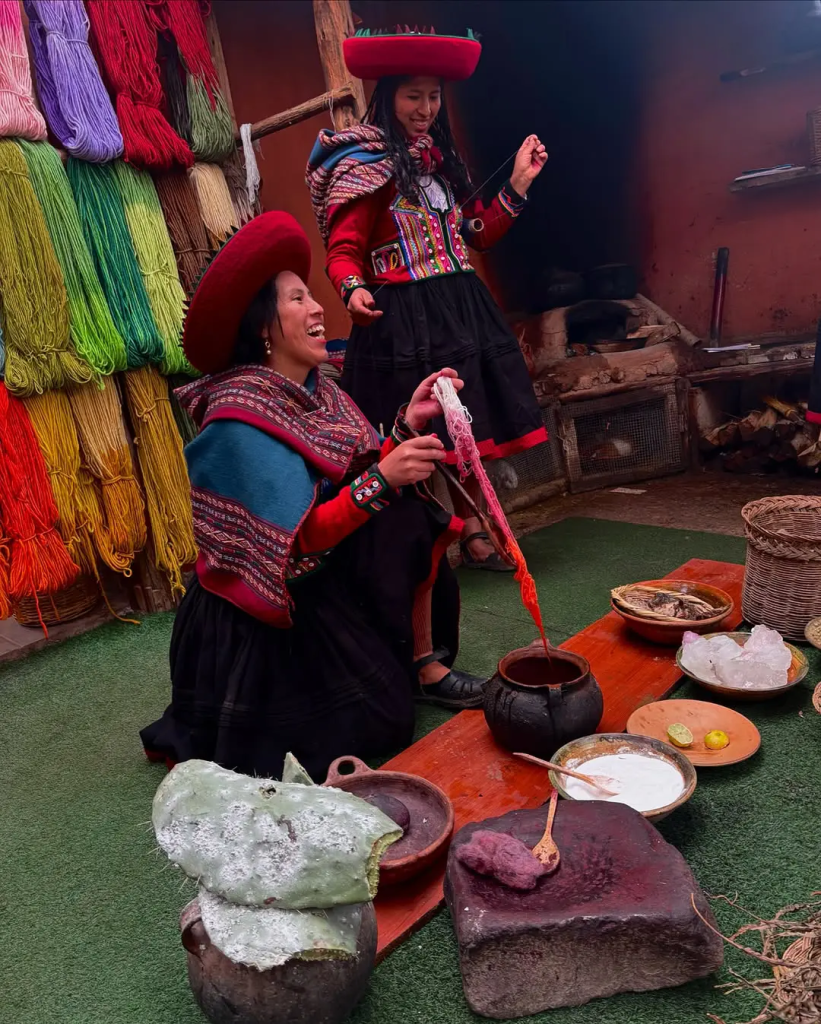
Below the ruins, the Pisac market runs daily. Sunday is the biggest day when villagers from surrounding communities trade goods. Skip the overpriced alpaca souvenirs near the entrance and walk to the back stalls. That is where local weavers actually sell their work.
Moray: The Inca Greenhouse
Moray is strange in the best way. Three sets of concentric circular terraces sink into the earth in near-perfect rings. Each ring holds a different microclimate, and the temperature drops noticeably as you walk down.
Archaeologists believe the Incas used Moray as an agricultural laboratory. The temperature gap between the top and bottom rings can reach 15 degrees Celsius. They likely tested which crops grew best at different elevations before planting them across the empire.
It is also one of the quieter stops on most itineraries. Get here before 11 a.m., and you might have a terrace almost to yourself. Robinson, one of the guides at Altitude Peru, often points out small irrigation details that most travelers walk right past.
Maras Salt Mines: White Pools on a Red Hillside
A short drive from Moray takes you to the Maras salt pans. Thousands of small terraced pools, each fed by one salty spring, glow white against the red mountainside. Local families have worked these pools for over 500 years.
Each pool belongs to a family from the nearby village. They harvest the salt by hand, drying it under the high-altitude sun. You can buy a bag at the entrance for a few soles, and the pink salt is genuinely good. It tastes different from anything in a supermarket back home.
Wear good shoes here. The paths between the pools are narrow and slippery, and one misstep means a salty fall. The viewpoint at the top gives you the photo most travelers come for, but the smaller paths below feel more honest.
Lunch in Urubamba
Most Sacred Valley tours stop for lunch around Urubamba, the largest town in the valley. Buffet spots are decent, but smaller family-run restaurants are better. Ask your guide for one off the main road. Trout from local rivers is the dish to order, often grilled and served with quinoa.
Ollantaytambo: The Living Inca Town
The final big stop is Ollantaytambo, and perhaps the most important one. The town itself sits on original Inca foundations, with narrow cobbled streets and water channels still running through them. People live in these stone houses, not just sell things from them.
The ruins above town are massive. Six monolithic blocks of pink granite sit at the top, each weighing over 50 tons, brought from a quarry six kilometers away across the river. Nobody is quite sure how the Incas moved them. Theories exist, but theories are not answers.
Climb the terraces if your legs and lungs allow. The view across the valley from the top is the kind that makes people stop talking. From here, many travelers catch the evening train to Aguas Calientes for Machu Picchu the next morning.
What Most Tours Get Wrong
Cheap group tours pack 25 people into a bus and give you 30 minutes at each site. You spend more time waiting for the slowest walker than actually seeing anything. A smaller private or semi-private tour costs more, but you get to linger where you want to linger.
Altitude matters too. The valley sits lower than Cusco, which makes it a smart first-day activity for your body. Doing the valley before the Inca Trail or Machu Picchu helps you acclimatize gently, instead of throwing yourself straight into a 4,200-meter pass.
