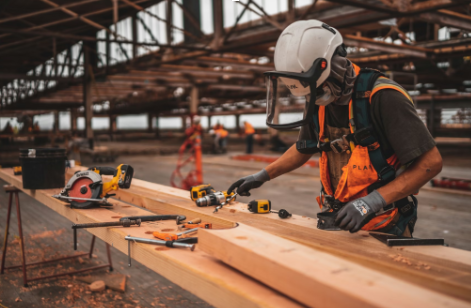
Every construction site operates under the shadow of risk. Falls, equipment failures, and hazardous materials create daily threats that can turn routine tasks into life-altering incidents. Yet one of the most effective safety interventions remains surprisingly simple: brief, focused conversations held before work begins.
Construction safety toolbox talks are short, on-site meetings where crews discuss specific hazards relevant to their immediate work. Unlike formal training sessions, these discussions happen in real time, addressing the actual conditions workers will face that day. When conducted consistently, they create a continuous feedback loop that keeps safety awareness sharp and reduces preventable accidents.
The format matters less than the consistency. Whether delivered through in-person discussions, printed materials, or safety meeting videos, the goal remains the same: ensure every worker understands the hazards they’ll encounter and knows how to respond. Regular safety communications significantly reduce injury rates across construction sites.
Why Brief Safety Discussions Outperform Annual Training
Annual safety training has its place, but it suffers from a fundamental problem: workers forget. Information delivered months before a specific task provides little protection when conditions change or new hazards emerge. Toolbox talks address this gap by delivering targeted information exactly when workers need it.
These discussions serve multiple functions beyond information transfer:
- They identify site-specific hazards that generic training materials miss.
- They create space for workers to voice concerns without formal reporting procedures.
- They reinforce that safety decisions happen continuously, not just during training sessions.
- They build collective responsibility rather than treating safety as management’s sole concern.
The psychological impact extends beyond immediate hazard awareness. Regular safety communications contribute to what researchers call “psychological safety“—the belief that speaking up about risks won’t result in punishment or dismissal. This climate change proves as important as any specific safety protocol.
Video Content as a Communication Tool
Construction crews include workers with varying literacy levels, language backgrounds, and learning preferences. Text-heavy safety materials fail to reach everyone equally. Video content addresses this challenge by presenting information visually, reducing language barriers and improving comprehension across diverse teams.
Toolbox talk videos offer practical advantages over traditional delivery methods:
- Consistency: Every crew receives identical information, eliminating variations that occur when different supervisors lead discussions.
- Demonstration: Complex procedures become clearer when workers see them performed correctly rather than hearing them described.
- Accessibility: Workers can review content on mobile devices before shifts or after incidents, reinforcing key concepts.
- Documentation: Video logs provide evidence of safety communications, which matters during inspections or incident investigations.
The effectiveness depends on content quality. Generic safety videos that could apply to any industry fail to engage construction workers facing specific hazards. The best safety videos for construction sites address recognizable scenarios—the actual equipment, weather conditions, and site layouts workers encounter daily.
Selecting Effective Safety Video Content
Not all construction safety videos deliver equal value. Poorly produced content wastes time and undermines credibility, while effective videos become reference materials that workers actually use. Selection criteria should prioritize relevance and clarity over production polish.
Key factors when evaluating safety videos:
- Specificity: Content should address construction-specific hazards rather than general workplace safety.
- Brevity: Videos longer than 10 minutes lose attention; focused topics work better than comprehensive overviews.
- Practical demonstration: Showing correct procedures matters more than explaining why they’re required.
- Real scenarios: Staged situations that mirror actual site conditions resonate more than abstract examples.
Many construction companies now develop custom content that features their own sites and equipment. While this requires upfront investment, it produces materials that workers recognize immediately. For companies seeking ready-made resources, construction-focused video libraries designed for daily toolbox talks are available from providers like Ally Safety, Convergence Training, and Vivid Learning Systems.
Building Communication Habits Beyond Formal Meetings
Toolbox talk videos work best as part of broader communication practices, not as standalone solutions. The most effective safety programs combine multiple approaches: pre-shift discussions, visual aids posted at hazard points, and open channels for workers to report concerns without bureaucratic barriers.
Video content supports these practices by:
- Providing a common reference point when workers discuss specific hazards.
- Offering supervisors a starting point for conversations rather than requiring them to develop content from scratch.
- Creating consistency across multiple sites when companies operate in different locations.
- Allowing workers to revisit complex procedures without waiting for the next formal training session.
The goal isn’t to replace human interaction with video content. Rather, videos handle information delivery efficiently, freeing supervisors to focus on discussion, questions, and site-specific concerns that require human judgment.
Technology Integration in Modern Construction Safety
While toolbox talks remain foundational, new technologies are expanding what’s possible in construction safety. These innovations complement rather than replace traditional practices, adding layers of protection that weren’t feasible a decade ago.
Emerging safety technologies include:
- Wearable sensors: Devices that monitor environmental conditions and alert workers to heat stress, toxic gas exposure, or proximity to electrical hazards.
- Drone inspections: Aerial surveys that identify structural risks and site hazards without requiring workers to access dangerous areas.
- Virtual reality training: Immersive simulations that let workers practice emergency responses in controlled environments.
- Mobile reporting apps: Tools that allow instant hazard reporting with photos and location data, bypassing paperwork delays.
The most successful implementations combine old and new approaches. A crew might watch a safety video about fall protection during their morning toolbox talk, then use wearable sensors that alert them if they approach unprotected edges during the workday. The video provides knowledge; the technology provides real-time intervention.
Sustaining Safety Practices Over Time
The challenge isn’t implementing safety programs—it’s maintaining them when schedule pressures mount and projects fall behind. Toolbox talks get skipped, video content grows stale, and safety becomes something crews do for inspectors rather than themselves.
Sustained effectiveness requires treating safety communications as essential infrastructure rather than optional additions. This means:
- Scheduling toolbox talks as non-negotiable parts of daily operations, not activities that happen when time permits.
- Rotating content regularly so workers encounter fresh information rather than identical messages.
- Soliciting worker feedback on safety videos and discussions to ensure content remains relevant.
- Tracking leading indicators like near-miss reports and safety observations, not just lagging indicators like injury rates.
- Holding supervisors accountable for safety communications with the same rigor applied to schedule and budget performance.
The most effective programs evolve based on actual site experience. When workers report new hazards or near-misses, those observations should inform the next round of toolbox talks and video content. This creates a learning system rather than a static compliance exercise.
Construction safety ultimately depends on thousands of individual decisions made throughout each workday. Toolbox talks, safety meeting videos, and related practices don’t eliminate risk—they equip workers to recognize hazards and respond appropriately when conditions change. That capability, reinforced daily through brief focused conversations, remains the most reliable protection available on any construction site.
