Key Takeaways
- Choose a work truck based on its actual weekly workload, not advertised maximum specifications.
- Calculate payload carefully, including passengers, tools, cargo, accessories, fuel, and trailer tongue weight.
- Match the truck’s size, cab, bed, and powertrain to the crew, equipment, routes, and towing needs.
- Prioritize safety, visibility, maneuverability, and driver comfort for daily job-site use.
- When buying used, review the maintenance history and vehicle condition and arrange an independent inspection.
- Consider the total cost of ownership, including fuel, maintenance, tires, insurance, financing, and potential downtime.
- Avoid paying for more capability than the business needs while leaving a reasonable margin for future growth.
A work truck should be chosen for the jobs it must complete every week, not for the biggest number on a specification sheet. Whether you are comparing new models or browsing used work trucks for sale in Tulsa with financing options, start by identifying the loads, routes, crew size, and equipment that define your normal workday. The right truck can improve productivity, reduce unnecessary operating costs, and make daily loading, towing, and travel safer. The wrong one can lead to overloaded beds, uncomfortable crews, frequent maintenance, and a purchase that no longer fits the business after a few months.
Start With the Job
Write down what the truck will handle during a typical week. Consider the materials carried in the bed, tools stored inside, trailer types, road conditions, job-site terrain, and the number of people who ride along. A landscaping crew may prioritize bed space, racks, and protected tool storage. A contractor moving compact equipment may need stronger towing equipment, trailer brakes, and a more capable suspension. Also, separate occasional work from routine work. A truck that tows a heavy trailer twice a year does not always need the same configuration as one that tows it every day. Buy for the regular workload, with enough extra capacity for realistic growth and busy days.
Calculate Payload Before Towing Capacity
Payload is often the key factor that determines whether a truck operates safely in the real world. It includes far more than materials in the bed: passengers, tools, cargo, accessories, fuel, hitch equipment, and trailer tongue weight all count against it. Available Payload = Listed Payload − Passengers − Tools − Cargo − Accessories − Tongue Weight
Check the specific truck’s door-jamb label and owner’s manual instead of relying on an advertisement for a maximum rating. Cab style, bed length, drivetrain, options, and aftermarket equipment can all change the usable capacity. A high towing rating does not mean the truck can carry a full crew, a loaded bed, and a heavy trailer simultaneously.
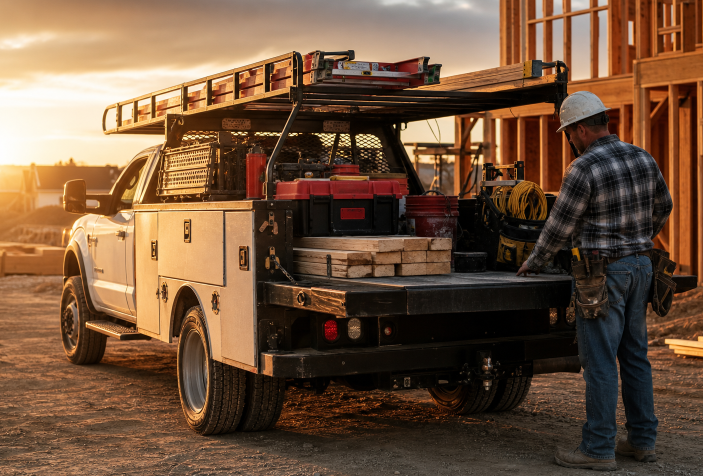
Choose the Right Truck Size
- Light-duty trucks: Often fit service calls, lighter materials, small trailers, and businesses that combine work and personal driving.
- Heavy-duty trucks: Make more sense for frequent towing, dense loads, large equipment, and demanding job sites.
- Chassis-based work vehicles: Can be the better choice when the business needs a service body, dump body, utility storage, or another specialized upfit.
Too few trucks can create strain, downtime, and loading problems. Too many trucks can raise fuel, tire, maintenance, insurance, parking, and purchase costs. The goal is a capability that matches the job rather than the largest possible configuration.
Compare Bed and Cab Layouts
Cab and bed choices affect productivity every day. A longer bed may carry lumber, ladders, and materials more easily, but it can be harder to park or maneuver. A crew cab makes room for workers and secure interior storage, though it often reduces the available bed length.
Questions to Ask Before Choosing a Layout
- Is a regular cab enough for the usual crew?
- Would an extended or crew cab prevent the need for another vehicle?
- Will common materials fit with the tailgate closed?
- Are tie-down points accessible when the bed is loaded?
- Can a toolbox, ladder rack, or bed organizer be installed without compromising useful capacity?
Review Powertrain Options
Choose the powertrain based on the route, load, and work schedule. Gasoline trucks can be practical for lighter loads, shorter trips, and lower upfront costs. Diesel may suit high-mileage commercial work and regular heavy towing, but maintenance and purchase costs can be higher. Hybrid trucks may help with stop-and-go routes, while electric trucks can fit predictable local routes with dependable depot or home charging. Fuel type is only one factor. Compare annual mileage, idle time, charging access, local energy costs, loaded range, maintenance needs, and the weight the truck will most often carry.
Check Safety and Visibility Features
Safety equipment should support the environment in which the truck operates. Busy urban routes may call for blind-spot monitoring, parking sensors, rear cross-traffic alerts, and camera coverage. Rough job sites may make durable steps, effective mirrors, useful ground clearance, and bright exterior lighting more important. Useful features to review include a rearview camera, trailer camera support, automatic emergency braking, large mirrors, easy step-in points, seat-belt access, and trailer brake controls. Build a daily walk-around routine around the items in a vehicle inspection checklist for brakes, tires, lights, steering, and coupling devices, so small defects are found before they become downtime or safety issues.
Inspect a Used Work Truck
Used work trucks can offer value, but a clean exterior does not prove light use. Review the vehicle history report, maintenance records, and evidence of major repairs. Inspect the frame for rust, cracks, bends, or fresh coating that could conceal damage. Check the hitch, trailer wiring, bed, tailgate, tie-downs, tires, suspension, brakes, steering, lights, climate system, and four-wheel-drive system if equipped. Uneven tire wear or damaged suspension components may reveal a harder-working life than the odometer suggests. Before purchase, arrange an independent inspection from a qualified mechanic.
Estimate Long-Term Operating Costs
The purchase price is only the beginning. Estimate fuel or charging, insurance, routine service, tires, brakes, registration, taxes, upfits, downtime, and expected resale value. A cheaper truck that cannot carry enough tools or needs frequent repairs may cost more than a better-equipped alternative. For example, one truck might cost $3,000 less to buy but require $1,200 more in annual fuel and maintenance. Over three years, that apparent bargain could cost $600 more, not including lost work time. Use your own mileage, load, and repair assumptions rather than generic estimates.
Avoid Common Buying Mistakes
- Choosing based on appearance instead of workload.
- Confusing maximum towing capacity with usable payload.
- Forgetting the weight of passengers, tools, racks, and tongue weight.
- Skipping an independent inspection on a used truck.
- Buying more capability than the business needs.
- Ignoring parking, storage, and maneuvering limits.
- Overlooking driver comfort during long workdays.
The best work truck usually fits the everyday workload with a sensible margin. It is not necessarily the biggest truck, the most expensive trim, or the one with the most impressive advertised rating.
Use the Final Truck-Buying Checklist
- ☐ Typical payload has been documented.
- ☐ Trailer weight and tongue weight are known.
- ☐ Cab and bed layout fit the crew and equipment.
- ☐ The powertrain suits the normal route and workload.
- ☐ Safety and visibility equipment match the job site.
- ☐ Maintenance history and an independent inspection are complete.
- ☐ Operating costs fit the business budget.
- ☐ The truck allows room for reasonable future needs.
Before signing, compare the specific configuration to realistic needs, as truck capabilities can vary widely by cab, bed, drivetrain, and towing package. A careful review of daily work requirements can prevent an expensive mismatch and help ensure the truck remains useful for years.
Conclusion
Choosing the right work truck starts with understanding the work it will actually perform. Payload, towing needs, crew size, bed and cab configuration, powertrain, safety features, and long-term operating costs should all be considered before making a purchase. For a used truck, a thorough inspection and review of its maintenance history are equally important. The goal is not to buy the largest or most powerful truck available, but to select one that provides enough capability without creating unnecessary fuel, maintenance, financing, or operating costs. By comparing trucks against real weekly workloads and leaving a reasonable margin for future needs, businesses can make a more practical investment, improve job-site efficiency, and choose a vehicle that remains dependable as their work continues to grow.
