Table of Contents
- Why Each Room Needs a Different Flooring Plan
- Start With Household Needs
- Best Choices for Entryways and Hallways
- Flooring for Kitchens and Laundry Rooms
- Flooring for Living Rooms and Family Areas
- Comfortable Flooring for Bedrooms
- Options for Homes With Pets and Children
- Maintenance and Long-Term Costs
- Why Subfloor Preparation Matters
- A Simple Flooring Buying Checklist
- Common Questions About Flooring Choices
- Final Thoughts
A busy Tulsa home needs flooring that does more than look good on installation day. Between muddy shoes, pet paws, children’s toys, cooking spills, and everyday foot traffic, each room asks something different from its floor. Homeowners comparing the best carpet and tile options in Tulsa for home renovation can make a more confident choice by starting with how each space is actually used.
A single flooring material can create a cohesive look, but it is not always the most practical solution for every part of the house. A thoughtful room-by-room plan can balance durability, moisture protection, comfort, cleaning routines, and the overall renovation budget without making the home feel disconnected.
Why Each Room Needs a Different Flooring Plan
Traffic, moisture, sunlight, noise, and comfort needs change throughout a home. An entryway may collect grit and rainwater, while a bedroom benefits from a warmer and quieter surface. The flooring sample that looks best under showroom lighting may not be the best match for daily life in a busy Tulsa household. Planning by room helps prioritize performance where it matters most while preserving a consistent style through color, texture, and transitions.
Start With Household Needs
Before selecting a product, consider the routines that put the most pressure on your floors. Identify rooms with the heaviest traffic, frequent spills, direct sunlight, large furniture, or regular pet activity. Also consider whether quick cleanup, softness, sound control, easy repair, or water resistance matters most. These answers narrow the options more effectively than choosing by color alone.
Best Choices for Entryways and Hallways
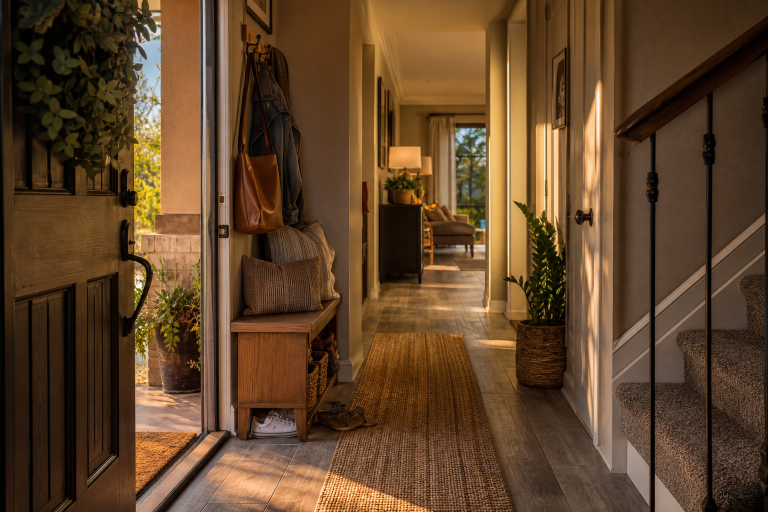
Entryways and hallways need to handle repeated impact, dirt, moisture, and abrasive debris. Luxury vinyl and tile are common choices because their surfaces are easy to wipe or mop when messes happen. Laminate may also work when the product is suitable for the location, and spills are cleaned promptly. Textured finishes and mid-tone patterns can make minor dust and marks less noticeable than highly glossy or very dark surfaces.
Use durable mats at exterior doors and secure runners in long halls. These are part of the flooring strategy, not merely decoration. Any transition between rooms should sit flat and be installed securely to reduce trip hazards.
Flooring for Kitchens and Laundry Rooms
Kitchens and laundry rooms need flooring that is practical around splashes, dropped items, and routine cleaning. Porcelain or ceramic tile, as well as many luxury vinyl products, can be strong candidates for these spaces. Tile offers a hard, durable surface, while resilient flooring can feel more forgiving when standing for long periods. Check the manufacturer’s care and installation requirements before committing, especially around appliances, seams, and possible water exposure.
Flooring for Living Rooms and Family Areas
Living rooms and family spaces must accommodate furniture movement, chair legs, toys, pets, and guests. Hardwood and engineered wood provide a classic appearance and can be paired with area rugs, while laminate and luxury vinyl offer wood-look styles with lower-maintenance routines. Carpet remains a comfortable option where softness and sound absorption are priorities.
Scratch resistance is helpful, but no surface is completely damage-proof. For example, a family may choose a resilient hard surface for its main gathering room, then use carpet in bedrooms where bare-foot comfort and quiet are more valuable. Furniture pads and sensible cleaning habits help protect nearly any material.
Comfortable Flooring for Bedrooms
Bedrooms often call for warmth, softness, and reduced noise. Carpet can create a quieter surface and a comfortable first step in the morning when it is properly maintained. Hardwood, engineered wood, laminate, and luxury vinyl can also work well with area rugs and appropriate underlayment. Neutral flooring colors provide flexibility when bedding, wall colors, or furniture change later.
Options for Homes With Pets and Children
Homes with pets and children benefit from realistic expectations. Claws, toys, spills, and frequent cleaning can affect every flooring type. Water-resistant flooring is not necessarily waterproof, and stain resistance does not mean stains should be left untreated. Review the product specifications, warranty terms, and repair process before purchasing. Keeping pet nails trimmed, placing washable rugs in active zones, and saving extra material can make future maintenance easier.
Maintenance and Long-Term Costs
The purchase price is only one part of a flooring budget. Include old-floor removal, disposal, subfloor repairs, underlayment, trim, installation labor, furniture moving, cleaning products, and possible future repairs. Save spare planks, tiles, or carpet remnants when possible, since an exact match may not remain available years after installation.
Why Subfloor Preparation Matters
Even premium flooring can perform poorly over an uneven, damp, or damaged subfloor. Moisture testing may be appropriate over concrete or in areas with a history of water exposure. Wood products may also require acclimation, while floating floors need proper expansion gaps and compatible underlayment. Homes with floors above crawlspaces or unconditioned basements can experience uncomfortable surfaces when the assembly is not adequately sealed and insulated, which is why air sealing and insulating floors over unconditioned spaces deserve attention before new finish flooring is installed.
A Simple Flooring Buying Checklist
- List every room included in the project.
- Rate each room for traffic, moisture, sunlight, and cleaning needs.
- Set a complete budget that includes installation and preparation.
- Compare two or three suitable materials for each room.
- Review care instructions, warranties, and repair options.
- Look at samples in natural light and evening lighting.
- Confirm subfloor, underlayment, and transition requirements before installation.
Common Questions About Flooring Choices
Is One Flooring Type Best for the Entire Home?
Not always. One material can simplify the visual design, but rooms with higher moisture or different comfort needs may benefit from another option. Coordinated colors and finishes can create continuity without forcing one product into every space.
What Flooring Is Easiest to Clean?
Smooth hard surfaces are generally straightforward for routine sweeping and spill cleanup, while carpet requires vacuuming and prompt stain treatment. The easiest choice depends on the household, surface texture, seams, and the manufacturer’s care guidance.
What Should Homeowners Consider for Indoor Air Quality?
Review emissions information for flooring, adhesives, cushions, and underlayments, since building materials and furnishings can affect indoor conditions. The EPA identifies source control, ventilation, and filtration as important parts of maintaining healthy indoor air quality.
Final Thoughts
The best flooring for a busy Tulsa home is the flooring that suits the room, the household, and the maintenance routine. Consider moisture control in utility spaces, durability at entrances, comfort in bedrooms, and realistic upkeep throughout the home. With sound preparation and a room-by-room plan, it is possible to create floors that feel cohesive and stand up to everyday life.
