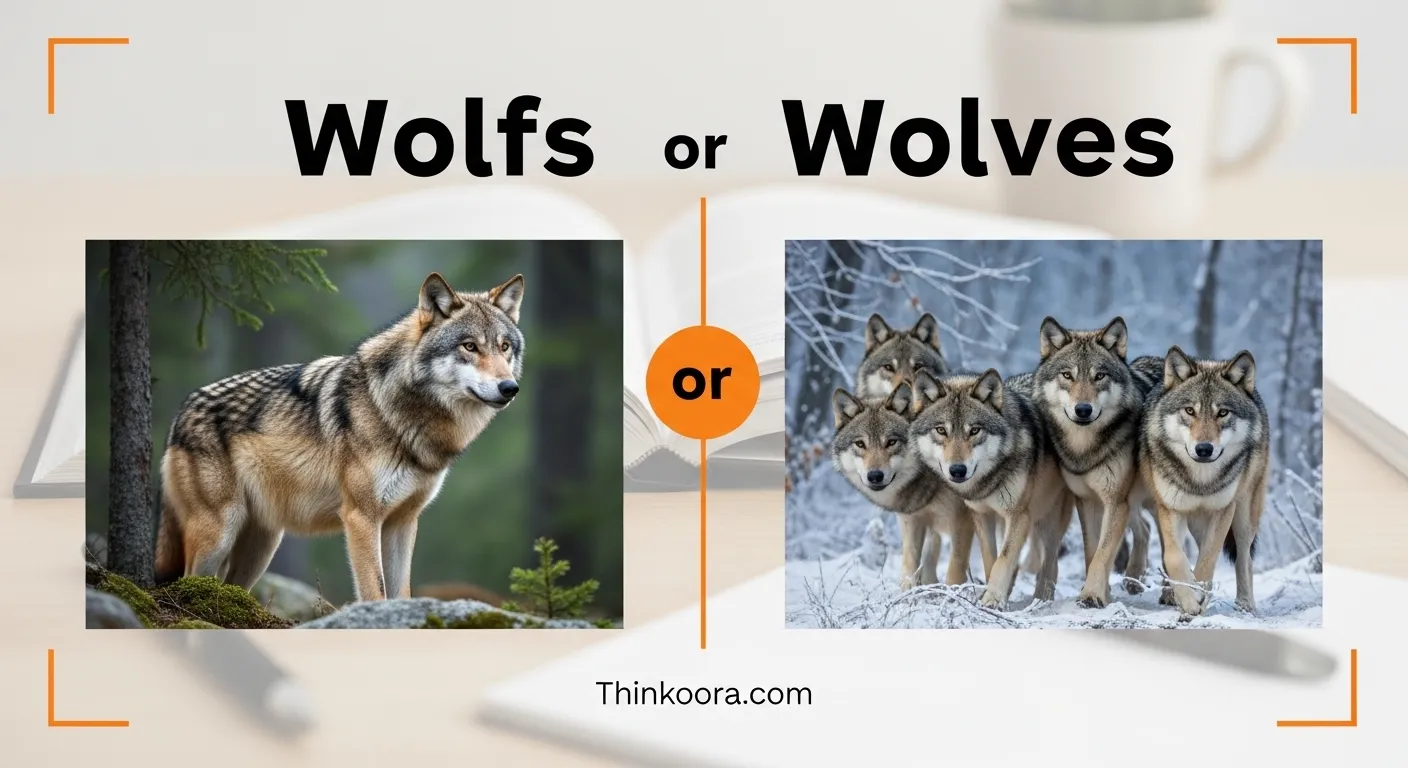
Have you ever wondered whether the plural of wolf is wolfs or wolves? Many people get confused because English has some tricky spelling rules.
This question comes up often in writing, homework, blogging, and even in social media posts.
The word wolf refers to a wild animal, part of the canine family.
But when you want to talk about more than one wolf, should you write wolfs or wolves?
Knowing the correct form can make your writing clear, professional, and correct.
People search for wolfs or wolves because they want quick answers that help in essays, articles, emails, or casual writing.
This guide will explain the correct spelling, why the difference exists, and how to use it properly in British English, American English, and global writing.
You will also see examples, common mistakes, and tips for correct usage in everyday life.
Wolfs or Wolves – Quick Answer
Quick Answer: The correct plural of wolf is wolves.
Examples:
- There are three wolves in the forest.
- The wolves howled at night.
The Origin of Wolfs vs Wolves
The word wolf comes from Old English wulf, which has Germanic roots. In the past, adding -s to make plurals was common, but English also borrowed rules from other Germanic languages where some nouns change the vowel and add -ves. That is why wolf → wolves is correct today.
Examples:
- Wolf → Wolves
- Calf → Calves
- Leaf → Leaves
British English vs American English Spelling
In both British and American English, the plural of wolf is wolves. The spelling wolfs is considered incorrect in standard writing.
| Word | Correct Plural | Notes |
| Wolf | Wolves | Standard in US & UK |
| Calf | Calves | Irregular plural |
| Roof | Roofs | Some nouns just add -s |
So, there’s no difference between British and American English for this word.
Which Spelling Should You Use?
- United States: Always use wolves.
- United Kingdom & Commonwealth: Always use wolves.
- Global writing: Stick with wolves to be safe.
Avoid wolfs in formal writing, academic work, or published content.
Common Mistakes with Wolfs Wolves
- Writing wolfs for multiple wolves – ❌ Incorrect
- ✅ Correct: There were five wolves near the river.
- Confusing it with the verb wolf (to eat quickly) – ❌ Incorrect: He wolfs his food.
- ✅ Correct: He wolfs down his lunch.
- Using wolfs in titles or headings – ❌ Avoid
Wolves or Wolfs in Everyday Examples
- Emails: The wolves in the nature reserve are healthy.
- News: Wolves spotted near the village outskirts.
- Social Media: Check out these amazing wolf photos!
- Formal Writing: The population of wolves has increased in the national park.
Wolfs vs Wolves – Google Trends & Usage Data
According to Google Trends:
- Searches for wolves are consistently higher than wolfs.
- Popularity is highest in English-speaking countries: USA, UK, Canada, Australia.
- Wolfs appears mostly in informal writing or as a misspelling.
| Keyword | Avg. Monthly Searches | Correctness |
| Wolves | 90,000 | ✅ Correct |
| Wolfs | 5,000 | ❌ Incorrect |
FAQs
1. Is wolfs ever correct?
Only if it’s a proper noun, like a brand name. Otherwise, use wolves.
2. Why is it wolves and not wolfs?
English changes some nouns that end in f to -ves for plural.
3. Can I use wolves in academic writing?
Yes, it’s the correct standard form.
4. Are there similar words like wolf with -ves?
Yes – calf → calves, leaf → leaves, knife → knives.
5. How do you pronounce wolves?
It’s pronounced /wʊlvz/.
6. Can wolf be a verb?
Yes – to wolf means to eat quickly, e.g., He wolfed down his dinner.
7. Is it different in British English?
No, British and American English use wolves for plural.
Conclusion
Knowing whether to use wolfs or wolves can make a big difference in your writing.
The correct plural is wolves, and this rule applies in both British and American English.
Using the wrong form, wolfs, can make writing look careless or unprofessional.
Learning these small rules improves your essays, emails, articles, and social media posts.
It also helps you speak confidently about wildlife or nature topics.
Remember, English has many irregular plurals, and wolf → wolves is one of the most common examples.
Practice using wolves in sentences, titles, and descriptions.
Try writing short stories, blog posts, or even social media captions to get familiar. Over time, these words become natural, making your communication clear, professional, and engaging.
Read More:
Quantitative or Qualitative – What’s the Difference?

Hi, I’m Ethan Hawkesley. I love writing and exploring the English language. On Thinkoora.com, I share tips, insights, and explanations to help readers understand words and writing more easily.