You’re sitting outside, enjoying tea, when a buzzing insect flies near you.
You panic and wonder: wasp or bee?
This is a very common question. Many people confuse these two insects. They look similar. They both sting. And they both fly around flowers.
But here’s the truth: wasps and bees are very different. Knowing the difference can help you stay safe. It can also help you understand nature better.
People search for wasp or bee because they want quick answers. They want to know:
- Which one is more dangerous?
- Which one makes honey?
- Which one should I avoid?
This guide clears all confusion. You’ll learn the key differences, behavior, and real-life examples. By the end, you’ll easily tell whether it’s a wasp or a bee—and what to do next.
Wasp or Bee – Quick Answer
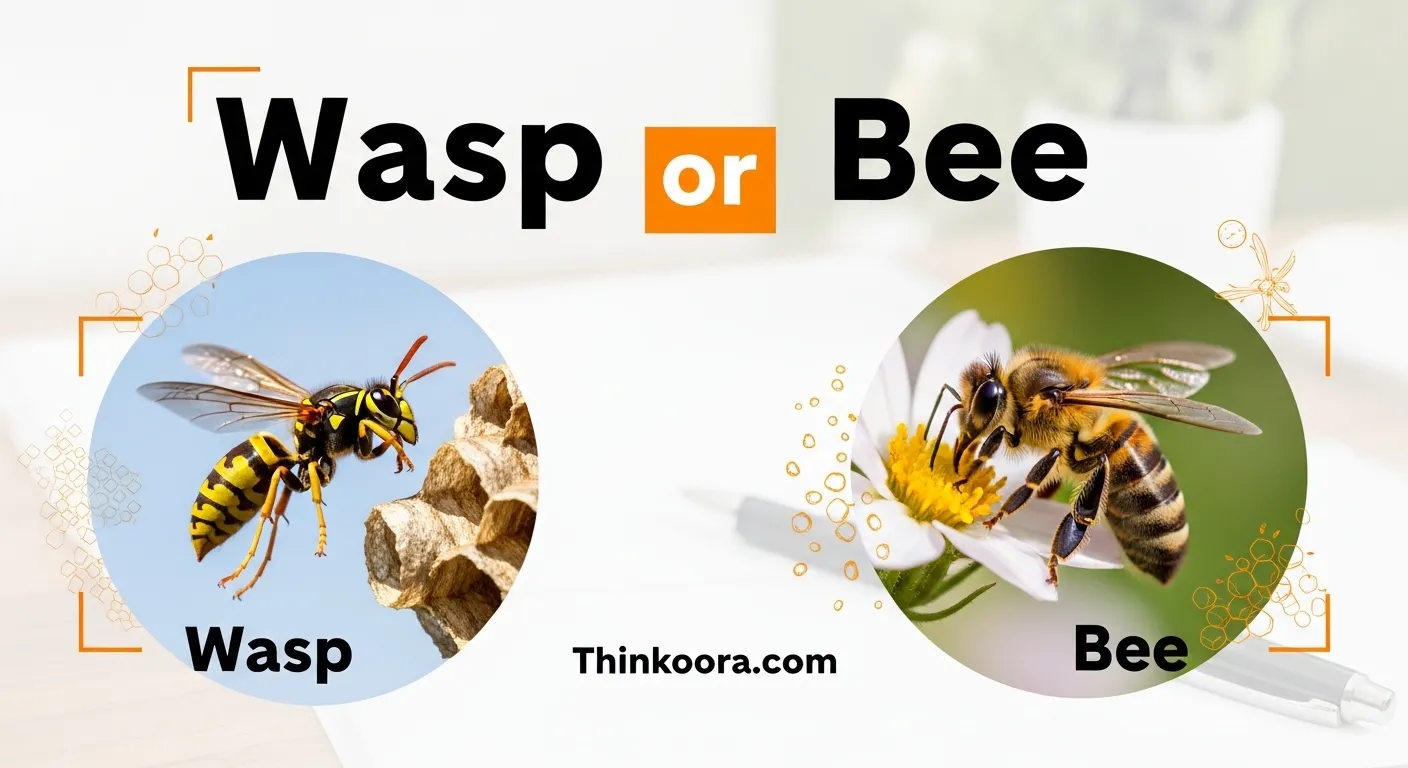
A bee is fuzzy, round, and helps pollinate flowers.
A wasp is smooth, slim, and often more aggressive.
Simple examples:
- 🐝 Bee → Yellow + black, hairy body, loves flowers, makes honey
- 🐝 Wasp → Bright yellow or black, shiny body, narrow waist, hunts insects
Quick rule:
- If it looks soft and fluffy → Bee
- If it looks sharp and shiny → Wasp
The Origin of Wasp or Bee
The confusion between wasp or bee goes back many years.
Word origins:
- Bee comes from Old English bēo
- Wasp comes from Old English wæps
Both words have been used for over 1,000 years.
Why confusion exists:
- Both belong to the same insect order: Hymenoptera
- Both can sting
- Both are often yellow and black
But over time, people grouped them together incorrectly.
In reality:
- Bees are pollinators
- Wasps are predators or scavengers
This is why the keyword wasp or bee is so popular—it solves a real-life confusion.
British English vs American English Spelling
Good news:
There is no spelling difference between wasp and bee in British and American English.
However, the usage and naming of species can differ slightly.
Comparison Table
| Feature | British English | American English |
| Wasp spelling | Wasp | Wasp |
| Bee spelling | Bee | Bee |
| Common usage | Wasp in the garden | Wasp in the yard |
| Bee reference | Honeybee | Honey bee |
| Informal tone | More formal | More casual |
Key takeaway:
- Spelling stays the same
- Context and phrasing may change
Which Should You Use – Wasp or Bee?
Use wasp or bee when:
- You are unsure which insect you saw
- You are asking a question
- You are comparing both
Audience-based advice:
- 🇺🇸 US audience
Use simple phrasing: Is this a wasp or bee? - 🇬🇧 UK/Commonwealth
Slightly formal: How to identify a wasp or a bee? - 🌍 Global audience (SEO)
Best keyword: wasp or bee difference
Pro tip:
For blogs and SEO, always include both words.
This captures more search traffic.
Common Mistakes with Wasp or Bee
Many people make simple mistakes when identifying insects.
❌ Mistake 1: Calling every stinging insect a bee
✔️ Correction: Not all are bees—many are wasps
❌ Mistake 2: Thinking bees are aggressive
✔️ Correction: Bees are usually calm unless disturbed
❌ Mistake 3: Believing wasps make honey
✔️ Correction: Only bees make honey
❌ Mistake 4: Ignoring body shape
✔️ Correction:
- Bees = round and hairy
- Wasps = thin and smooth
❌ Mistake 5: Not noticing behavior
✔️ Correction:
- Bees visit flowers
- Wasps hunt insects or hover near food
Wasp or Bee in Everyday Examples
Here’s how people use wasp or bee in real life:
Hi, I found a nest outside. Is it a wasp or bee?
📰 News
Experts warn about rising wasp activity, often confused with bees.
💬 Social Media
This insect is scary 😅 wasp or bee???
🏢 Formal Writing
Proper identification of a wasp or bee is essential for safe removal.
Wasp or Bee – Google Trends & Usage Data
The keyword wasp or bee is widely searched worldwide.
Popular countries:
- United States
- United Kingdom
- Canada
- Australia
- Pakistan & India
When searches increase:
- Summer season 🌞
- Garden activity 🌿
- Outdoor events 🍉
Why people search:
- Fear of stings
- Curiosity
- Pest control needs
Search variations:
- difference between wasp and bee
- wasp vs bee sting
- how to tell wasp or bee
Comparison Table – Wasp vs Bee
| Feature | Bee | Wasp |
| Body | Fuzzy, round | Smooth, slim |
| Color | Yellow + black (soft) | Bright yellow/black |
| Behavior | Calm | Aggressive |
| Diet | Nectar, pollen | Insects, food scraps |
| Sting | Once (dies after) | Multiple times |
| Role | Pollination | Pest control |
| Nest | Wax hives | Paper nests |
| Sound | Soft buzz | Loud buzz |
FAQs
1. How do I quickly tell a wasp or bee apart?
Look at the body.
- Hairy = bee
- Smooth = wasp
2. Which is more dangerous: wasp or bee?
Wasps are more aggressive.
They can sting multiple times.
3. Do both wasp and bee make honey?
No.
Only bees produce honey.
4. Why do wasps chase people?
They are protective and attracted to food.
Especially sweet drinks.
5. Are bees friendly?
Yes, mostly.
They sting only when threatened.
6. Can a bee sting more than once?
Usually no.
Honeybees die after one sting.
7. Should I kill a wasp or bee?
Avoid killing both.
Bees help the environment.
Wasps control pests.
Conclusion
Understanding wasp or bee is simple once you know the basics.
Bees are friendly helpers.
They pollinate plants and make honey.
Wasps are more aggressive.
They protect themselves and hunt other insects.
The key differences lie in:
- Body shape
- Behavior
- Diet
- Sting ability
If you see a fuzzy insect on a flower, it’s likely a bee.
If it looks sleek and flies around food, it’s probably a wasp.
Knowing this helps you react wisely.
You won’t panic unnecessarily.
You’ll also respect the role each insect plays in nature.
For SEO and writing, use wasp or bee when comparing or asking questions.
It’s clear, simple, and widely searched.
In short:
- Observe carefully
- Stay calm
- Identify correctly
That’s all you need to master the difference between a wasp or bee.
Read More:
West or Linn – Which One is Correct?
Choose or Die – What It Means and How to Use It

I’m Daniel Whitmore, a content writer who focuses on English grammar, spelling mistakes, and word usage. I write clear, simple, and helpful articles to make English easier for students, writers, and everyday readers.