In today’s digital age, managing money instantly through apps has become a norm.
Two of the most popular payment apps are Venmo and CashApp, but many people get confused about which one to use. Are they the same?
Do they have hidden fees? Which app works better for your needs?
This is why searches like venmo or cashapp are so common.
People want a clear comparison to make quick decisions.
Whether you are paying friends, receiving money, or handling online transactions, knowing the differences and advantages of each app can save time, prevent mistakes, and ensure secure transactions.
This article will break down everything about Venmo and CashApp:
their origins, differences in usage, common mistakes, and tips on which one suits your situation.
By the end, you will have a clear understanding to make confident choices in personal and professional payments.
Venmo or CashApp – Quick Answer
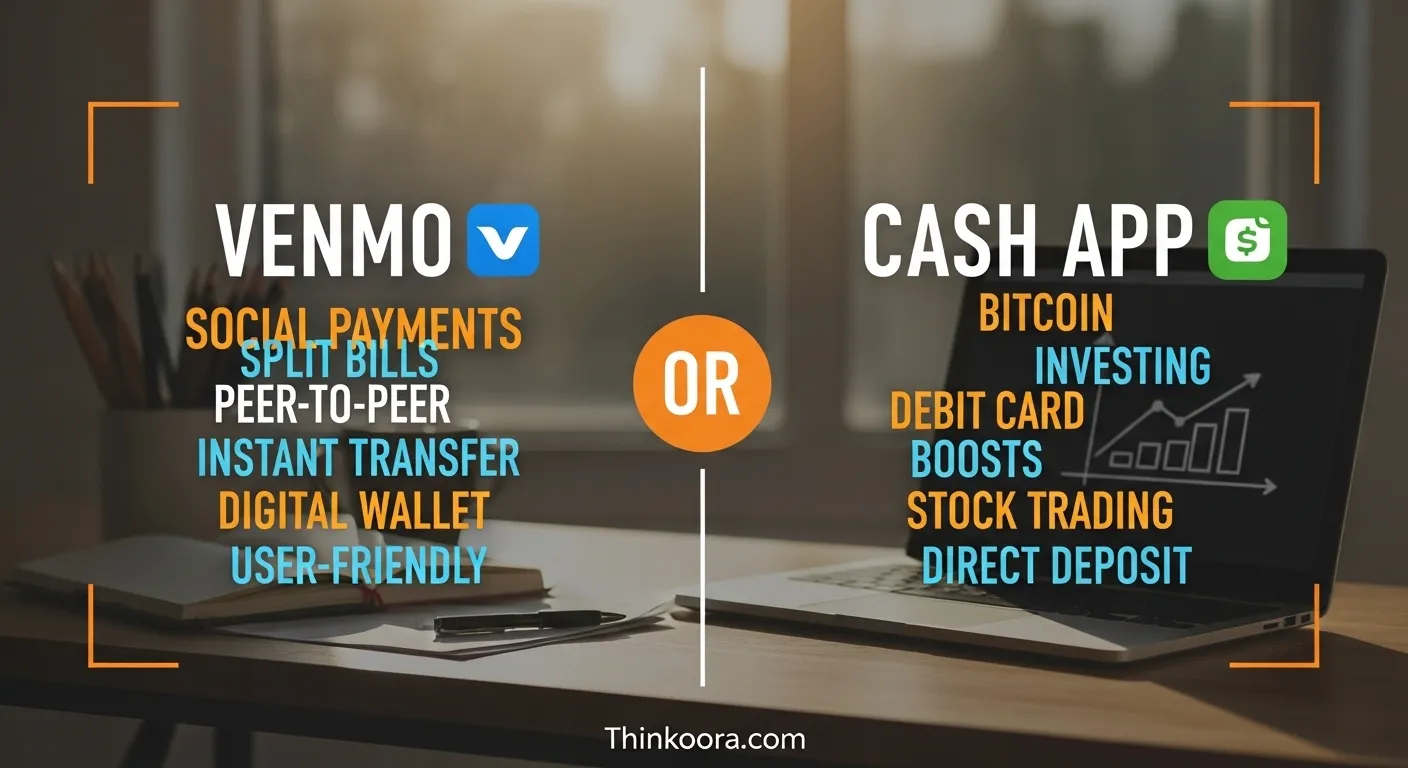
Quick Answer: Both Venmo and CashApp are mobile payment apps allowing peer-to-peer money transfers, but they differ in features:
| Feature | Venmo | CashApp |
| Primary Use | Social payments, sharing transactions | Direct payments, Bitcoin, stock trading |
| Social Feed | Yes, you can add notes & emojis | No, more private transactions |
| Fee Structure | Free for bank transfers (instant transfer has a fee) | Free for standard transfers, 1.5%-3% for credit card payments |
| Popularity | Highly used in the U.S. among friends & millennials | Popular for flexible payments and investing, U.S. & limited international users |
Example: If you’re splitting dinner costs with friends, Venmo is ideal. For instant personal transfers or Bitcoin trading, CashApp may work better.
The Origin of Venmo or CashApp
The term Venmo comes from a creative combination: vend (sell) + mobile. Launched in 2009 by Andrew Kortina and Iqram Magdon-Ismail, it focused on social payments. CashApp, originally named Square Cash, launched in 2013 by Square, Inc., emphasizing simplicity and instant money transfers.
People often ask Venmo or CashApp because both have grown quickly but serve slightly different audiences. The spelling and branding differences reflect their company origins and design focus: Venmo has a social, friend-to-friend vibe, while CashApp is direct and business-oriented.
British English vs American English Spelling
While Venmo and CashApp are brand names and do not have official UK or US spelling differences, it’s helpful to understand general English spelling rules:
| Word Type | British English | American English |
| Colour | colour | color |
| Favourite | favourite | favorite |
| Travelled | travelled | traveled |
| App Names | No change | No change |
Key Insight: Brand names like Venmo and CashApp remain the same worldwide. However, general spelling rules affect related words in descriptions, e.g., transferred money vs transfered money (correct US and UK spelling: transferred).
Which App Should You Use?
- U.S. Users: Both apps work well, but choose based on social vs business focus:
- Venmo: Great for social transactions and shared payments.
- CashApp: Good for quick personal transfers, Bitcoin, and small investing.
- UK/Commonwealth Users: Venmo is limited; CashApp may not be fully supported. Alternatives like PayPal or Revolut may be better.
- Global Audience: Consider app availability and currency support. Venmo and CashApp are mostly U.S.-focused.
Common Mistakes with Venmo vs CashApp
- Confusing Social vs Private Features: People try social features on CashApp they don’t exist.
- Using Credit Cards Without Checking Fees: Both apps charge for credit card transfers.
- Ignoring Security Settings: Not enabling PIN or biometric security can risk theft.
- Spelling App Names Incorrectly: Writing Veno or Cash App inconsistently may confuse support or readers.
- Assuming International Support: Both apps are primarily U.S.-only.
Correction: Always double-check the app name, transfer method, and fees before sending money.
Venmo or CashApp in Everyday Examples
- Emails: I sent your portion via Venmo; check your app for confirmation.
- News: CashApp now allows Bitcoin trading in the U.S.
- Social Media: Split the bill with friends using Venmo’s emojis and notes feature!
- Formal Writing: Businesses may accept payments via CashApp for small-scale transactions.
CashApp or Venmo – Google Trends & Usage Data
According to Google Trends:
- Venmo: Peaks in searches around holidays and college semesters, mainly U.S. users.
- CashApp: Searches rise during stock market events and Bitcoin news.
- Keyword Popularity: Venmo or CashApp spikes when new features, fees, or service issues appear.
| App | Popularity | Primary Users |
| Venmo | High | College students, social users |
| CashApp | Medium | Individuals, small business owners, investors |
Comparison Table: Venmo vs CashApp
| Feature | Venmo | CashApp |
| Social Feed | Yes | No |
| Bank Transfer Fees | Free (1% instant) | Free (1.5% instant) |
| Bitcoin Support | No | Yes |
| Stock Trading | No | Yes |
| Availability | U.S. only | U.S., limited international use |
| App Style | Social | Direct, private |
FAQs
1. Can I use Venmo outside the U.S.?
No, Venmo is U.S.-based only.
2. Is CashApp safe for online payments?
Yes, with PIN, biometric security, and monitoring features.
3. Which app is better for social payments?
Venmo, because of its social feed and emoji notes.
4. Can I transfer Bitcoin via Venmo?
No, Bitcoin is supported only on CashApp.
5. Are there hidden fees for Venmo or CashApp?
Both charge for instant transfers or credit card payments; standard bank transfers are usually free.
6. Can I use both apps simultaneously?
Yes, many users have both for different purposes.
7. What is the most searched question about these apps?
Venmo or CashApp — which is better? is a top query.
Conclusion
In conclusion, Venmo or CashApp depends on your priorities.
Venmo excels in social, shared transactions, perfect for friends and small groups.
CashApp focuses on speed, privacy, and additional features like Bitcoin and stock trading. Understanding fees, security, and geographic availability is crucial to avoid mistakes.
U.S. users can freely choose based on social vs private needs, while international users should consider alternatives.
Remember, proper usage, awareness of app rules, and correct spelling will help you navigate payments confidently and efficiently.
Read More:
Quantitative or Qualitative – What’s the Difference?

Hi, I’m Ethan Hawkesley. I love writing and exploring the English language. On Thinkoora.com, I share tips, insights, and explanations to help readers understand words and writing more easily.