Have you ever wondered why sometimes you see the word spelled vapour and other times vapor?
This spelling difference can confuse students, writers, and anyone learning English.
People search for vapour or vapor because they want to know which version to use in different contexts.
Vapour (or vapor) is the gas form of a liquid, like water turning into steam.
Knowing the right spelling helps you write correctly in school, blogs, or professional emails.
For example, if you are writing a science report, using the correct spelling shows accuracy and professionalism.
This guide will explain the difference, show common mistakes, and give clear examples.
You’ll learn which spelling to use depending on where you live or who your audience is. By the end, you’ll never get confused about vapour or vapor again.
Vapour or Vapor – Quick Answer
Explanation:
- Both words mean the same thing: gas from a liquid.
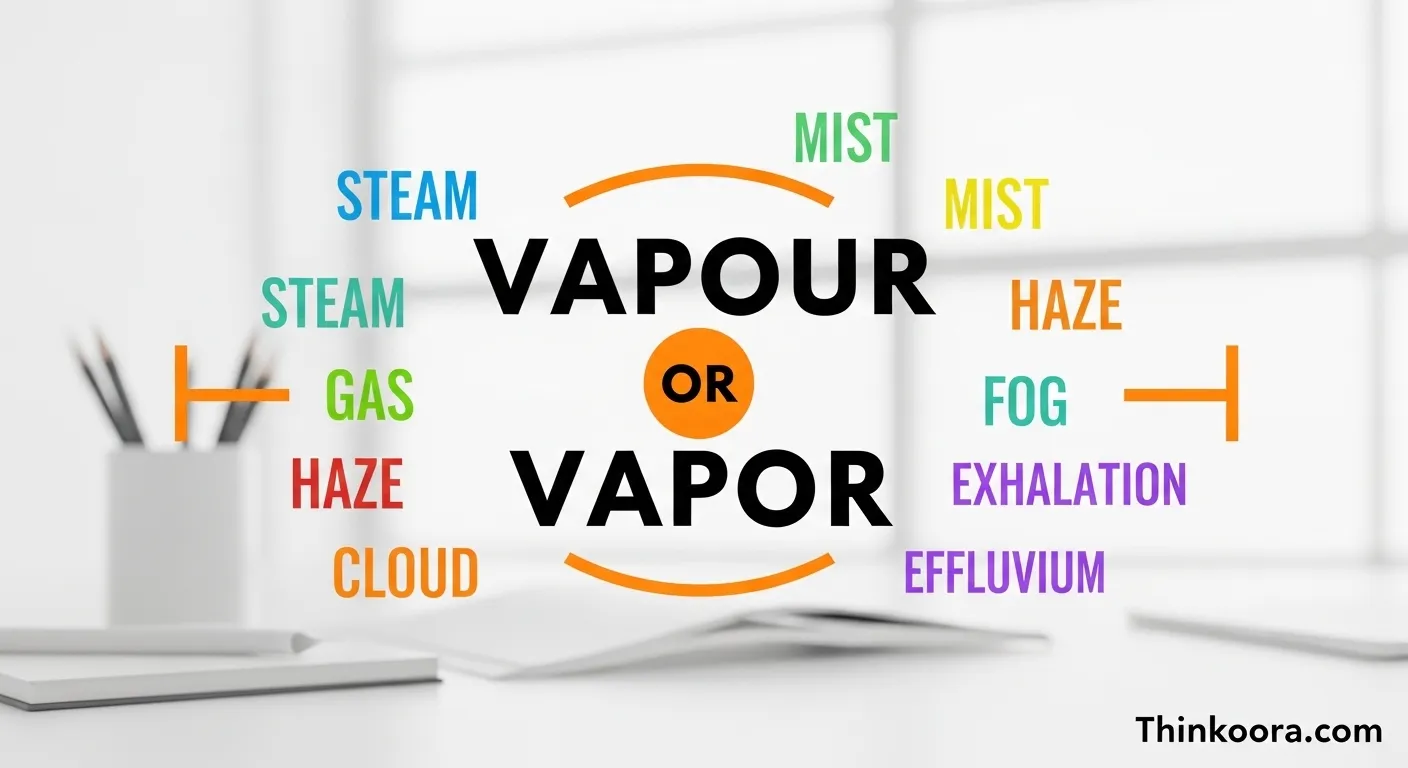
- Vapour → British spelling.
- Vapor → American spelling.
Examples:
- Steam rises as water turns into vapour.
- The scientist measured the vapor in the lab.
The Origin of Vapour/Vapor
The word comes from Latin vapor, meaning steam or exhalation.
- In the 17th century, English used vapour in Britain.
- American English simplified it to vapor.
This difference is a result of regional spelling evolution.
British English vs American English Spelling
Rules:
- British English often keeps ou in words like colour, flavour, vapour.
- American English changes it to o, so color, flavor, vapor.
| Word (UK) | Word (US) |
| Vapour | Vapor |
| Colour | Color |
| Flavour | Flavor |
| Honour | Honor |
Which Spelling Should You Use?
US Audience: Use vapor.
UK/Commonwealth Audience: Use vapour.
Global Audience: Consider who will read it; if unsure, check your style guide.
Example:
- US article: Water vapor rises quickly.
- UK article: Water vapour rises quickly.
Common Mistakes with Vapour/Vapor
- Mixing spellings in the same text. ✅ Wrong: The vapor formed from the vapour.
- Using vapour in American publications. ✅ Wrong in US context.
- Misspelling as vapoour or vapo.
Correct Usage:
- US: Vapor
- UK: Vapour
Vapour vs Vapor in Everyday Examples
Emails:
- Please note the vapor from the experiment is safe.
News:
- Morning vapour covered the park.
Social Media:
- Steam rising from my tea is pure vapour.
Formal Writing:
- The vapor pressure of water changes with temperature.
Vapor or Vapour – Google Trends & Usage Data
Popularity:
- US: vapor dominates.
- UK & Australia: vapour dominates.
- Global: depends on audience, often US English rules dominate online.
Table of Keyword Variations:
| Keyword Variation | Popularity (Global) |
| vapor | High |
| vapour | Medium |
| water vapor | High |
| steam vapor | Medium |
| water vapour | Medium |
FAQs
1. Is vapour the same as vapor?
Yes. Only spelling is different. Meaning is the same.
2. Which is correct in science reports?
Use vapor for US reports, vapour for UK reports.
3. Can I use vapor in UK writing?
Technically yes, but UK readers expect vapour.
4. How do you pronounce vapour?
It is pronounced the same: /ˈveɪpər/.
5. Are there other words like vapour/vapor?
Yes: colour/color, flavour/flavor, honour/honor.
6. Does the meaning change with spelling?
No, only spelling differs.
7. Which is better for blogging?
Use the spelling matching your target audience.
Conclusion
Now you know the difference between vapour and vapor. Both words refer to the gas form of a liquid.
The spelling depends on the audience: vapour for British English and vapor for American English.
Using the correct form improves your writing, whether in emails, essays, reports, or blogs.
Learning these differences helps you avoid common mistakes and communicate professionally.
Always check your style guide if writing for a specific region. Practice using both spellings in examples and everyday writing to remember which is right for your audience.
Remember: small details like spelling make a big difference in credibility.
Using vapour or vapor correctly shows you are attentive, professional, and confident in English.
Read More:
Elliptical or Treadmill – Which One Is Better for Your Workout?
Dissociate or Disassociate – Which Spelling Is Correct?

Hi, I’m Ethan Hawkesley. I love writing and exploring the English language. On Thinkoora.com, I share tips, insights, and explanations to help readers understand words and writing more easily.