Many people search for trick or treating every year, especially around Halloween.
Parents, students, teachers, bloggers, and even marketers often stop and wonder: Is trick or treating correct?
Should it be written differently?
Does it change in British or American English?
The confusion usually comes from how the phrase is spoken.
In casual speech, people shorten or change it, which leads to spelling and usage mistakes in writing.
Some writers are unsure whether it should be hyphenated, capitalized, or treated as a noun or a verb.
Others wonder if the phrase works the same way in formal writing as it does in casual conversation.
This article clears up all that confusion in one place.
You will get a quick answer, learn where the phrase comes from, see how British and American English use it, and understand the most common mistakes people make.
You’ll also find real-life examples, FAQs, and usage advice based on audience and context.
By the end, you’ll know exactly how to use trick or treating correctly and confidently every time.
Trick or Treating – Quick Answer
Trick or treating is correct.
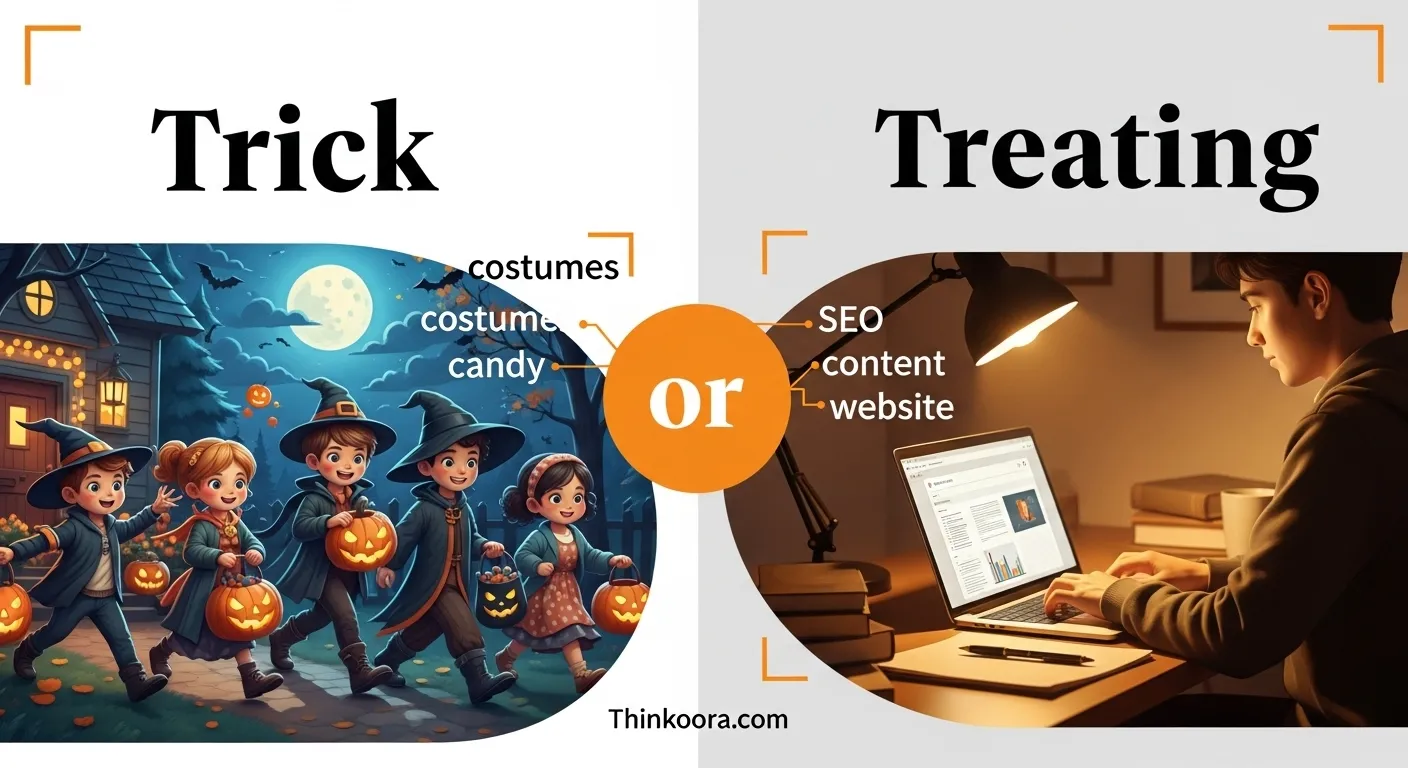
It refers to the Halloween activity where children go door to door asking for candy.
Examples:
- The kids went trick or treating after sunset.
- We took our children trick or treating on Halloween night.
👉 It is usually written as three words, not hyphenated, and used as a noun or verb phrase.
The Origin of Trick or Treating
The phrase trick or treat comes from old Halloween traditions in Europe. The idea was simple: give a treat, or risk a harmless trick.
The modern phrase trick or treating developed in the United States in the early 20th century. As Halloween became a child-focused holiday, the activity of going house to house needed a name. That action became known as trick or treating.
There are no spelling variations because the phrase comes from common English words, not borrowed foreign terms. The confusion today comes from usage, not spelling history.
British English vs American English Spelling
There is no spelling difference between British and American English for trick or treating.
Both use:
- Trick or treat
- Trick or treating
Comparison Table
| English Variety | Correct Form |
| American English | trick or treating |
| British English | trick or treating |
| Canadian English | trick or treating |
| Australian English | trick or treating |
✔ Same spelling
✔ Same meaning
✔ Same usage
Which Spelling Should You Use?
You should always use trick or treating as written.
Audience-based advice:
- US audience: Use trick or treating (very common)
- UK/Commonwealth: Use trick or treating (understood, though less common culturally)
- Global audience: Use trick or treating with context if needed
There is no alternative spelling to choose from only correct or incorrect usage.
Common Mistakes with Trick or Treating
Here are frequent errors people make:
❌ trick-or-treating (hyphenated)
❌ trick n treating (informal/slang)
❌ trick or treatings (wrong plural)
❌ Trick Or Treating (unnecessary capitalization mid-sentence)
Correct Usage:
✔ trick or treating
✔ Trick or treating (only capitalize at sentence start or in titles)
Trick or Treating in Everyday Examples
Emails
- The office will close early so parents can take kids trick or treating.
News
- Police shared safety tips for families going trick or treating.
Social Media
- Best costumes we saw while trick or treating 🎃
Formal Writing
- Trick or treating is a long-standing Halloween tradition in North America.
Trick or Treating – Google Trends & Usage Data
Search interest for trick or treating spikes every year in October, especially in the U.S., Canada, and the UK.
The phrase is most commonly searched:
- Before Halloween events
- By parents planning activities
- By schools and community organizers
- By bloggers and marketers creating seasonal content
Outside of October, searches drop sharply, showing that the phrase is highly seasonal and event-based.
Comparison Table: Keyword Variations
| Phrase | Correct | Notes |
| trick or treating | ✅ Yes | Standard, correct form |
| trick-or-treating | ❌ No | Hyphen not needed |
| trick or treat | ✅ Yes | Base phrase |
| trick or treatings | ❌ No | Incorrect plural |
FAQs About Trick or Treating
1. Is trick or treating grammatically correct?
Yes, it is fully correct and widely accepted.
2. Should trick or treating be hyphenated?
No. Write it as three separate words.
3. Is trick or treating a noun or verb?
It can be both, depending on the sentence.
4. Do British people use trick or treating?
Yes, though the tradition is more common in the U.S.
5. Can I capitalize trick or treating?
Only at the start of a sentence or in headings.
6. Is it formal or informal?
It is informal but acceptable in news and educational writing.
Conclusion
The phrase trick or treating is simple once you understand it.
There is no spelling difference between British and American English, and no hidden grammar rule to worry about.
The confusion mostly comes from casual speech, social media shortcuts, and unnecessary hyphenation.
If you are writing for any audience, the safe and correct choice is always trick or treating.
Use it consistently, keep it unhyphenated, and only capitalize it when grammar rules require it.
Understanding this phrase helps your writing look cleaner, more professional, and more confident especially in seasonal content, school writing, or public communication.
Once you know the rule, you’ll never hesitate again.
Read More:
Weather or Portland Guide(2026) Seasons, Forecasts & Tips

I am Samuel Wright, a writer who loves helping people understand English grammar, spelling, and word usage clearly.