English learners and even native speakers often pause when writing too or to.
These two tiny words look almost identical, sound the same, and appear everywhere in emails, social media posts, school essays, and professional writing.
Because of this, too or to is one of the most searched English grammar questions online.
The confusion happens because to and too have completely different meanings but identical pronunciation.
One wrong letter can change the meaning of a sentence or make your writing look careless. For students, this leads to lost marks. For professionals,
This article solves that confusion once and for all. You’ll get a quick answer, simple explanations, real-life examples, common mistakes, and professional usage advice.
Whether you’re writing for school, work, or the web, you’ll know exactly when to use too and when to use to without overthinking it.
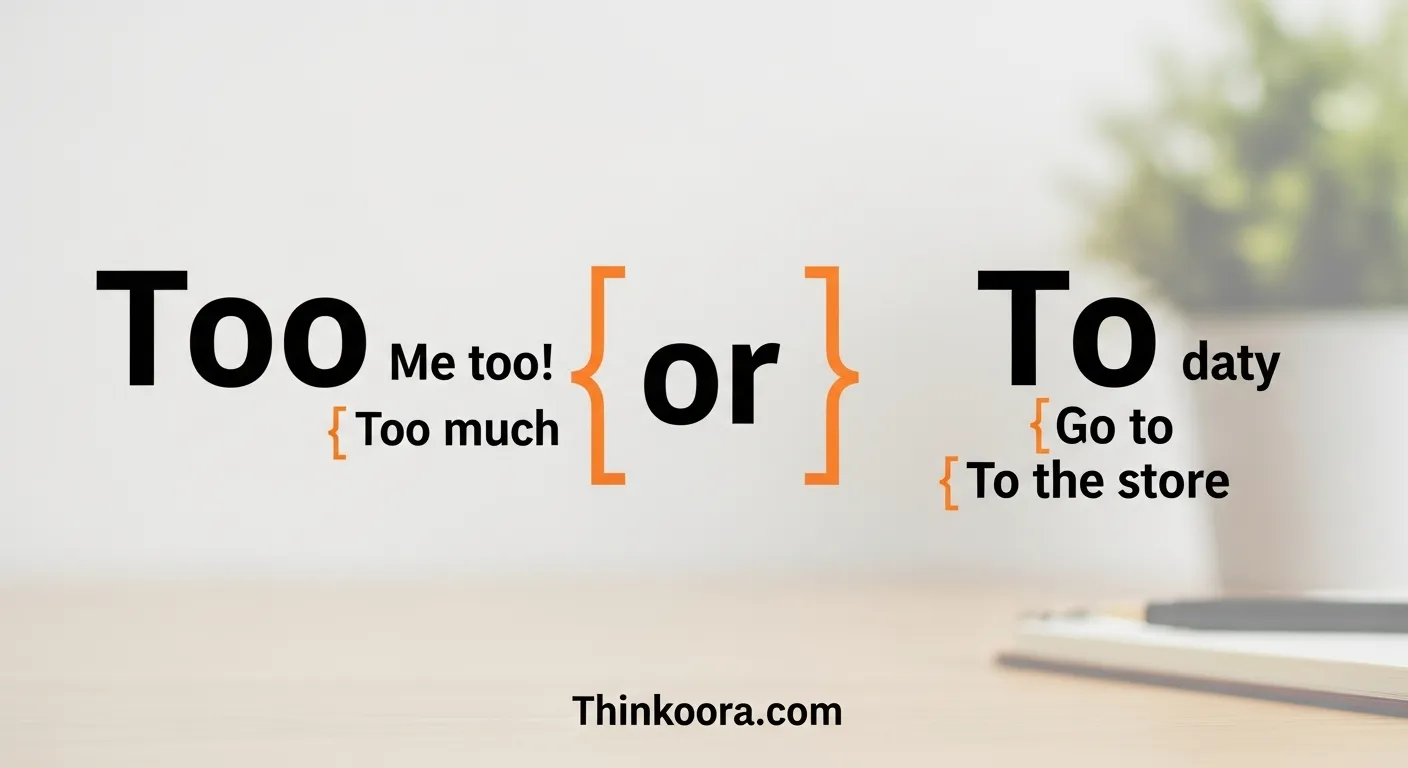
Too vs To – Quick Answer
To is used for direction, purpose, or as part of a verb.
Too means also or more than needed.
Simple Examples
- I am going to school.
- This bag is too heavy.
- She wants to learn English too.
Quick tip:
If you can replace the word with also or very, use too.
The Origin of Too vs To
The word to comes from Old English tō, meaning toward or in the direction of. It has always been a functional word used with verbs and places.
Too comes from Old English tō as well, but over time it developed a different meaning in addition or excessively. To avoid confusion, English added an extra o to form too.
So, the spelling difference exists purely to separate function (to) from meaning (too).
British English vs American English Spelling
Good news:
There is no spelling difference between British and American English for too or to.
Both follow the same rules worldwide.
Comparison Table
| Aspect | British English | American English |
| To | Same usage | Same usage |
| Too | Same usage | Same usage |
| Meaning | No difference | No difference |
This makes too or to a global grammar rule.
Which Spelling Should You Use?
Use to when:
- Showing direction: go to work
- Before a verb: to eat, to learn
- Indicating purpose: came to help
Use too when:
- Meaning also: I want tea too
- Meaning excessively: too hot, too late
Audience-Based Advice
- US audience: Follow standard rules (same as above)
- UK/Commonwealth: Same rules apply
- Global audience: Always use correct grammar mistakes are noticed worldwide
Common Mistakes with Too or To
I want too go home
I want to go home
She is to tired
She is too tired
Me too went there
I went there too
Easy Memory Trick
- Too = extra o = extra meaning
- To = simple, short, functional
Too or To in Everyday Examples
Emails
- I need to talk to you.
- I am available too.
News
- Prices are too high to manage.
Social Media
- Feeling too tired to post today 😴
Formal Writing
- The report was submitted too late to be reviewed.
Too or To – Google Trends & Usage Data
Search data shows too or to is most searched in:
- United States
- United Kingdom
- India
- Pakistan
- Philippines
Why People Search It
- School assignments
- Job emails
- Blogging and SEO writing
- Social media captions
The confusion is highest in non-native English regions, but mistakes are common everywhere.
Too vs To – Comparison Table
| Word | Meaning | Example |
| To | Direction / Verb marker | Go to school |
| Too | Also / Excessively | Too hot |
FAQs
1. Can too be used at the end of a sentence?
Yes. I like coffee too.
2. Is to much correct?
No. The correct form is too much.
3. Can to mean also?
No. Only too means also.
4. Is too informal?
No. It is correct in both formal and informal writing.
5. How do I remember the difference?
Extra o in too = extra meaning.
6. Are too and to pronounced the same?
Yes, they sound the same but mean different things.
7. Does Grammarly catch this mistake?
Yes, but you should still learn the rule.
Conclusion
Understanding the difference between too or to is simple once you know their roles. To is a functional word used for direction and verbs, while too adds meaning by showing excess or inclusion. Even though they sound the same, they are never interchangeable.
This small grammar rule has a big impact. Using the wrong word can confuse readers, weaken your writing, and reduce professionalism. The good news is that this rule is universal it’s the same in British English, American English, and global usage.
If you remember just one thing, remember this:
Use too when you mean also or very. Use to everywhere else.
Mastering too or to improves clarity, confidence, and credibility in everyday English.
Read More:
UK or England – Know the Difference in 2 Minutes

I’m Daniel Whitmore, a content writer who focuses on English grammar, spelling mistakes, and word usage. I write clear, simple, and helpful articles to make English easier for students, writers, and everyday readers.