Have you ever paused while writing and wondered: should I use tons or tonnes?
You are not alone.
Many people search for this keyword because both words sound the same. Yet they are not always the same. The spelling changes by country. The weight value can also change.
This confusion often appears in emails, school work, news articles, and even business reports. If you write for a global audience, it matters even more.
So, what is correct?
This guide gives you a quick answer first. Then, it explains the history, spelling rules, and real-life examples. By the end, you will know exactly which word to use — and when.
Tons or Tonnes – Quick Answer
Short answer:
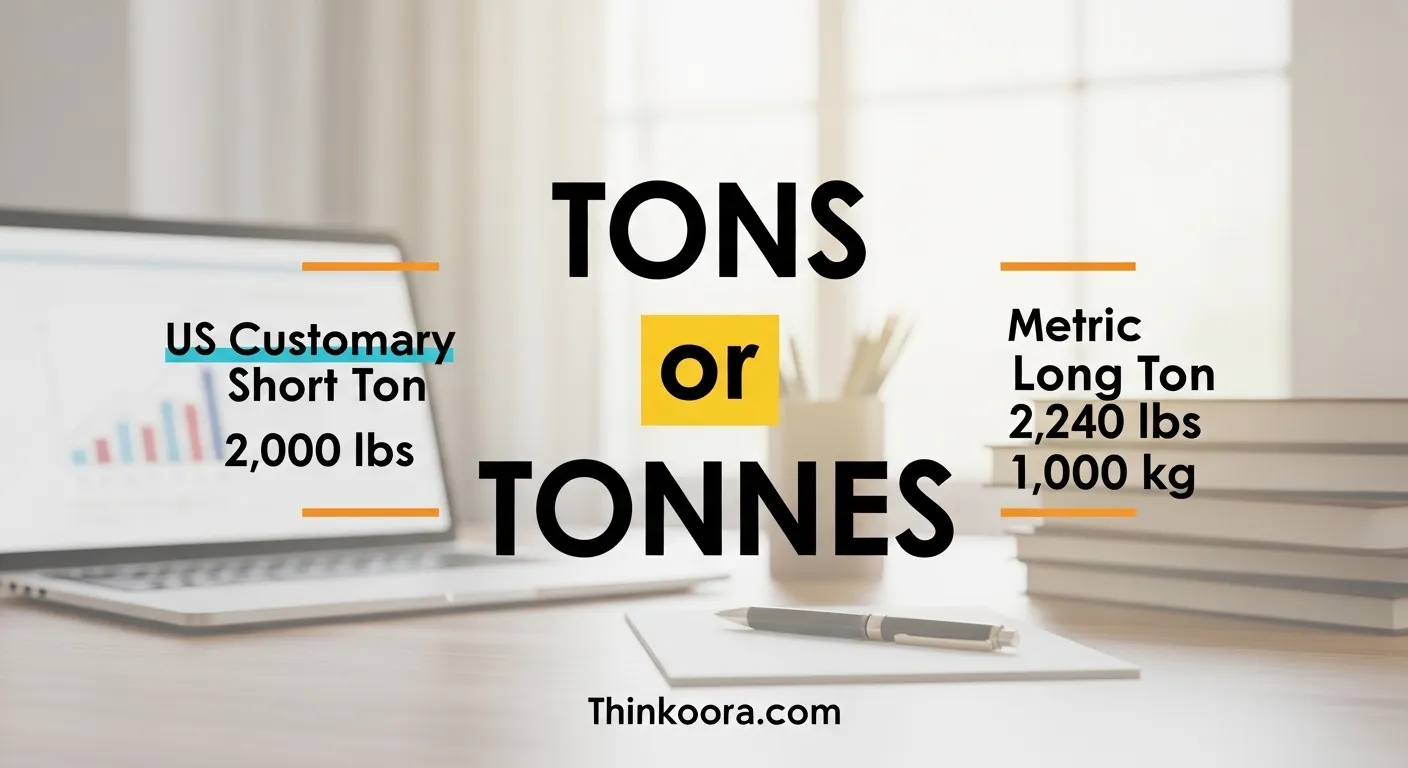
- Tons is used in American English.
- Tonnes is used in British English and most other countries.
However, there is more.
In the United States:
- A ton = 2,000 pounds (also called a short ton).
In the UK and many other countries:
- A tonne = 1,000 kilograms (also called a metric ton).
Examples:
- The truck carries 5 tons of sand. (US)
- The ship transported 5 tonnes of coal. (UK)
So, spelling and measurement system both matter.
The Origin of Tons or Tonnes
The word comes from Old French tonne, meaning a large barrel.
In the past, a ton referred to the weight of a full wine barrel. Over time, countries created their own systems of measurement.
Later, the metric system was developed in France. It introduced the tonne as 1,000 kilograms.
The United States kept its own system, which uses pounds. That is why the American ton equals 2,000 pounds.
So, the spelling difference reflects two different measurement systems.
British English vs American English Spelling
The difference is simple but important.
| Region | Spelling | Weight Meaning |
| United States | Ton / Tons | 2,000 pounds |
| United Kingdom | Tonne / Tonnes | 1,000 kilograms |
| Canada | Tonne (metric), Ton (informal) | Usually metric |
| Australia | Tonne | 1,000 kilograms |
Key Point:
- American English prefers shorter spellings (color, meter, ton).
- British English often keeps traditional or metric forms (colour, metre, tonne).
Therefore, the spelling shows both language style and measurement system.
Which Spelling Should You Use?
It depends on your audience.
If your readers are in the US:
Use tons.
If your readers are in the UK, Europe, Australia, or Asia:
Use tonnes.
Writing for a global audience?
Use metric tonnes for clarity. It avoids confusion.
For business, science, and trade, metric tonnes is often safest.
Always match the spelling to your region and measurement system.
Common Mistakes with Tons or Tonnes
Here are frequent errors:
Mistake 1: Using tons when talking about kilograms.
5 tons (if you mean 1,000 kg each in UK writing)
5 tonnes
Mistake 2: Mixing systems in one document.
❌ 3 tonnes (6,000 pounds)
✔ Use one system consistently.
Mistake 3: Using tonnes in US-focused writing.
This looks incorrect to American readers.
Mistake 4: Thinking they always mean the same weight.
They do not.
Always check the context.
Tons or Tonnes in Everyday Examples
In Emails
- We shipped 10 tons of steel. (US company)
- The factory produces 10 tonnes of steel daily. (UK company)
In News Headlines
- Storm drops 2 tons of snow. (US news)
- Farm exports reach 2 million tonnes. (UK news)
On Social Media
- I have tons of work today!
(Note: Here, tons means a lot, not weight.)
In Formal Writing
- The cargo weighed 500 metric tonnes.
Context decides meaning.
Tons or Tonnes – Google Trends & Usage Data
Search data shows clear regional patterns.
In the United States, tons is searched more often.
In the United Kingdom, Australia, and Canada, tonnes is more popular.
Business and trade reports often use metric tonnes worldwide.
Meanwhile, informal speech prefers tons to mean many.
So, usage depends on country and context.
Read More: Do or Does: The Confusion Solved Fast
Comparison Table: Tons vs Tonnes
| Feature | Tons | Tonnes |
| Language | American English | British English |
| Measurement System | US Customary | Metric |
| Weight | 2,000 pounds | 1,000 kilograms |
| Used In | US media, US business | UK, Europe, Australia |
| Informal Meaning | Yes ( a lot ) | Rare |
FAQs
1. Are tons and tonnes the same?
No. A US ton equals 2,000 pounds. A tonne equals 1,000 kilograms.
2. Which is heavier?
A metric tonne is slightly heavier than a US ton.
3. Is tonne the same as metric ton?
Yes. They mean 1,000 kilograms.
4. Why does the US not use tonnes?
The US mainly uses the customary system, not the metric system.
5. Can I use tons in the UK?
Only in informal writing. For weight, use tonnes.
6. What does tons of fun mean?
It means a lot of fun. It is informal.
7. Which spelling is correct internationally?
Metric tonnes is safest for global writing.
Conclusion
The difference between tons or tonnes is simple once you know the rules.
Tons belongs to American English. It equals 2,000 pounds.
Tonnes belongs to British English and the metric system. It equals 1,000 kilograms.
So first, think about your audience. Are they in the US or in a metric country? Then match your spelling and measurement system.
Also, stay consistent. Do not mix systems in one document.
For global or scientific writing, metric tonnes gives the most clarity.
In short, the right choice depends on region, system, and purpose. Once you understand that, you will never be confused again.
Read More:
That’s or Thats? The Complete Guide to Using the Correct

I’m Daniel Whitmore, a content writer who focuses on English grammar, spelling mistakes, and word usage. I write clear, simple, and helpful articles to make English easier for students, writers, and everyday readers.