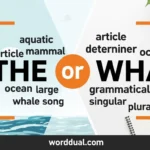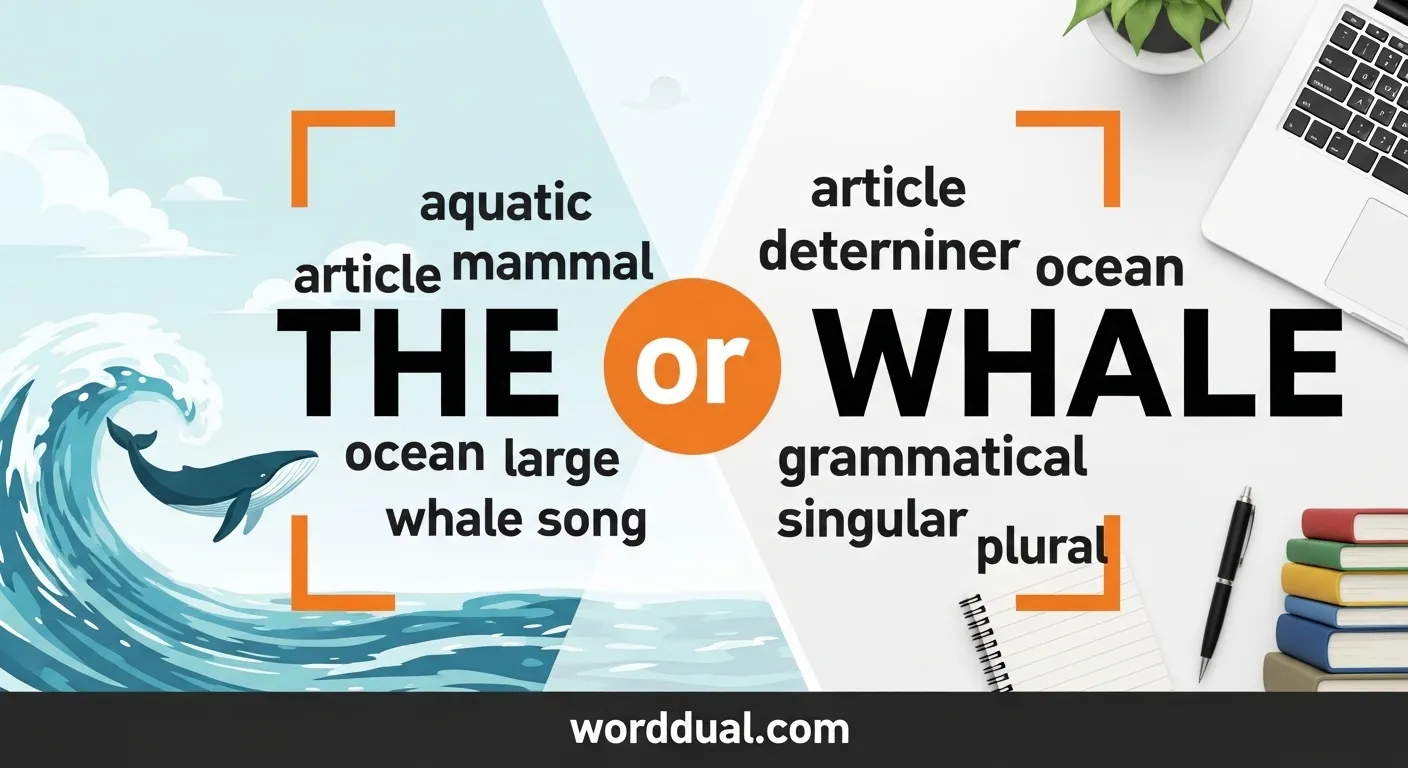
Have you ever typed something like the whale and wondered why your search showed results for the or whale? You’re not alone.
Many people search for the or whale because they are confused about sentence structure, grammar, or typing mistakes.
Sometimes it happens due to autocorrect.
Other times, it’s a misunderstanding of how English words connect.
This keyword usually reflects a deeper question:
👉 Should we use the, or, or both in a sentence?
👉 How do these words work when talking about something like a whale?
In simple terms, the is an article, and or is a conjunction. They serve very different roles. Mixing them incorrectly can change the meaning of a sentence or make it unclear.
This guide will clear up the confusion. You’ll learn the meaning, origin, correct usage, and common mistakes. By the end, you’ll know exactly when to use the, when to use or, and how to avoid errors with words like whale.
The or Whale – Quick Answer
Short Answer:
- The whale is correct when talking about a specific whale.
- The or whale is usually incorrect unless used in a choice sentence.
Examples:
- ✅ The whale is swimming in the ocean.
- ✅ Do you want to see the dolphin or whale?
- ❌ The or whale is big.
Simple Rule:
- Use the → for a specific thing
- Use or → to show a choice
The Origin of The or Whale
To understand this confusion, let’s break it into parts:
1. The
- Comes from Old English þe
- Used to point to something specific
- Example: the sun, the ocean, the whale
2. Or
- Comes from Old English oþþe
- Used to show a choice between options
- Example: tea or coffee
3. Whale
- Comes from Old English hwæl
- Refers to a large sea animal
Why Confusion Happens:
- Typing errors (missing words)
- Voice search mistakes
- Lack of grammar clarity
- Mixing sentence structures
So, the or whale is not a standard phrase. It’s usually a grammar confusion or search error.
British English vs American English Spelling
Good news! There is no spelling difference between British and American English for these words.
| Word | British English | American English | Meaning |
| The | The | The | Definite article |
| Or | Or | Or | Conjunction |
| Whale | Whale | Whale | Sea animal |
Key Insight:
- The confusion is not about spelling
- It is about grammar and usage
Which Spelling Should You Use?
Even though spelling is the same, usage depends on your audience.
Use the whale when:
- Writing formally
- Talking about a specific whale
- Writing for global audiences
Use or when:
- Giving choices
- Comparing options
Audience-Based Advice:
- 🇺🇸 US Audience → Keep sentences simple and direct
- 🇬🇧 UK Audience → Same rules apply
- 🌍 Global Audience → Use clear grammar, avoid confusion
Pro Tip:
Always ask:
👉 Am I pointing to something specific or giving a choice?
Common Mistakes with The or Whale
Here are the most common errors people make:
❌ Mistake 1: Mixing article and conjunction
- Wrong: The or whale is big
- Correct: The whale is big
❌ Mistake 2: Missing subject clarity
- Wrong: Or whale is large
- Correct: The whale is large
❌ Mistake 3: Incorrect choice structure
- Wrong: The or whale do you like?
- Correct: Do you like the dolphin or the whale?
❌ Mistake 4: Overusing or
- Wrong: The whale or swims fast
- Correct: The whale swims fast
Quick Fix Tips:
- Use the for one thing
- Use or between two choices
- Never mix them randomly
The or Whale in Everyday Examples
Let’s see how these words appear in real life.
📧 Emails:
- Please choose the blue design or the whale logo.
📰 News:
- The whale was spotted near the coast.
📱 Social Media:
- Would you rather see dolphins or whales?
📄 Formal Writing:
- The whale is one of the largest mammals on Earth.
💬 Conversations:
- Do you want fish or whale meat?
The or Whale – Google Trends & Usage Data
This keyword is searched because of:
🔍 Search Intent:
- Grammar confusion
- Sentence correction
- Typing mistakes
🌍 Popular Regions:
- South Asia (Pakistan, India)
- USA (ESL learners)
- UK (students learning grammar)
📊 Usage Context:
- Educational searches
- English learning
- Writing correction
Key Insight:
People are not searching for the or whale itself.
They are searching to fix a sentence mistake.
Comparison Table: Keyword Variations
| Phrase | Correct? | Meaning | Example |
| The whale | ✅ Yes | Specific whale | The whale is huge |
| Whale | ✅ Yes | General reference | Whale is a mammal |
| Or whale | ⚠️ Rare | Choice context only | Fish or whale |
| The or whale | ❌ No | Incorrect phrase | — |
| Dolphin or whale | ✅ Yes | Comparison | Dolphin or whale? |
FAQs
1. What does the or whale mean?
It usually has no meaning. It is a grammar mistake or typing error.
2. Is the or whale correct English?
No. It is not grammatically correct.
3. When should I use the whale?
Use it when talking about a specific whale.
4. When should I use or?
Use or when giving choices between two things.
5. Why do people search for the or whale?
Because of confusion in grammar or typing errors.
6. Can or whale be correct?
Yes, but only in a choice sentence like:
Do you want fish or whale?
7. How can I avoid this mistake?
- Learn basic grammar rules
- Read your sentence again
- Check if you are showing a choice or a specific object
Conclusion
Understanding the or whale is really about understanding basic English grammar.
The confusion comes from mixing two different types of words:
articles and conjunctions. Once you know their roles, the mistake becomes easy to fix.
Remember this simple rule:
- Use the when talking about something specific
- Use or when giving a choice
Avoid combining them randomly, as in the or whale, because it creates unclear or incorrect sentences.
Instead, focus on building clear and meaningful phrases like the whale or dolphin or whale.
This small grammar fix can make a big difference in your writing.
Whether you are sending emails, posting on social media, or writing professionally, clarity matters.
By using the correct structure, you improve both readability and credibility.
Keep practicing, and soon these mistakes will disappear naturally from your writing.
Read More:
Cancelling or Canceling – Which Spelling is Correct?

I am Samuel Wright, a writer who loves helping people understand English grammar, spelling, and word usage clearly.