Many people search for Splenda or Stevia because they want a healthier sugar alternative.
With rising concerns about weight, diabetes, and overall health, artificial and natural sweeteners have become very popular.
When standing in a grocery store or reading food labels, people often see Splenda and stevia side by side and feel confused.
The confusion is simple but important. Both sweeteners are sugar-free, both are used in drinks and food, and both claim to be better than sugar.
However, they are not the same. One is artificial, while the other comes from a plant. Their taste, health effects, and best uses can differ.
This article clearly explains the difference between Stevia or Splenda. You will get a quick answer, learn their origins, see real-life examples, and understand which one suits your needs best.
By the end, you will be able to choose confidently based on health goals, taste, and daily use.
Splenda or Stevia – Quick Answer
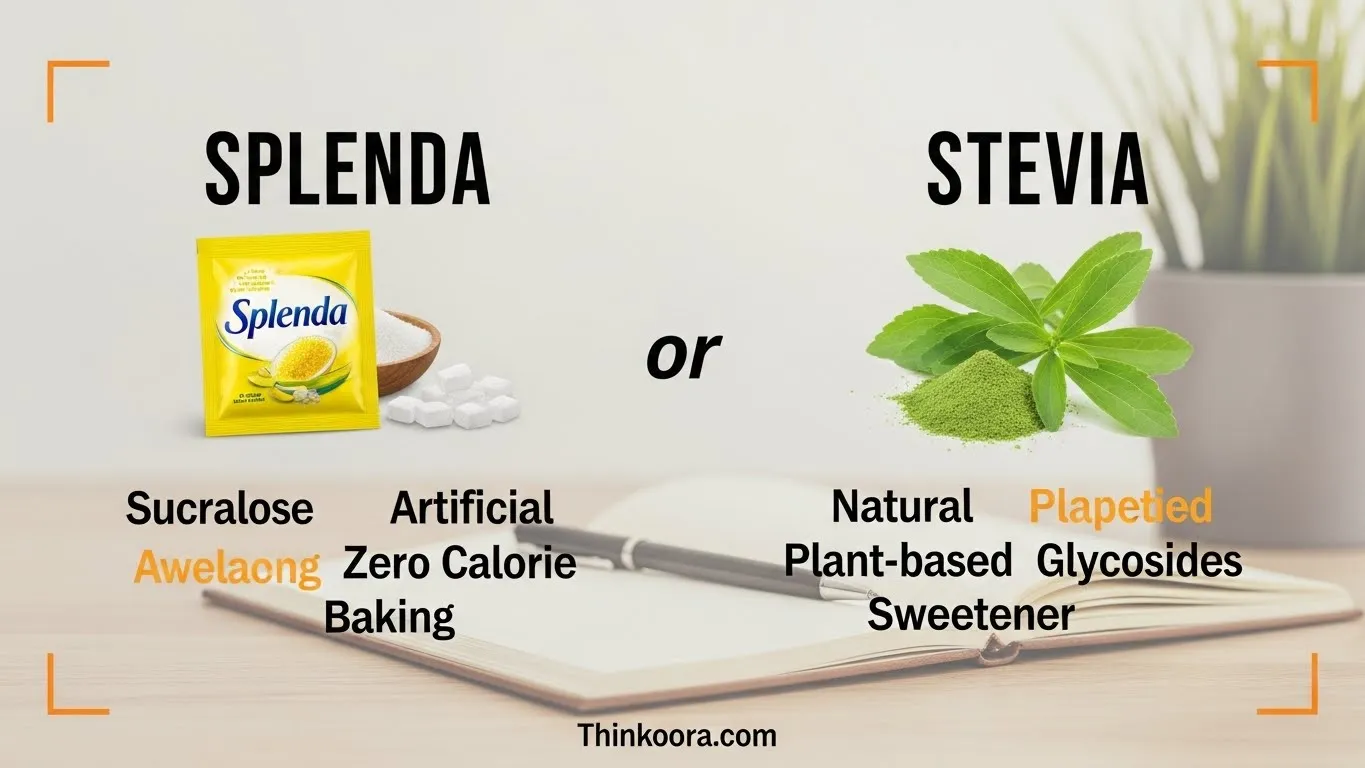
Splenda is an artificial sweetener made from sucralose.
Stevia is a natural sweetener made from stevia plant leaves.
Examples:
- Coffee with Splenda tastes closer to sugar.
- Herbal tea with stevia has a slight plant-like taste.
Both are calorie-free, but their sources and health impact differ.
The Origin of Splenda or Stevia
Splenda
Splenda was introduced in the 1990s. Its main ingredient is sucralose, which is made by changing sugar molecules. This process makes it very sweet without calories.
Stevia
Stevia comes from the Stevia rebaudiana plant. People in South America have used it for hundreds of years. Modern stevia products extract sweet compounds called steviol glycosides.
There are no spelling differences here. The confusion is about which product to choose, not spelling.
British English vs American English Spelling
There is no spelling difference between British and American English for these words.
| Term | British English | American English |
| Splenda | Splenda | Splenda |
| Stevia | Stevia | Stevia |
Both terms are brand or product names and stay the same worldwide.
Which Should You Use? Splenda vs Stevia
Your choice depends on your needs:
- 🇺🇸 US audience: Both are common and widely available.
- 🇬🇧 UK/Commonwealth: Stevia is often preferred for natural labeling.
- 🌍 Global use: Stevia is seen as more natural and widely accepted.
Choose Splenda if you want sugar-like taste.
Choose stevia if you want a plant-based option.
Here are clear, simple, SEO-friendly “Common Mistakes” for Splenda or Stevia, written in easy language (mobile-friendly):
Common Mistakes with Splenda or Stevia
Many people misunderstand how Splenda and stevia work. These are the most common mistakes and the correct facts.
❌ Thinking Splenda and Stevia Are the Same
✔ Splenda is artificial (made from sucralose).
✔ Stevia is natural (from plant leaves).
❌ Believing All Splenda Products Are 100% Sugar-Free
✔ Some Splenda packets contain fillers like maltodextrin, which add small carbs.
❌ Using Stevia Like Regular Sugar
✔ Stevia is much sweeter than sugar.
✔ Using too much causes a bitter taste.
❌ Assuming “Natural” Means No Side Effects
✔ Stevia is natural, but overuse may cause stomach discomfort in some people.
❌ Thinking Splenda Is Unsafe for Everyone
✔ Splenda is approved by food authorities and safe for most people when used in moderation.
❌ Ignoring Taste Differences
✔ Splenda tastes closer to sugar.
✔ Stevia may have a slight herbal aftertaste.
❌ Using the Wrong Sweetener for Baking
✔ Splenda handles high heat well.
✔ Stevia needs recipe adjustments when baking.
❌ Assuming Both Are Best for Weight Loss
✔ Both help reduce sugar intake, but diet quality still matters.
Stevia vs Splenda in Everyday Examples
Emails
- I use stevia instead of sugar in my tea.
News
- Many consumers are switching from sugar to stevia.
Social Media
- Coffee tastes better with Splenda for me!
Formal Writing
- The study compared Splenda and stevia as sugar alternatives.
Splenda or Stevia – Google Trends & Usage Data
Search trends show that:
- Splenda is popular in North America.
- Stevia is growing fast in Europe and Asia.
- Health-focused users search more for stevia.
- Taste-focused users often search for Splenda.
The keyword Splenda or stevia is commonly searched by diabetics, fitness users, and people on low-carb diets.
Comparison Table: Splenda vs Stevia
| Feature | Splenda | Stevia |
| Source | Artificial (sucralose) | Natural (plant-based) |
| Calories | 0 | 0 |
| Taste | Sugar-like | Slight herbal |
| Heat stable | Yes | Yes |
| Popular with diabetics | Yes | Yes |
| Clean-label friendly | No | Yes |
FAQs
1. Is Splenda worse than stevia?
Splenda is safe but artificial. Stevia is natural. Choice depends on preference.
2. Is stevia better for diabetes?
Yes, stevia does not raise blood sugar.
3. Does Splenda cause side effects?
Some people report bloating or headaches.
4. Can I bake with stevia?
Yes, but measurements differ from sugar.
5. Is Splenda natural?
No, it is chemically processed.
6. Which tastes more like sugar?
Splenda tastes closer to sugar.
7. Can children use stevia?
Yes, in small amounts.
Conclusion
The choice between Splenda or stevia depends on your health goals, taste preference, and lifestyle. Splenda offers a sugar-like taste and works well in baking and drinks.
However, it is an artificial sweetener. Stevia, on the other hand, comes from a plant and appeals to people who prefer natural products.
Both sweeteners are calorie-free and suitable for people with diabetes. The key difference lies in their source and taste.
If you want a clean-label, plant-based option, stevia is the better choice. If you want a taste closer to sugar, Splenda may work better for you.
Understanding these differences helps you make smarter food choices.
Once you know how Splenda or stevia works, choosing the right sweetener becomes easy and stress-free.
Read More:
ndeavors or Endeavours? Correct Spelling Explained (2026 Guide)
Onamonapia or Onomatopoeia? The Correct Spelling (2026)
Finalised vs Finalized 2026 – UK and US English Differences

Hi, I’m Ethan Hawkesley. I love writing and exploring the English language. On Thinkoora.com, I share tips, insights, and explanations to help readers understand words and writing more easily.