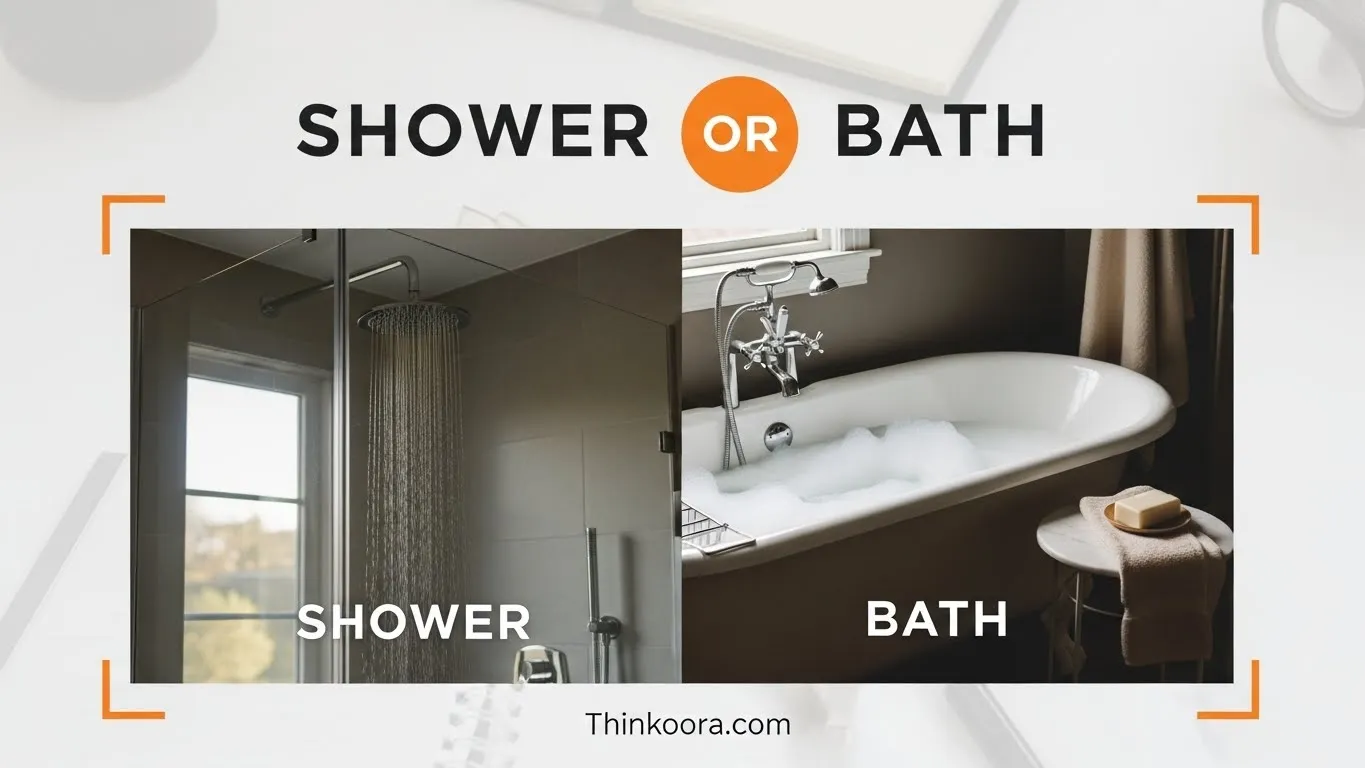
Many people search for shower or bath because they want to know which is healthier, faster, or more relaxing.
Choosing between a shower and a bath might seem simple, but it often causes confusion.
Some want to save water, others want relaxation, and some are concerned about hygiene.
This keyword is popular among health-conscious individuals, parents, and lifestyle bloggers.
People often wonder: Is a shower better for daily hygiene? or Does taking a bath relax more?
By understanding the differences, you can make an informed choice that suits your lifestyle, health needs, and time constraints.
This article gives a quick answer, explains the origin and usage of the terms, compares British vs American preferences, lists common mistakes, and shows real-life examples.
By the end, you will know exactly when to choose a shower or bath, saving time, water, and improving overall well-being.
Shower or Bath – Quick Answer
- Shower: Fast, water-efficient, and ideal for daily hygiene.
- Bath: Relaxing, slower, and ideal for stress relief and soaking.
Examples:
- Morning routine → Shower (quick and refreshing)
- Evening relaxation → Bath (soaking in warm water)
The Origin of Shower and Bath
- Shower: Comes from Old English scūr, meaning a short fall of rain. The term was applied to indoor water spray systems in the 19th century.
- Bath: From Old English bæð, meaning immersion in water. Baths have been used since ancient civilizations for hygiene and relaxation.
Both terms have stayed consistent in spelling, so confusion is more about usage than spelling.
British English vs American English Spelling
Both shower and bath have the same spelling in UK and US English.
| Term | British English | American English |
| Shower | Shower | Shower |
| Bath | Bath | Bath |
Usage differs slightly:
- UK: Taking a bath is more common; showers are sometimes shorter.
- US: Showers are more common than baths in daily routines.
Which Spelling Should You Use?
Since spelling does not differ, focus on audience context:
- 🇺🇸 US → Most prefer shower in conversation and daily routine
- 🇬🇧 UK → Bath is widely used, showers are often optional
- 🌍 Global → Use the term that fits the reader’s culture or daily habit
Common Mistakes with Shower or Bath
- ❌ Saying I will take a shower bath → ✔ Choose one: bath or shower
- ❌ Using bath for quick cleaning → ✔ Showers are better for fast hygiene
- ❌ Assuming showers use more water → ✔ Showers can save water if timed properly
- ❌ Confusing bath for spa or hot tub → ✔ Bath refers to personal immersion
Shower or Bath in Everyday Examples
Emails
- ✔ I’ll take a quick shower before the meeting.
News
- ✔ Daily showers reduce body odor, according to health experts.
Social Media
- ✔ Relaxing bath time after a long day!
Formal Writing
- ✔ Participants were advised to take showers to maintain hygiene.
Shower or Bath – Google Trends & Usage Data
The keyword “shower or bath” is widely searched globally, showing strong interest in health, hygiene, and lifestyle comparisons.
📊 Key Insights:
- United States: Searches lean heavily toward “shower”, reflecting the US preference for quick, daily cleaning routines.
- United Kingdom & Europe: “Bath” searches are more common, highlighting cultural habits of relaxation and evening routines.
- Asia & Australia: Interest in both terms is growing, often linked to wellness blogs, spa treatments, and home bathroom products.
🔎 Context of Searches:
- Health-conscious users search to compare hygiene and water usage.
- Lifestyle audiences look for relaxation, stress relief, and self-care routines.
- Parents and caregivers search for safety tips for children’s baths and showers.
📈 Trends Over Time:
- Summer months: Slight increase in showers, especially quick, refreshing routines.
- Winter months: Higher searches for baths, showing preference for warm, relaxing immersion.
📌 Takeaway:
Understanding search trends can help businesses, bloggers, and content creators target their audience effectively by providing tips, comparisons, and product recommendations for shower or bath.
Comparison Table: Shower vs Bath
| Feature | Shower | Bath |
| Speed | Quick | Slow |
| Water Usage | Less (if timed) | More |
| Relaxation | Moderate | High |
| Hygiene | High | Moderate |
| Ideal Time | Morning | Evening |
| Health Benefits | Refreshing | Stress relief, muscle relaxation |
FAQs
- Which is healthier, shower vs bath?
- Showers are more hygienic; baths are relaxing.
- Do showers save water?
- Yes, especially if under 5 minutes.
- Is a bath better for stress relief?
- Yes, soaking in warm water reduces tension.
- Can I shower every day and take a bath weekly?
- Yes, this is a common healthy routine.
- Do baths or showers clean better?
- Showers remove dirt and sweat faster; baths are for soaking.
- Is it safe to take hot baths?
- Generally yes, but avoid very hot water if you have heart issues.
- Which is more popular globally, bath vs shower?
- Showers dominate in the US and Asia; baths are popular in the UK and Europe.
Conclusion
Choosing between a shower or bath depends on your lifestyle, health, and time. Showers are ideal for quick hygiene, saving water, and morning routines.
Baths are perfect for relaxation, evening stress relief, and muscle recovery.
Understanding the differences helps you plan your routine effectively. For daily cleaning, a shower is practical and efficient.
For relaxation, a bath provides mental and physical comfort. Both are essential for personal care, and choosing the right option enhances your health, well-being, and daily comfort.
By knowing when and why to use a shower or bath, you make smarter, healthier choices in your everyday life.
Read More:
Finalised vs Finalized 2026 – UK and US English Differences

I am Samuel Wright, a writer who loves helping people understand English grammar, spelling, and word usage clearly.