Many students, researchers, marketers, and professionals often feel confused about quantitative or qualitative.
These two terms are used very often in education, research, surveys, data analysis, and business reports.
Because both are related to data and analysis, people are not always sure which one to use and when. That is why searches for quantitative or qualitative are so common.
The confusion usually starts when someone has to choose a research method or describe data.
Should the data be numbers or words? Should it measure quantity or describe quality?
Using the wrong term can make a report unclear or incorrect, especially in academic writing and professional documents.
This article solves that confusion in a simple way.
You will learn the clear difference between quantitative and qualitative, their origin, spelling rules, British vs American usage, common mistakes, real-life examples, and usage trends.
By the end, you will know exactly when to use quantitative and when to use qualitative, with confidence.
Quantitative vs Qualitative – Quick Answer
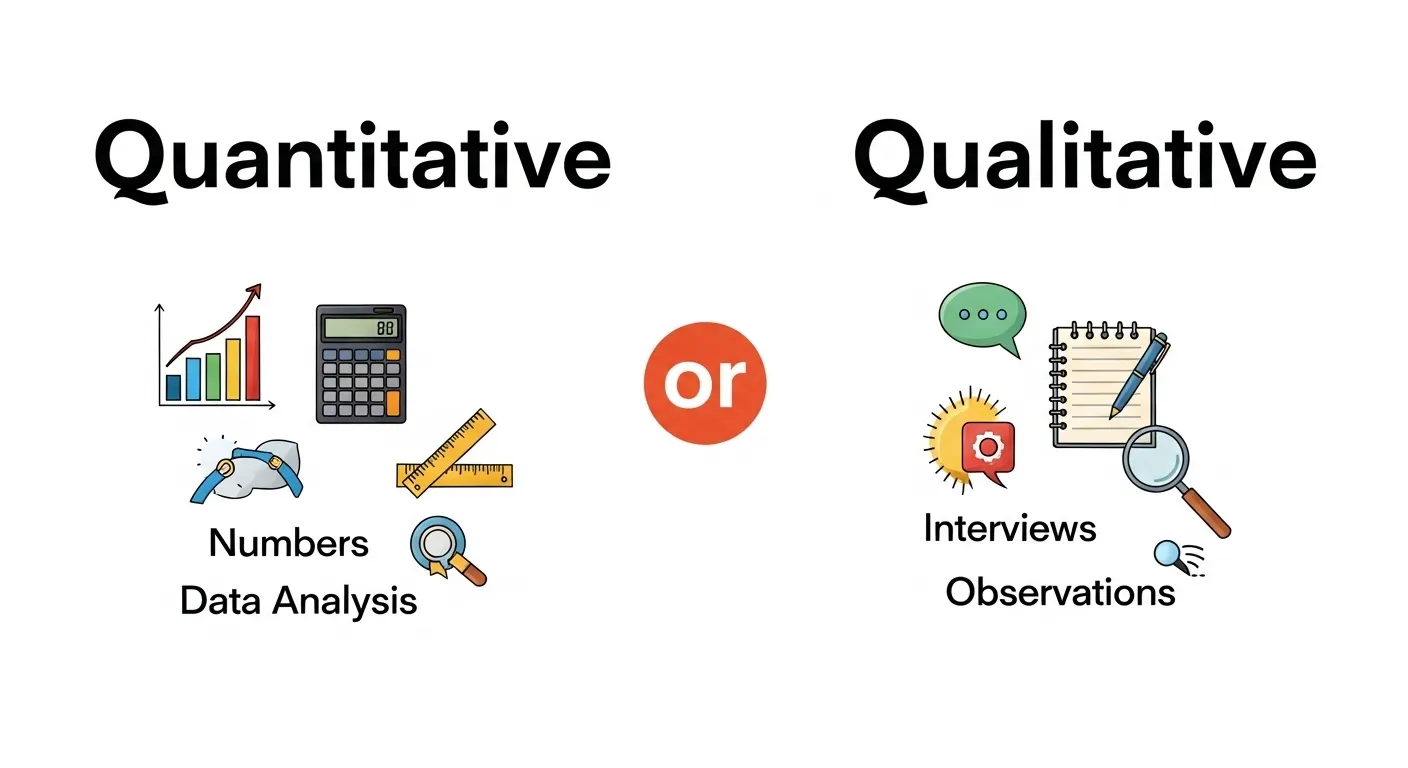
Quantitative = data based on numbers
Qualitative = data based on descriptions or qualities
Examples:
- Quantitative: The survey had 200 responses.
- Qualitative: The feedback described users as happy and satisfied.
👉 If you count it, it’s quantitative.
👉 If you describe it, it’s qualitative.
The Origin of Quantitative or Qualitative
Both words come from Latin.
- Quantitative comes from quantitas, meaning quantity or amount.
- Qualitative comes from qualitas, meaning quality or nature.
These terms entered English through academic and scientific writing. Over time, they became standard terms in research, education, psychology, business, and social sciences.
There are no spelling variations caused by history. The difference between the words exists because they describe two different types of data, not because of regional spelling changes.
British English vs American English Spelling
There is no spelling difference between British and American English.
| Term | British English | American English |
| Quantitative | ✅ Correct | ✅ Correct |
| Qualitative | ✅ Correct | ✅ Correct |
Both spellings and meanings are the same worldwide.
Which Spelling Should You Use?
You don’t need to worry about spelling by region. Instead, focus on meaning.
- 🇺🇸 US audience → Use based on data type
- 🇬🇧 UK audience → Use based on data type
- 🌍 Global audience → Same rule applies
Choose quantitative for numbers and measurements.
Choose qualitative for opinions, feelings, and descriptions.
Common Mistakes with Quantitative or Qualitative
❌ Frequent Errors
- Using quantitative for opinions
- Using qualitative for numbers
- Mixing both terms in the same sentence incorrectly
- Thinking one is better than the other
✅ Correct Usage
- Use quantitative for statistics and counts
- Use qualitative for interviews and observations
💡 Tip:
Ask yourself: Is this about how many, or about how it feels?
Quantitative or Qualitative in Everyday Examples
📧 Emails
- We collected quantitative data from the survey.
📰 News
- The report includes qualitative interviews with experts.
📱 Social Media
- Poll results are quantitative, comments are qualitative.
📄 Formal Writing
- This study uses both quantitative and qualitative methods.
Quantitative or Qualitative – Google Trends & Usage Data
Search trends show:
- Quantitative or qualitative is popular among:
- Students
- Researchers
- Business analysts
- Searches are high in:
- United States
- United Kingdom
- Canada
- Australia
- Most users search this phrase to:
- Choose a research method
- Understand data types
- Prepare academic assignments
This confirms strong educational and professional intent behind the keyword.
Comparison Table: Quantitative vs Qualitative
| Feature | Quantitative | Qualitative |
| Data type | Numbers | Words |
| Focus | Amount | Meaning |
| Examples | Age, score, sales | Opinions, feelings |
| Tools | Surveys, statistics | Interviews, observations |
| Usage | Charts, graphs | Descriptions, themes |
FAQs
1. What is the main difference between quantitative and qualitative?
Quantitative uses numbers; qualitative uses descriptions.
2. Can a study use both?
Yes. This is called mixed-methods research.
3. Is quantitative data more accurate?
Not always. Both serve different purposes.
4. Are interviews qualitative or quantitative?
Usually qualitative.
5. Are surveys quantitative?
Mostly quantitative, but open questions are qualitative.
6. Which one is better?
Neither. It depends on your goal.
7. Are these terms used worldwide?
Yes. They are standard global terms.
Conclusion
The confusion between quantitative or qualitative is very common, but the difference is actually simple.
Quantitative data focuses on numbers, measurements, and counts. Qualitative data focuses on meaning, experience, and description.
Neither term is better than the other—they simply serve different purposes.
There are no spelling differences between British and American English, which makes usage easier for global audiences.
The key is to choose the word that matches your data type. If you are measuring or counting, use quantitative.
If you are describing thoughts, feelings, or experiences, use qualitative.
Understanding this difference helps you write clearer reports, choose the right research method, and communicate professionally.
Once you master this concept, your academic and professional writing becomes more precise and confident.
Read More:
Wisk or Whisk – Which Spelling Is Correct?

I am Samuel Wright, a writer who loves helping people understand English grammar, spelling, and word usage clearly.