Have you ever paused while writing, overlaid or overlayed and wondered which one is correct? You’re not alone.
Many writers, editors, and even software users get confused about these two forms.
The difference seems subtle, yet it can affect the professionalism of your writing.
This confusion usually arises because English has many irregular verbs and variant spellings between British and American English.
Overlay is one of those verbs that can take different past forms, and knowing which to use depends on context, audience, and even location.
People search for overlaid or overlayed because they want quick clarity for emails, reports, coding documentation, or academic writing.
This article solves that problem by giving you straightforward explanations, historical context, spelling rules, common mistakes, and examples you can use today.
By the end, you’ll confidently choose the right form without second-guessing.
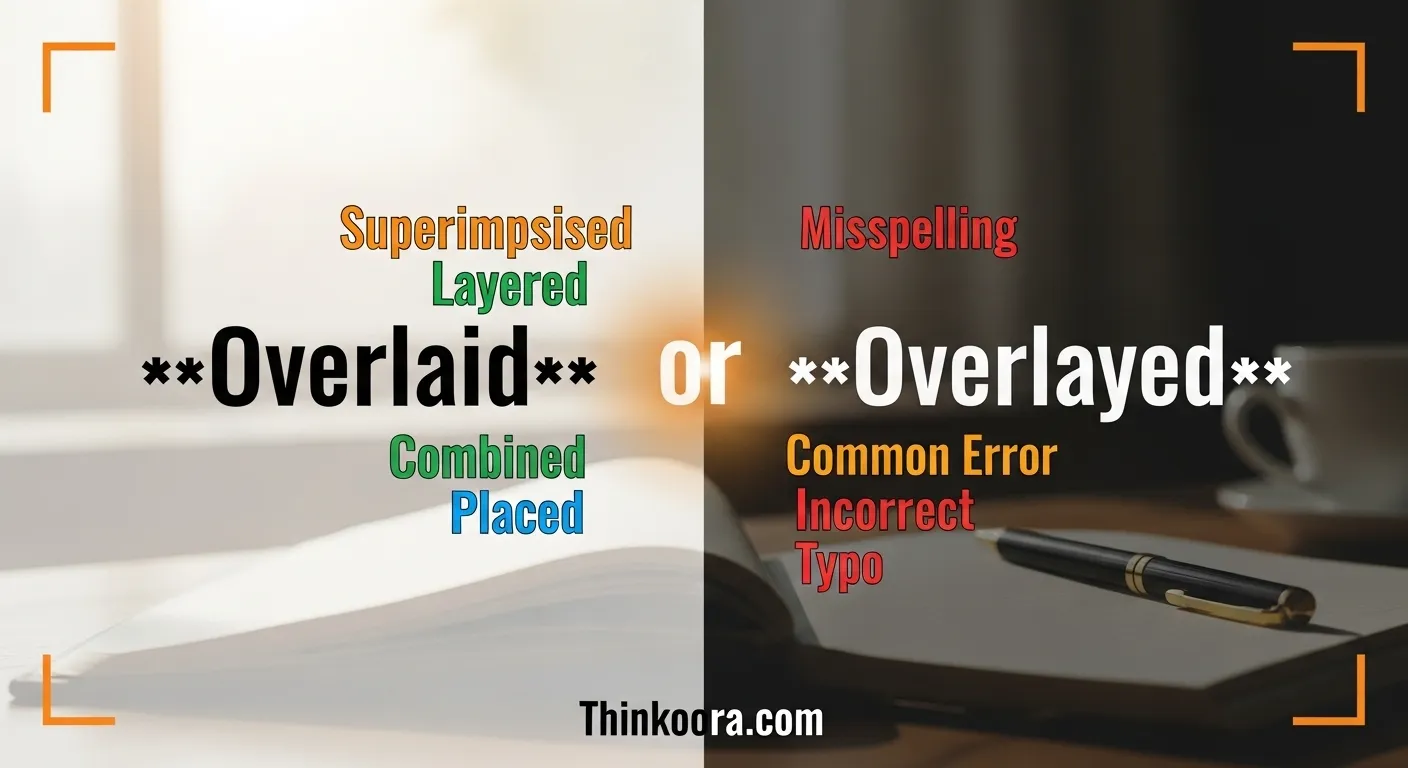
Overlaid or Overlayed – Quick Answer
- Correct Past Tense: Overlaid
- Alternative (less common) Past Tense: Overlayed
- Usage: Both can be technically correct, but overlaid is far more widely accepted, especially in formal writing.
Examples:
- The designer overlaid a transparent texture on the background.
- She overlaid the map with the latest traffic data.
- (Less common) He overlayed the video footage with subtitles.
✅ Quick tip: Use overlaid in professional or formal contexts, and overlayed may appear in casual writing or software documentation.
The Origin of Overlaid / Overlayed
The verb overlay comes from combining over + lay, meaning to place something on top of another. This verb dates back to Middle English, around the 14th century. Over time, its past tense evolved.
- Historical spelling: Early texts sometimes used overlayed, reflecting the regular pattern of adding -ed to verbs.
- Standardization: Modern English has largely standardized overlaid as the preferred past tense.
This evolution mirrors other irregular verbs, like lay → laid or pay → paid, where the irregular form became dominant in formal usage.
British English vs American English Spelling
Both British and American English prefer overlaid, but minor differences in spelling rules can confuse writers.
| Form | British English | American English | Notes |
| Past Tense | overlaid | overlaid | Preferred in both. |
| Alternative | overlayed | overlayed | Less common; sometimes used in tech or casual writing. |
| Present Tense | overlay | overlay | No difference. |
| Continuous | overlaying | overlaying | Same for both. |
💡 Tip: In digital design, software manuals, and user guides, you might see overlayed, but traditional writing favors overlaid.
Which Spelling Should You Use?
Choosing the right form depends on your audience:
- US audience: Stick with overlaid. It’s widely accepted in academic, professional, and formal writing.
- UK / Commonwealth audience: Overlaid is preferred, but overlayed is sometimes seen in casual or tech contexts.
- Global / Digital content: Use overlaid for consistency, especially if you want SEO-friendly, formal content.
Rule of thumb: When in doubt, choose overlaid.
Common Mistakes with Overlaid / Overlayed
Writers often make the following errors:
- Using overlayed in formal reports (less professional).
- Confusing overlaid with overlying, which is a present participle.
- Writing over layed (two words) – incorrect.
- Using overlaid inconsistently in the same text.
Corrected Examples:
- ❌ Incorrect: He overlayed the chart on the dashboard.
- ✅ Correct: He overlaid the chart on the dashboard.
- ❌ Incorrect: The designer over layed textures.
- ✅ Correct: The designer overlaid textures.
Overlaid / Overlayed in Everyday Examples
Here’s how you might see it in different contexts:
Emails / Professional Writing:
- I’ve overlaid the sales report with the new figures for review.
News / Media:
- The journalist overlaid graphics on the map to highlight affected areas.
Social Media:
- Just overlaid my photo with a filter. Looks amazing!
Technical / Software Documentation:
- You can overlayed multiple layers in this version of the app. (less formal)
Overlaid or Overlayed – Google Trends & Usage Data
Google Trends shows that overlaid is searched far more than overlayed worldwide.
- Top countries searching for overlaid: US, UK, Canada, Australia.
- Top industries: Digital design, GIS mapping, video editing, academic writing.
Observation: Overlayed appears occasionally in forums and casual tutorials but never dominates formal writing.
Comparison Table – Keyword Variations
| Keyword | Usage Level | Context/Notes |
| Overlaid | High | Formal, professional, preferred everywhere |
| Overlayed | Low | Informal, casual, software documentation |
| Overlaying | Medium | Present participle, common in design and editing |
| Overlays | Medium | Noun or verb, plural form, general usage |
FAQs
1. Is overlayed wrong?
Not wrong, but less formal. Overlaid is preferred in professional writing.
2. Can I use overlaid for software tutorials?
Yes, it’s accepted and often sounds more polished than overlayed.
3. Is overlaid only British English?
No. It’s standard in both British and American English.
4. Can overlaid be used as an adjective?
Yes. Example: The overlaid image looked professional.
5. How do I choose between overlaid and overlayed?
Use overlaid for formal writing. Use overlayed only in casual or informal digital content.
6. Is overlayed common in spoken English?
Rare. People usually say overlaid even when speaking.
7. Can overlaid be used in coding or graphic design?
Absolutely. Example: The map was overlaid with traffic information.
Conclusion
In summary, the past tense of overlay is almost always overlaid, with overlayed being a rare, informal variant.
This distinction is crucial for writers, designers, software developers, and students who want to maintain clarity and professionalism.
Remember these key points:
- Overlaid is preferred in British, American, and global English.
- Overlayed appears in casual writing or digital tutorials but is less standard.
- Consistency is important: pick one form and stick with it throughout your document.
- Understanding the origin and usage can help you write confidently and avoid embarrassing mistakes.
By using overlaid consistently, you ensure your writing is professional, polished, and universally understood.
Whether you’re drafting emails, creating design documents, or writing academic papers, overlaid will always be the safe choice.
Read More:
Bearable or Bareable – Which Spelling Is Correct?
Sunk or Sank: What’s the Correct Past Tense of Sink?

I am Samuel Wright, a writer who loves helping people understand English grammar, spelling, and word usage clearly.