Many English learners and writers get confused between onamonapia or onomatopoeia.
This is a common issue because the word is long, unusual, and often misheard or misspelled.
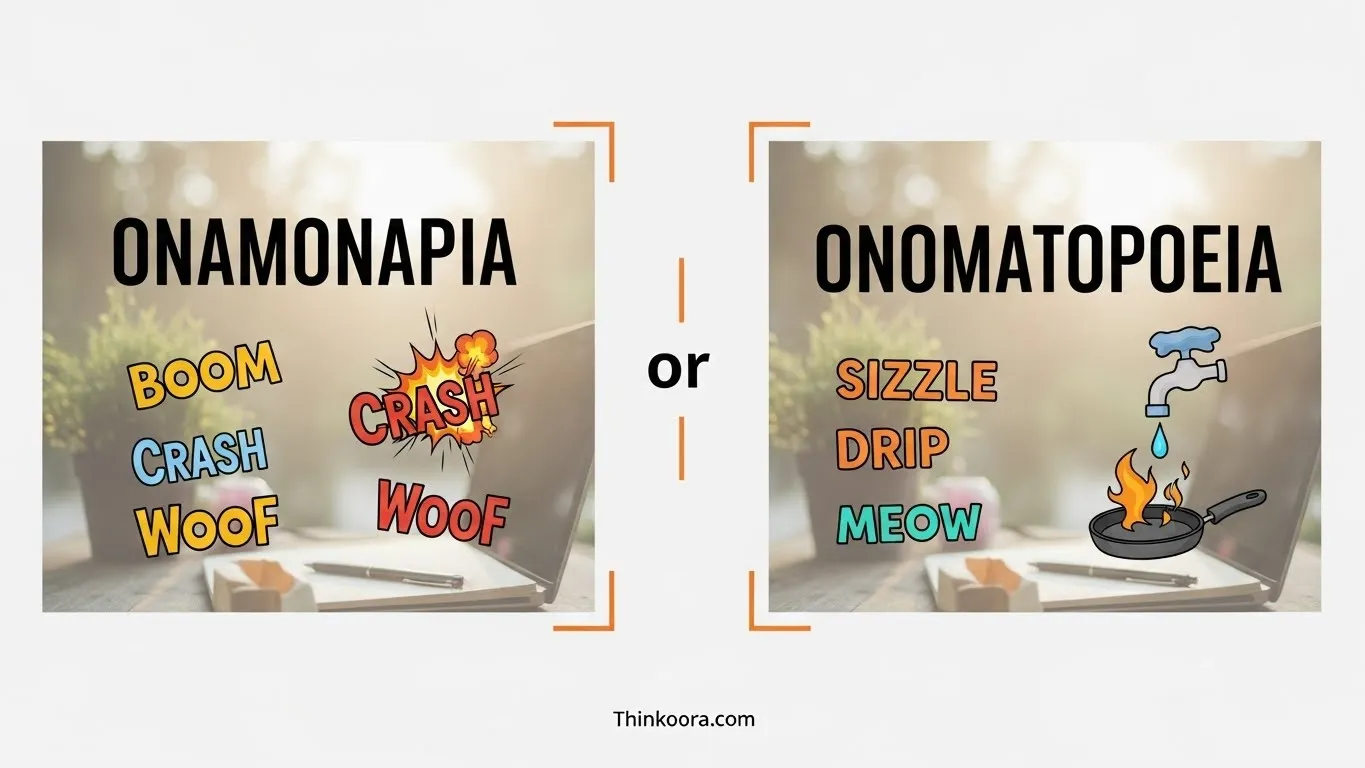
The correct spelling is onomatopoeia, which refers to words that imitate natural sounds, like buzz, clang, or sizzle.
Misusing or misspelling the word can make writing appear less professional, especially in essays, literature, and teaching materials.
People search for onamonapia or onomatopoeia because they want clarity on the correct spelling and usage.
This article provides a complete guide, covering the meaning, origin, British vs American English spelling, common mistakes, examples in daily life, Google Trends insights, comparison tables, and FAQs.
By the end, you will confidently know how to use onomatopoeia correctly in your writing and speech.
Onamonapia or Onomatopoeia – Quick Answer
- Onamonapia → ❌ Incorrect
- Onomatopoeia → ✅ Correct spelling
Examples
- The word buzz is an example of onomatopoeia.
- Comic books often use onomatopoeia like “bang” or “pow” to illustrate sounds.
Tip: Always use onomatopoeia. Onamonapia is a common typo or mispronunciation.
The Origin of Onomatopoeia
The term comes from the Greek words:
- “onoma” meaning name
- “poiein” meaning to make or create
Onomatopoeia literally means the creation of a name (word) from a sound. It has been used in English since the 16th century to describe words that imitate natural sounds. Over time, the unusual spelling has caused confusion, leading to frequent misspellings like onamonapia.
British English vs American English Spelling
Interestingly, onomatopoeia has no alternative spellings in British or American English. Both regions use onomatopoeia. Misheard forms like onamonapia are incorrect in any English variant.
Comparison Table
| Spelling | British English | American English | Notes |
| onamonapia | ❌ Incorrect | ❌ Incorrect | Typo or mispronunciation |
| onomatopoeia | ✅ Correct | ✅ Correct | Standard spelling worldwide |
Key Point: The confusion is not about British vs American English; it is about typos and pronunciation errors.
Which Spelling Should You Use?
Always use onomatopoeia in all forms of writing: academic essays, creative writing, journalism, comics, and social media. Avoid using onamonapia, even informally.
Examples
- Correct: The poet used onomatopoeia to describe the storm.
- Incorrect: The poet used onamonapia to describe the storm.
Professional Tip: Spell checkers often flag onamonapia, but manually confirming onomatopoeia is always safer.
Common Mistakes with Onomatopoeia
Misspelling
- onamonapia, onomatapia, onomatopoea → all incorrect
Mispronunciation
- Pronounced incorrectly as on-a-mona-pee-ah instead of on-uh-mat-uh-PEE-uh
Confusing meaning
- Onomatopoeia refers only to words that imitate sounds. Don’t use it for general descriptive words.
Grammar errors
- Correct: The word buzz is an example of onomatopoeia.
- Incorrect: The word buzz is an onamonapia.
Onomatopoeia in Everyday Examples
Emails and Writing
- Use onomatopoeia to make your children’s stories more engaging.
News and Media
- The article describes the thunder with vivid onomatopoeia, like “crash” and “boom.”
Social Media
- This comic is full of onomatopoeia: “bam!”, “pow!”, and “whack!”
Formal Writing
- Shakespeare frequently employed onomatopoeia to enhance the auditory imagery of his plays.
Onamonapia or Onomatopoeia – Google Trends & Usage Data
Insights
- High search volume worldwide from ESL learners, students, and writers
- Many users search for onamonapia mistakenly, reflecting common spelling confusion
- Onomatopoeia is universally accepted and used in both British and American English
Popularity by Country
- USA → widespread use in literature and education
- UK, Canada, Australia → used in poetry, books, and teaching materials
- ESL learners → common errors in spelling and pronunciation
Observation: Awareness of correct spelling is essential for professional writing and academic work.
Onamonapia vs Onomatopoeia Comparison Table
| Spelling | Correctness | Example Usage | Notes |
| onamonapia | ❌ Incorrect | N/A | Common typo |
| onomatopoeia | ✅ Correct | The word “clang” is an example of onomatopoeia. | Standard, correct form worldwide |
Frequently Asked Questions (FAQs)
1. Is onamonapia correct?
No. The correct spelling is onomatopoeia.
2. How do you pronounce onomatopoeia?
It is pronounced on-uh-mat-uh-PEE-uh.
3. What does onomatopoeia mean?
It refers to words that imitate natural sounds, like buzz, clang, or sizzle.
4. Are there regional spelling differences?
No, onomatopoeia is spelled the same in British and American English.
5. Can onomatopoeia be used in formal writing?
Yes, it is widely used in literature, journalism, and educational materials.
6. How do I remember the correct spelling?
Break it into parts: ono-mato-poe-ia to help visualize the correct letters.
7. Are comic books full of onomatopoeia?
Yes, they often use onomatopoeic words like “bang,” “pow,” or “crash” to represent sounds visually.
Conclusion
The correct spelling is onomatopoeia, not onamonapia. Onomatopoeia refers to words that imitate sounds, enhancing writing, literature, and storytelling.
Understanding the correct spelling and pronunciation is essential for students, writers, and professionals. There is no difference between British and American English in this case.
Always use onomatopoeia in essays, creative writing, social media, and formal communication.
Avoid common mistakes like misspelling or mispronunciation. By following these guidelines, your writing will be accurate, professional, and engaging, and you will confidently know when and how to use onomatopoeia in any context.
Read More:
Lolly or Lollie: Stop the Spelling Confusion(2026)
Ark or Arc: What’s the Difference? Usage, Examples

I’m Daniel Whitmore, a content writer who focuses on English grammar, spelling mistakes, and word usage. I write clear, simple, and helpful articles to make English easier for students, writers, and everyday readers.