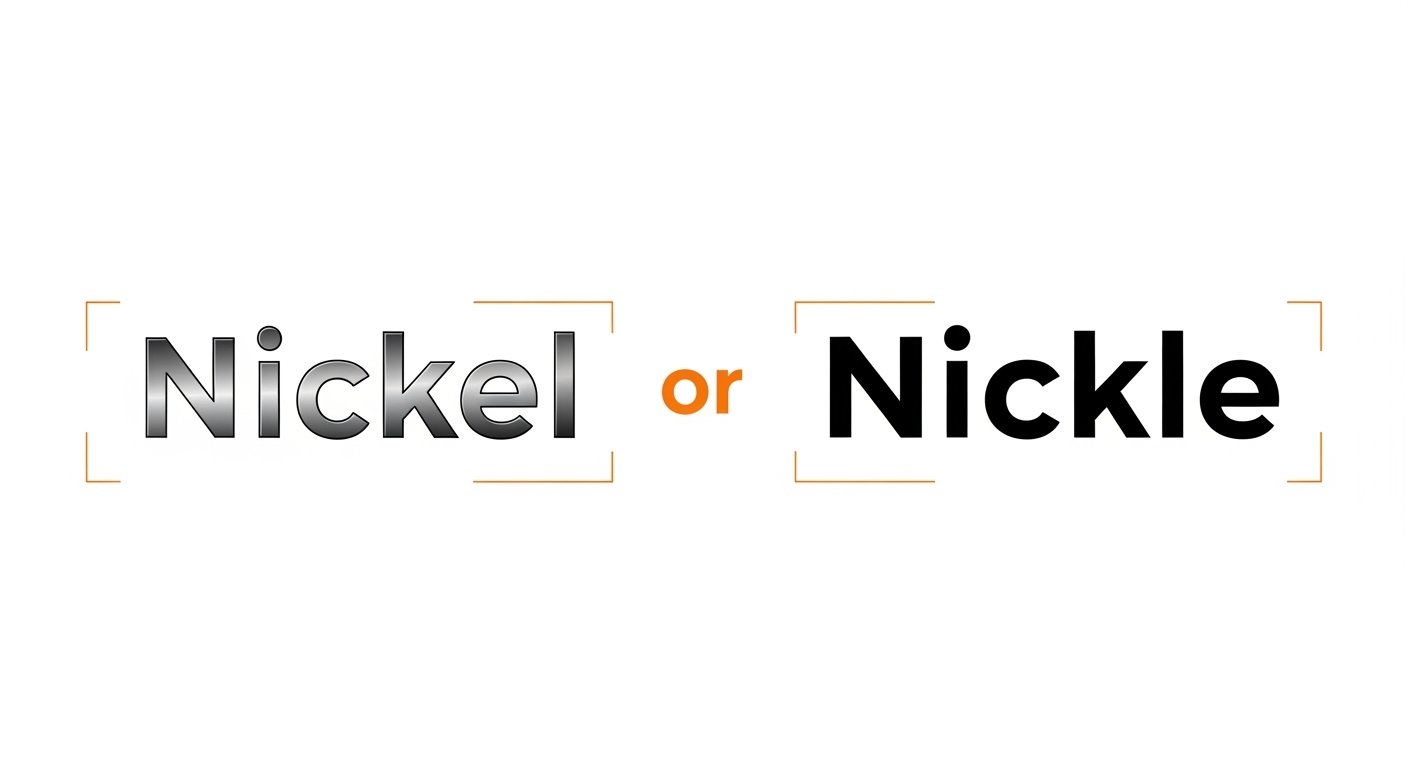
Are you confused whether to spell it nickel or nickle?
You’re not alone. Many people search online for this question because both spellings appear in texts, but only one is technically correct.
The confusion arises from historical spelling variations, regional differences, and even typing mistakes.
Understanding the correct spelling is important for students, writers, journalists, and anyone working with coins, metals, or chemistry.
Whether you are writing an article, sending an email, or publishing content online, using the right form ensures clarity and professionalism.
In this guide, we’ll answer the question quickly, explore the origin of the word, compare British and American spellings, highlight common mistakes, and show real-life usage examples. By the end, you’ll know exactly which spelling to use and why it matters.
Nickel or Nickle – Quick Answer
The correct spelling is nickel.
- Nickel is the standard spelling in both American and British English.
- Nickle is considered a common misspelling.
- Example:
- Correct: The coin is made of nickel.
- Incorrect: The coin is made of nickle.
Remember, nickle is widely recognized as a typo, so always use nickel in professional and formal writing.
The Origin of Nickel or Nickle
The word nickel comes from the German word Kupfernickel, which means false copper. Miners used it to describe a mineral that looked like copper but didn’t yield any valuable copper when smelted.
- 1750s: German miners called the ore Kupfernickel.
- Late 1800s: English speakers shortened it to nickel.
- Nickle has no historical basis; it likely appeared due to phonetic spelling or typos.
So, the correct form has historical and linguistic backing, while the alternative is just a modern mistake.
British English vs American English Spelling
Unlike many words where British and American English differ, nickel is spelled the same way in both.
| Feature | American English | British English |
| Correct Spelling | nickel | nickel |
| Common Mistake | nickle | nickle |
| Usage | Coins, metals, chemistry | Coins, metals, chemistry |
| Examples | A nickel costs five cents. | The statue is coated with nickel. |
✅ Key point: Use nickel universally to avoid errors.
Which Spelling Should You Use?
- United States: Always use nickel.
- United Kingdom & Commonwealth countries: Nickel is correct.
- Global audience: Stick to nickel for clarity.
Avoid nickle in any professional, educational, or online content. Most style guides, including Oxford and Merriam-Webster, list nickel as the only correct spelling.
Common Mistakes with Nickel or Nickle
Here are frequent mistakes and how to fix them:
- Misspelling: The coin is made of nickle. → Correct: The coin is made of nickel.
- Mispronunciation leading to spelling errors: Nick-le instead of Nick-el.
- Typing errors in formal writing: Emails, blogs, or reports sometimes have nickle due to autocorrect or haste.
- Confusing it with nickelodeon – remember, the metal’s spelling is always nickel.
Tip: Always double-check when writing about coins or chemistry.
Nickel or Nickle in Everyday Examples
Emails:
- Correct: Please use a nickel-plated component in the device.
- Incorrect: Please use a nickle-plated component in the device.
News Articles:
- Correct: The statue is coated with nickel to prevent corrosion.
Social Media Posts:
- Correct: Found a shiny nickel on the street today!
- Incorrect: Found a shiny nickle on the street today!
Formal Writing:
- Always use nickel in scientific or educational content.
Nickel or Nickle – Google Trends & Usage Data
Google Trends shows that nickel is overwhelmingly more searched than nickle.
- United States: nickel searches 95% higher than nickle.
- United Kingdom: nickel preferred in academic and news content.
- Global: nickle appears mostly in informal discussions or typing errors.
💡 Insight: Using nickel improves credibility, SEO ranking, and readability.
Keyword Comparison Table
| Variation | Status | Example |
| nickel | ✅ Correct | The coin is made of nickel. |
| nickle | ❌ Incorrect | The coin is made of nickle. |
FAQs
1. Is nickle ever correct?
No, nickle is always a misspelling. Only nickel is correct.
2. Why do people write nickle?
Phonetic spelling and typing errors are the main reasons.
3. Does the spelling differ in chemistry?
No. In chemical context, nickel (Ni) is universal.
4. Is nickel used in coins only?
No, it refers to the metal, alloys, coins, plating, and chemical compounds.
5. How do I remember the correct spelling?
Think of nickel as the mineral from Germany: Kupfernickel → nickel.
6. Can I use nickle in casual writing?
Even in casual contexts, nickel is recommended to avoid errors.
7. Are there any brand names using nickle?
Some outdated or local brands might, but professionally it’s incorrect.
Conclusion
The spelling debate between nickel or nickle is simpler than it seems.
Only nickel is correct and recognized worldwide. Nickle is a common typo without historical or linguistic backing.
For writers, students, professionals, and global audiences, sticking to nickel ensures clarity and credibility.
Use it in emails, articles, social media, and formal writing.
Remember the origin from Kupfernickel and the standardization across British and American English.
By following these guidelines, you’ll never second-guess your spelling again, and your content will appear polished and professional.
✅ Key Takeaway: Always use nickel, avoid nickle, and apply this consistently across all platforms and writing.

I am Samuel Wright, a writer who loves helping people understand English grammar, spelling, and word usage clearly.