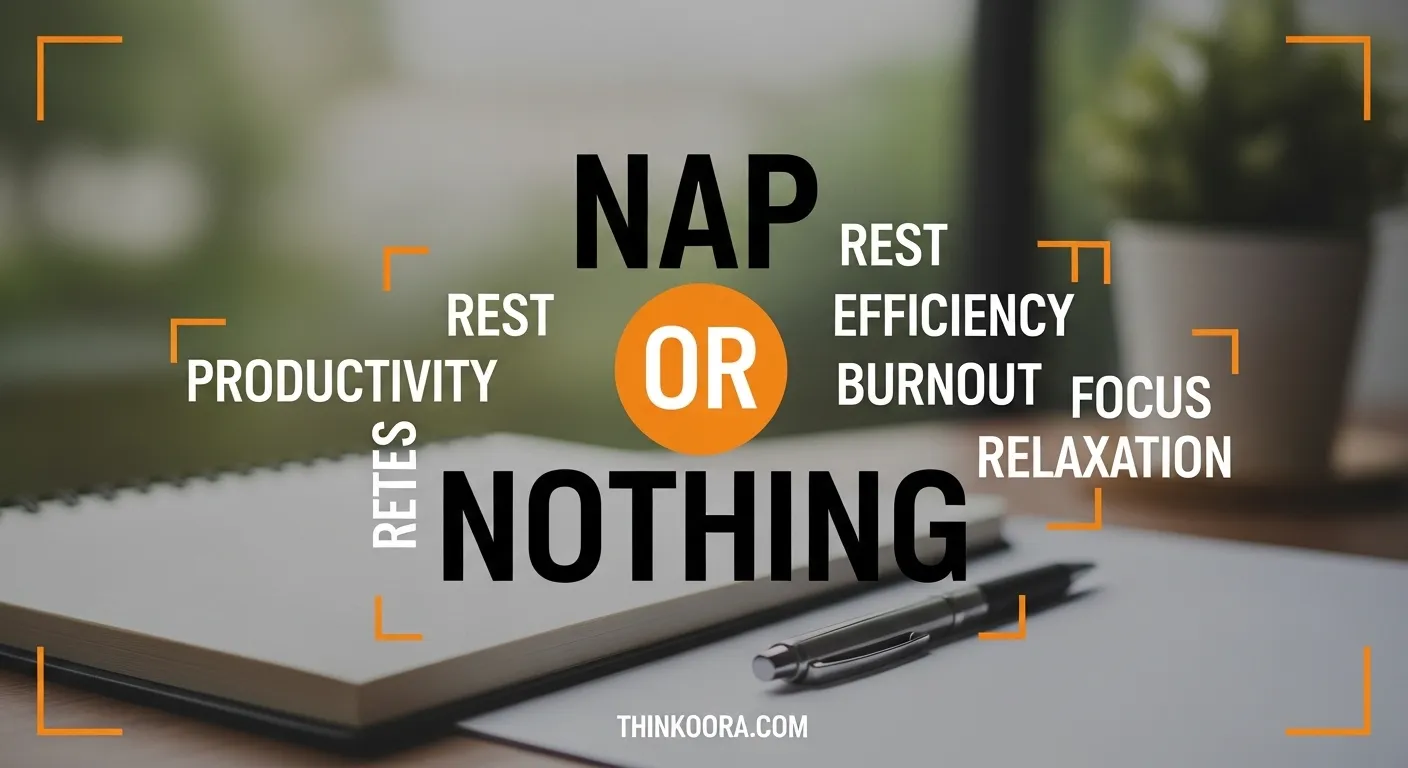
Many English learners and native speakers search for nap or nothing because they hear this phrase in conversations, social media, or casual speech and feel unsure about its meaning.
At first glance, the phrase looks simple, but it can be confusing. Is it an idiom? Does it have a fixed meaning? Or is it just informal speech?
People often come across nap or nothing when someone is talking about rest, energy, or productivity.
It is commonly used to express an extreme choice either taking a short sleep or doing nothing at all.
Because the phrase sounds informal, many learners wonder whether it is correct, where it comes from, and if it can be used in writing.
This article clears that confusion.
You will learn the exact meaning of nap or nothing, its origin, how it is used in British and American English, common mistakes, real-life examples, and usage advice.
By the end, you’ll know when this phrase works naturally and when it should be avoided.
Nap or Nothing – Quick Answer
Nap or nothing means choosing between a short rest or no rest at all, with no middle option.
Examples:
- I had no time to relax it was nap or nothing.
- During exams, it’s nap or nothing for students.
It is informal and mostly used in spoken English.
The Origin of Nap or Nothing
The word nap comes from Old English hnappian, meaning to sleep lightly. The word nothing comes from Old English nāthing, meaning not anything.
The phrase nap or nothing developed naturally in modern English as a spoken expression, not as a traditional idiom. It follows a common English pattern where two extremes are compared using “or”, such as all or nothing.
There are no spelling differences in this phrase. The words remain the same across all regions.
British English vs American English Spelling
There is no spelling difference between British and American English for nap or nothing.
| Phrase | British English | American English |
| nap or nothing | ✅ Correct | ✅ Correct |
The meaning and spelling are identical.
Which Spelling Should You Use?
You should always write nap or nothing exactly the same way for all audiences:
- 🇺🇸 US audience → nap or nothing
- 🇬🇧 UK audience → nap or nothing
- 🌍 Global audience → nap or nothing
Just remember: it works best in casual or conversational contexts, not formal writing.
Common Mistakes with Nap or Nothing
❌ Common Errors
- Using it in formal reports or academic essays
- Treating it as a fixed idiom like all or nothing
- Overusing it in professional emails
✅ Correct Use
- Casual speech
- Informal writing
- Social media posts
Nap or Nothing in Everyday Examples
📧 Emails (Informal)
- I’m exhausted today it was nap or nothing.
📰 News (Quoted Speech)
- The athlete said it was nap or nothing between sessions.
📱 Social Media
- Lunch break vibes: nap or nothing 😴
📄 Formal Writing
- ❌ Avoid using it directly
- ✅ Replace with: short rest or no rest
Nap or Nothing – Google Trends & Usage Data
Search interest shows that nap or nothing appears mainly in:
- Casual searches
- Spoken-English learning
- Lifestyle and productivity topics
It is not a high-volume formal keyword, but it is searched by learners trying to understand informal English expressions. Usage is higher in US and UK casual contexts.
Comparison Table: Nap or Nothing Variations
| Expression | Formal | Meaning |
| nap or nothing | ❌ No | Short rest or no rest |
| quick nap | ✅ Yes | Brief sleep |
| no rest at all | ✅ Yes | Zero rest |
FAQs
1. Is nap or nothing an idiom?
No, it is an informal expression, not a fixed idiom.
2. Is nap or nothing grammatically correct?
Yes, it is correct in casual speech.
3. Can I use nap or nothing in exams?
No, it is too informal.
4. Is nap or nothing used in British English?
Yes, but mostly in spoken language.
5. Does nap or nothing have another meaning?
No, it always refers to rest choices.
6. Is there a formal alternative?
Yes: a short rest or no rest.
Conclusion
The phrase nap or nothing is a simple and informal way to describe a situation where only two options exist: taking a short rest or having no rest at all.
While it may sound like an idiom, it is actually a modern, conversational expression built from common English words.
There are no spelling differences between British and American English, which makes it easy to remember and use correctly.
However, context matters. Nap or nothing works best in casual speech, friendly messages, and social media.
It should be avoided in formal writing, academic papers, or professional documents. In those cases, clearer and more neutral wording is a better choice.
If you remember one thing, remember this:
👉 Nap or nothing is informal, correct, and conversational but not professional.
Understanding expressions like this helps you sound more natural while still choosing the right tone for the situation.
Read More:
Women or Woman – Know the Difference (2026)

Hi, I’m Ethan Hawkesley. I love writing and exploring the English language. On Thinkoora.com, I share tips, insights, and explanations to help readers understand words and writing more easily.