Many English learners and even native speakers often wonder whether to use lose or loose.
This confusion is common because the two words sound similar but have very different meanings.
Using them incorrectly can change the meaning of a sentence and make your writing look unprofessional.
People search for lose or loose when they want a quick answer to whether a word should end with -se or -se-e, especially in emails, social media posts, or formal writing.
They also want to understand why English has this spelling challenge.
This article explains the difference clearly, provides examples, and guides you on which spelling to use depending on context.
We will explore the origin of the words, differences between British and American English, common mistakes, and how to use each in daily life.
By the end, you will be confident about lose vs loose and avoid embarrassing errors.
Lose or Loose Quick Answer
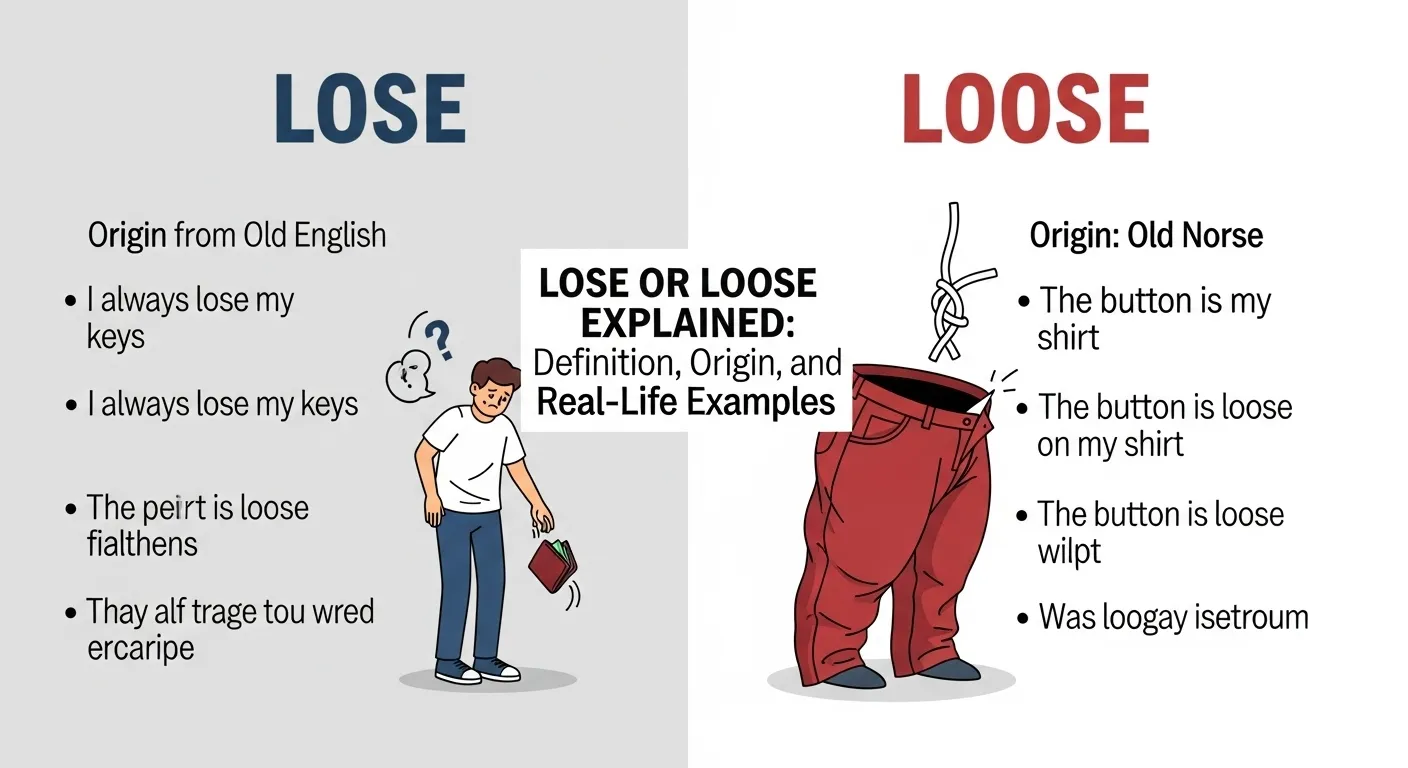
- Lose → Verb; means to misplace something, fail, or not win.
- Example: I always lose my keys.
- Example: The team did not want to lose the match.
- Loose → Adjective or verb; means not tight, free, or relaxed.
- Example (adjective): This shirt is too loose.
- Example (verb): They decided to loose the hounds during the hunt.
Quick tip: If it’s an action of losing, use lose. If it’s about being slack or free, use loose.
The Origin of Lose or Loose
The words lose and loose come from Old English, but they evolved differently over time:
- Lose: From Old English losian, meaning to perish, be lost.
- Loose: From Old English los, meaning free, released, or unbound.
The similar pronunciation caused confusion in modern English spelling. This is why many learners mix them up even today.
British English vs American English Spelling
In general, lose and loose spellings are the same in both British and American English. However, confusion often arises due to pronunciation differences:
| Word | Part of Speech | British Pronunciation | American Pronunciation | Usage Notes |
| Lose | Verb | /luːz/ | /luːz/ | Used for misplacing or not winning |
| Loose | Adjective/Verb | /luːs/ | /luːs/ | Used for not tight, free, or unbound |
Tip: Always check context. Pronunciation may sound similar, but meaning is distinct.
Which Spelling Should You Use?
- In the US: Stick to the same spellings; lose for failure/misplacing and loose for slack/free.
- In the UK & Commonwealth: Same rules apply. There’s no variation in spelling, but pronunciation might influence informal writing.
- Global English: Always follow context rules rather than regional rules.
Rule of thumb: Think about whether you’re describing loss (lose) or freedom/slack (loose).
Common Mistakes with Lose or Loose
| Mistake | Correction | Explanation |
| I don’t want to loose. | I don’t want to lose. | Action of losing something |
| My shoes are too lose. | My shoes are too loose. | Describing slackness |
| He will loose the game. | He will lose the game. | Incorrect verb form |
| The knot is lose. | The knot is loose. | Adjective describing slack |
| Don’t loose hope. | Don’t lose hope. | Action of failing to maintain |
Lose or Loose in Everyday Examples
- Emails:
I hope you don’t lose the report.
The connection feels a bit loose today. - News headlines:
Local team may lose the championship.
Loose regulations on safety raise concerns. - Social media:
Don’t lose faith, friends!
This sweater is too loose, I need a smaller size. - Formal writing:
Employees should not lose track of deadlines.
Ensure loose cables are secured to prevent accidents.
Lose or Loose Google Trends & Usage Data
According to Google Trends (2026):
- Searches for lose are significantly higher than loose due to frequent use in sports, finance, and daily life.
- Top countries searching for lose or loose include India, the United States, the UK, Canada, and Australia.
- Confusion spikes during exam seasons and English learning courses.
Observation: The mistake is global, but clear usage guidance reduces errors.
Comparison Table Lose vs Loose
| Feature | Lose | Loose |
| Part of Speech | Verb | Adjective / Verb |
| Meaning | Misplace / Fail | Not tight / Free |
| Example | I don’t want to lose. | The pants are loose. |
| Pronunciation | /luːz/ | /luːs/ |
| Common Mistakes | Writing loose by mistake | Writing lose by mistake |
FAQs
1. Can loose be a verb?
Yes, it is less common but correct: They loosed the birds at dawn.
2. Is lose only for objects?
No, it can refer to games, money, or abstract concepts: Don’t lose hope.
3. How do I remember the difference?
Lose has one o → something goes away. Loose has two o s → something is too big or free.
4. Are there regional spelling differences?
No, both words are spelled the same in US and UK English. Context matters more than region.
5. Can I say I am loosing weight ?
No, correct form is I am losing weight. Loosing is rarely correct.
6. Why do people mix these words?
Because they sound similar in pronunciation but have very different meanings.
7. Is it okay to use loose in informal text for lose ?
No, it’s considered a spelling mistake and may confuse readers.
Conclusion
Understanding the difference between lose and loose is essential. Lose means to misplace or fail, while loose means slack, free, or unbound.
Mixing them can cause confusion in writing.
Both British and American English use the same spellings, so focus on context. Simple trick: one o → lose (loss), two o → loose (free/slack).
Reviewing examples and practicing usage prevents errors.
With practice, lose vs loose becomes easy to remember. Keep this guide handy to write clearly and confidently every time.
Read More:
Seak or Seek? The Correct Spelling Explained 2026

I am Samuel Wright, a writer who loves helping people understand English grammar, spelling, and word usage clearly.