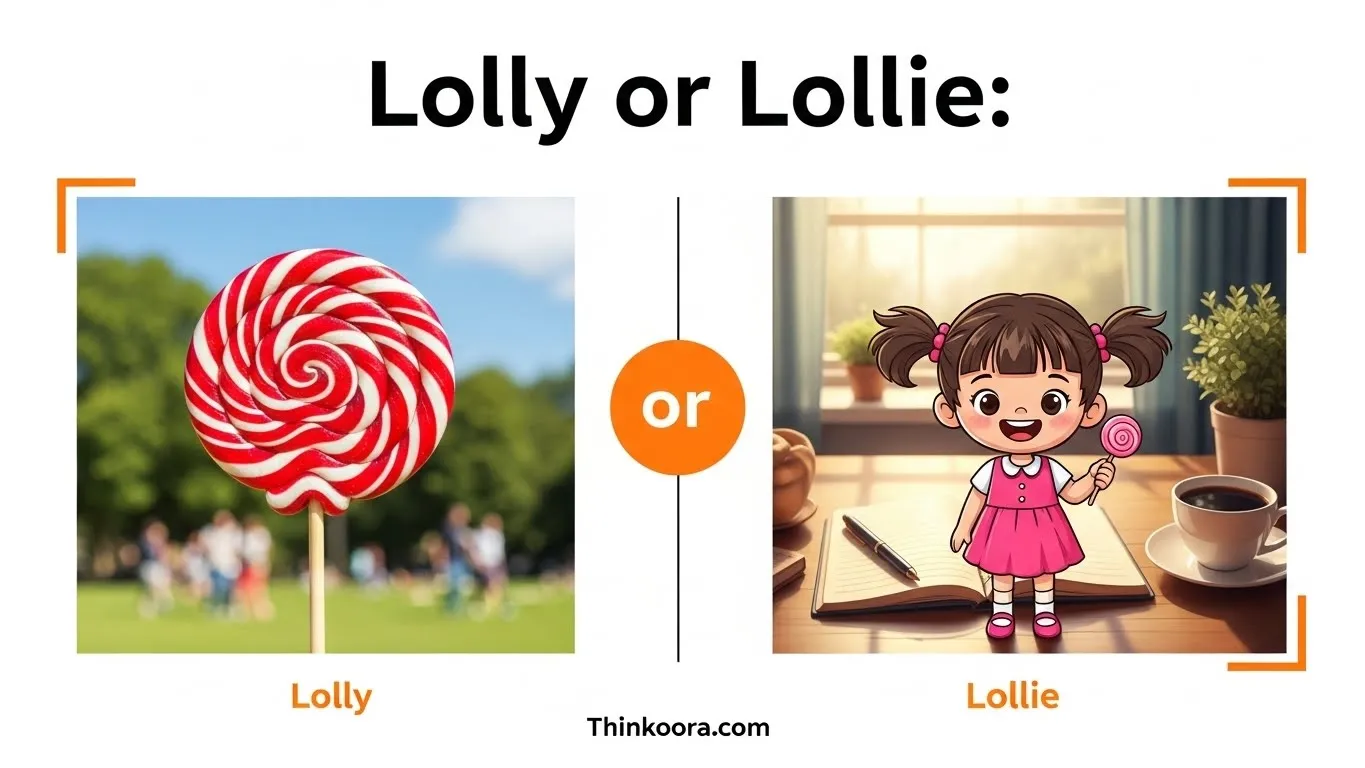
Many people pause when they see the words lolly or lollie. Are they the same word? Is one a spelling mistake?
Or does the choice depend on where you live? This confusion is common, especially for writers who create content for British, Australian, or global audiences.
People search for lolly or lollie because both spellings appear online. You might see lolly in one article and lollie in another.
Spellcheck tools don’t always help, and dictionaries may list both. This makes it hard to know which one is correct and which one sounds natural.
This article clears up the confusion in a simple way. You’ll get a quick answer, learn where the words come from, and see how British, American, and Australian English treat them.
You’ll also find real-life examples, common mistakes, and professional advice on which spelling to use. By the end, you’ll confidently choose lolly or lollie every time.
Lollie or Lolly – Which Spelling Is Correct?
Many English learners often get confused between lollie and lolly. Both words sound the same when spoken, but their spelling and usage are different. This confusion usually appears when people search online for the correct spelling of the word used for candy or a lollipop.
The correct and widely accepted spelling in English is lolly. The word lollie is generally considered a misspelling and is rarely used in standard dictionaries. In countries like the UK and Australia, lolly commonly refers to sweets or candy, and it is also used in the term lollypop.
Quick Answer
- ✅ Lolly → Correct spelling (means candy or sweet)
- ❌ Lollie → Incorrect or non-standard spelling
Example Sentences
- The child asked for a lolly from the shop.
- She bought a strawberry lolly on a hot day.
Why People Search Lollie or Lolly
People often type lollie because it matches the sound of the word, but English spelling rules do not always follow pronunciation. That’s why the standard spelling remains lolly.
Lolly or Lollie – Quick Answer
Both lolly and lollie are correct, but their use depends on region and style.
- Lolly → more common and widely accepted
- Lollie → mainly used in Australian English
Examples
- The child bought a lolly from the shop.
- Australian kids often say lollies instead of sweets.
They mean the same thing: a sweet or candy, often on a stick.
The Origin of Lolly or Lollie
The word lolly comes from British English and is linked to lollipop. The exact origin is unclear, but it likely developed as a shortened, informal term for sweet treats.
Why Two Spellings Exist
English often allows different spellings for informal words. Over time:
- Lolly became the standard spelling in British English.
- Lollie appeared as a regional variation, especially in Australia.
The spelling difference exists because English adapts to local pronunciation and writing habits. Both forms survived, but one became more dominant.
British English vs American English Spelling
This is where things get clearer.
Key Differences
- British English: prefers lolly
- American English: rarely uses either; prefers candy
- Australian English: uses both, but lollie is common
Comparison Table
| Region | Preferred Spelling | Notes |
| UK | lolly | Standard |
| USA | candy | lolly rarely used |
| Australia | lollie / lolly | both accepted |
| Global | lolly | safer choice |
Which Spelling Should You Use?
Your choice should match your audience.
Use lolly if:
- Writing for a UK or global audience
- You want a safe, standard spelling
- Writing formally or for SEO
Example:
She bought a chocolate lolly.
Use lollie if:
- Writing for an Australian audience
- Using a casual or local tone
Example:
Kids love fruit lollies in summer.
Professional Tip
For international websites, lolly is the best option.
Common Mistakes with Lolly or Lollie
❌ Thinking one is wrong
Both spellings are correct in the right context.
❌ Mixing spellings
- The shop sells lollies and lollys.
✔ Choose one spelling and stay consistent.
❌ Using for American readers
American readers expect candy, not lolly.
❌ Overusing informal words in formal writing
In formal contexts, be clear about meaning.
Lolly or Lollie in Everyday Examples
Emails
- Please bring a lolly for each child.
- She packed some lollies for the trip.
News Writing
- The company launched a new ice lolly.
- Australian children enjoy colorful lollies.
Social Media
- Summer = ice lolly 🍦
- Got my favorite lollies today 😋
Formal Writing
- The product is marketed as a fruit-flavored lolly.
- Consumption of sugary lollies is rising.
Lolly or Lollie – Google Trends & Usage Data
Search trends show clear regional patterns.
Lolly
- Popular in:
- UK
- Global English content
- Common in product descriptions and articles
Lollie
- Popular mainly in:
- Australia
- Local blogs and informal writing
By Country
- UK: lolly dominates
- Australia: lollie slightly more common
- USA: very low usage of both
Most searches happen because users want to know which spelling is correct.
Lolly vs Lollie Comparison Table
| Word | Meaning | Region | Correct |
| lolly | Sweet / candy | UK, Global | ✅ |
| lollie | Sweet / candy | Australia | ✅ |
| lollys | Incorrect plural | — | ❌ |
Frequently Asked Questions (FAQs)
1. Is lollie a correct spelling?
Yes, mainly in Australian English.
2. Is lolly British English?
Yes. It is the standard British spelling.
3. Do lolly and lollie mean the same thing?
Yes. They have the same meaning.
4. Which spelling is better for SEO?
Lolly works better for global audiences.
5. Is lolly used in American English?
Rarely. Americans usually say candy.
6. Can I use both in one article?
No. Choose one spelling and stay consistent.
7. Easy way to remember?
UK = lolly, Australia = lollie.
Conclusion
The difference between lolly or lollie is not about meaning but region and style. Both words refer to the same sweet treat, but lolly is the more widely accepted spelling in British and global English. Lollie is mainly a regional choice, popular in Australia.
The confusion exists because English allows informal variations to develop over time. While both spellings are correct, choosing the right one depends on who you are writing for. For international or professional content, lolly is the safer and more consistent option.
Once you understand the regional context, the choice becomes easy. With this guide, you can confidently use lolly or lollie without second-guessing your writing.
Read More:
Lovie or Lovey? The Right Term and How to Use It

I am Samuel Wright, a writer who loves helping people understand English grammar, spelling, and word usage clearly.