Have you ever wondered whether to write licence or license? You’re not alone.
This is one of the most commonly searched spelling dilemmas in English.
Students, professionals, and writers often feel confused about which form to use, especially when dealing with international audiences.
A simple spelling mistake can affect clarity, professionalism, and credibility.
People search for Licence or License to understand the difference between British and American English.
The confusion arises because the two words look almost identical but follow different grammatical rules depending on the region.
In some cases, the spelling also changes based on whether the word is used as a noun or a verb.
This comprehensive guide explains everything you need to know about licence or license.
From their origin and regional differences to real-life examples and common mistakes, this article provides clear answers.
Whether you’re writing an academic paper, business email, blog post, or social media caption, you’ll learn how to use the correct spelling with confidence.
Licence or License – Quick Answer
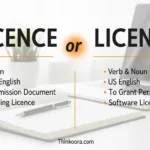
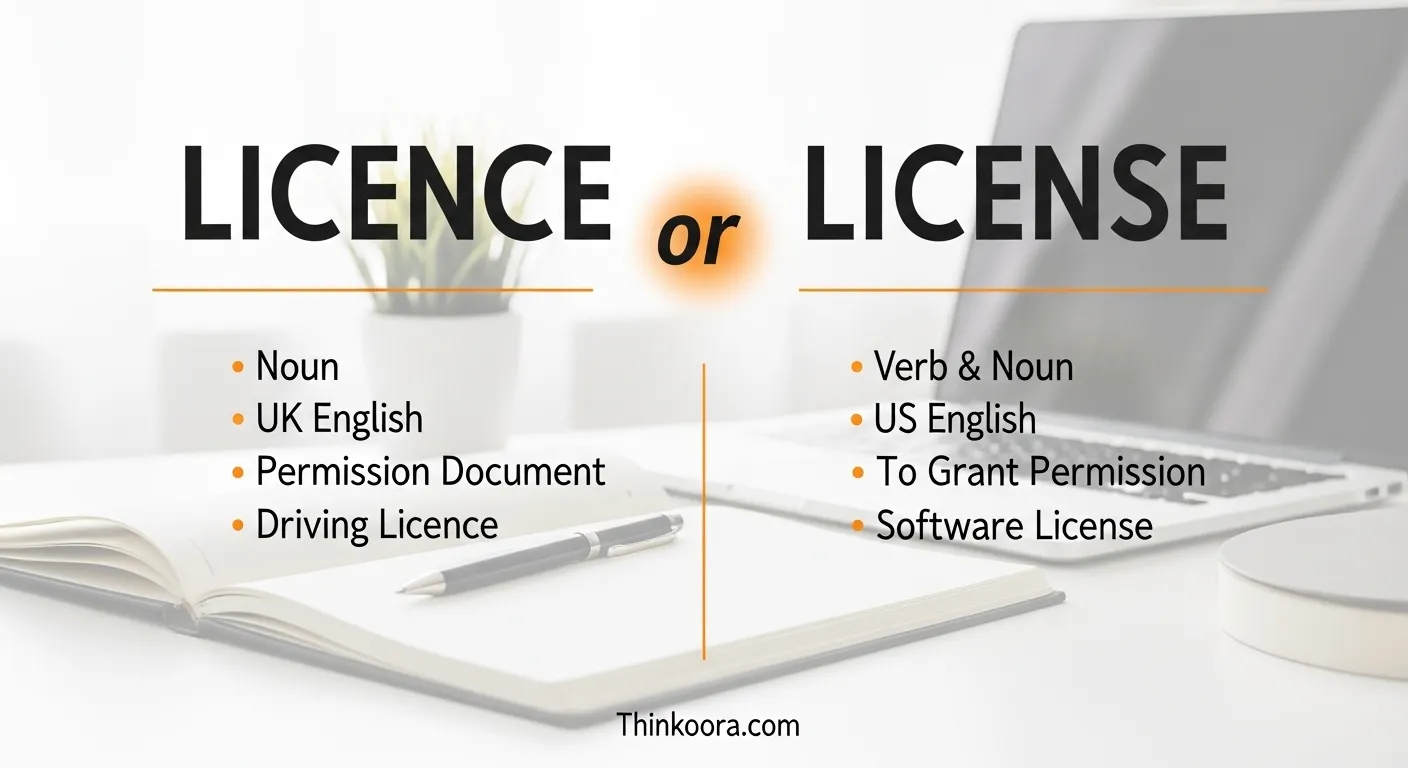
The difference between licence and license depends on location and usage.
- Licence is a noun in British English.
- License is a verb in British English.
- License serves as both a noun and verb in American English.
Examples:
- British English
- She has a driving licence. (Noun)
- The government will license the company. (Verb)
- American English
- He received his driver’s license. (Noun)
- The state will license the business. (Verb)
Quick Summary:
| Region | Noun | Verb |
| British English | Licence | License |
| American English | License | License |
Tip: If you’re writing for a UK audience, use licence as a noun. For US audiences, use license in all contexts.
The Origin of Licence or License
The words licence and license originate from the Latin word licentia, meaning freedom or permission. Over time, the term evolved through Old French as licence before entering Middle English.
Historical Development
- Latin: Licentia – freedom or authorization.
- Old French: Licence – permission.
- Middle English: Adopted into English with similar meanings.
In the 18th and 19th centuries, British lexicographers standardized spelling rules. This led to the distinction between licence (noun) and license (verb). However, American English simplified the rule by adopting license for both forms. This simplification was influenced by Noah Webster, who advocated for spelling reforms in the United States.
Why Spelling Differences Exist
The divergence between British and American English occurred due to:
- Language standardization efforts.
- Regional preferences.
- Webster’s spelling reforms in the United States.
- The evolution of global English.
Today, both forms are correct when used appropriately.
British English vs American English Spelling
Understanding regional differences is essential for accurate writing. The spelling you choose should align with your target audience.
Key Differences
| Feature | British English | American English |
| Noun Form | Licence | License |
| Verb Form | License | License |
| Example (Noun) | Driving licence | Driver’s license |
| Example (Verb) | The agency will license drivers | The agency will license drivers |
| Usage Regions | UK, Australia, India, Pakistan, Canada | United States |
Examples in Sentences
British English:
- He applied for a business licence.
- The authority will license the vendor.
American English:
- She renewed her driver’s license.
- The state will license new doctors.
This distinction helps writers maintain accuracy and professionalism across regions.
Which Spelling Should You Use?
Choosing between licence or license depends on your audience and purpose.
Use Licence When:
- Writing for a UK or Commonwealth audience.
- Preparing academic or legal documents in British English.
- Following British editorial guidelines.
Countries that prefer licence :
- United Kingdom
- Australia
- New Zealand
- India
- Pakistan
- South Africa
Use License When:
- Writing for an American audience.
- Creating content for US-based businesses.
- Publishing on American websites.
Use License for Global Audiences When:
- Your primary audience is international.
- You follow American English as a universal standard.
- You want consistency across digital platforms.
Quick Guide
| Audience | Recommended Spelling |
| United States | License |
| United Kingdom | Licence (noun), License (verb) |
| Commonwealth Countries | Licence (noun), License (verb) |
| International Websites | License |
Common Mistakes with Licence or License
Even experienced writers make errors when using these terms. Here are the most frequent mistakes and their corrections.
1. Using License as a Noun in British English
❌ He forgot his driving license.
✅ He forgot his driving licence.
2. Using Licence as a Verb
❌ The government will licence the company.
✅ The government will license the company.
3. Mixing British and American Spellings
❌ She received her driver’s licence in New York.
✅ She received her driver’s license in New York.
4. Ignoring Audience Context
Always match spelling with your target readers.
5. Forgetting Style Consistency
Avoid switching between British and American English in the same document.
Licence or License in Everyday Examples
Understanding real-life usage helps reinforce the correct spelling.
1. Emails
- British: Please attach a copy of your driving licence.
- American: Please attach a copy of your driver’s license.
2. News Headlines
- The council suspended his business licence. (UK)
- The state revoked her medical license. (US)
3. Social Media
- Just got my driver’s license today! 🎉
- Finally received my driving licence!
4. Formal Writing
- The company holds a valid operating licence.
- The agency is authorized to license professionals.
5. Legal Documents
- The vendor must obtain a trading licence.
- The state will license qualified applicants.
Licence or License – Google Trends & Usage Data
Search trends reveal how these terms are used worldwide.
Global Popularity
- License dominates in the United States.
- Licence is widely used in the United Kingdom and Commonwealth countries.
- American spelling is more common in global digital content.
Regional Preferences
| Country | Preferred Spelling |
| United States | License |
| United Kingdom | Licence |
| Canada | Both (context-dependent) |
| Australia | Licence |
| India | Licence |
| Pakistan | Licence |
| Global SEO | License |
SEO Insight
- License receives higher global search volume.
- Licence is more relevant for UK-based audiences.
- Using both terms improves search visibility and user reach.
Comparison Table: Licence vs License
| Feature | Licence | License |
| Part of Speech | Noun (British English) | Verb (British English); Noun & Verb (American English) |
| Meaning | Official permission | Official permission or authorization |
| Usage Region | UK and Commonwealth | United States |
| Example | Driving licence | Driver’s license |
| Formality | Formal and official | Formal and official |
| SEO Relevance | UK-focused searches | Global and US-focused searches |
FAQs
1. What is the difference between licence and license?
In British English, licence is a noun and license is a verb. In American English, license is used for both.
2. Is licence correct in the United States?
No. Americans use license for both noun and verb forms.
3. Which spelling is used in Pakistan?
Pakistan follows British English, so licence is preferred as a noun.
4. Is a driver’s licence correct?
Yes, in British English. In American English, it is written as driver’s license.
5. Why do British and American spellings differ?
Differences arose due to historical language evolution and spelling reforms led by Noah Webster in the United States.
6. Can licence be used as a verb?
No. In British English, the verb form is license.
7. Which spelling is better for SEO?
For global audiences, license performs better, but using both improves search visibility.
Conclusion
Understanding the difference between licence or license is essential for clear and professional communication.
While the two words share the same meaning official permission their usage varies depending on region and grammar.
In British English, licence is used as a noun and license as a verb. In American English, license serves as both noun and verb.
Recognizing this distinction ensures accuracy in academic writing, business communication, and digital content.
Choosing the correct spelling depends on your audience. Writers targeting the United Kingdom, Pakistan, or other Commonwealth countries should use licence for nouns.
Those writing for American readers should consistently use license. For global content, maintaining consistency often with American spelling helps reach a broader audience.
Avoid mixing styles within a single document to preserve professionalism and clarity.
By mastering these differences, you enhance your credibility and avoid common errors.
Whether you’re applying for a driving permit, drafting legal documents, or creating SEO-optimized content, knowing when to use licence or license ensures precision and confidence in your writing.
Read More:
Nickel or Nickle: Which Spelling is Correct?
Convertor or Converter – Which Spelling Is Correct?

I am Samuel Wright, a writer who loves helping people understand English grammar, spelling, and word usage clearly.