English is full of small spelling differences that create big confusion. One common example is honey or hunny.
Many people see both spellings online and wonder which one is correct. Is hunny just a cute version of honey, or is it actually a real word?
People search for honey or hunny for several reasons. Some see hunny used in text messages, memes, or social media captions.
Others notice it in cartoons and wonder if it is acceptable in normal writing.
The confusion often appears when writing romantic messages, casual chats, or online posts.
Understanding the difference between honey or hunny helps you avoid mistakes in emails, social media, and professional writing.
One version is a standard English word used for both food and affectionate nicknames. The other is mostly informal and playful.
In this guide, you will learn the quick answer, the origin of the spellings, differences in British and American usage, common mistakes, and practical examples.
By the end, you will know exactly when to use honey and when hunny might appear.
Honey or Hunny – Quick Answer
Quick answer:
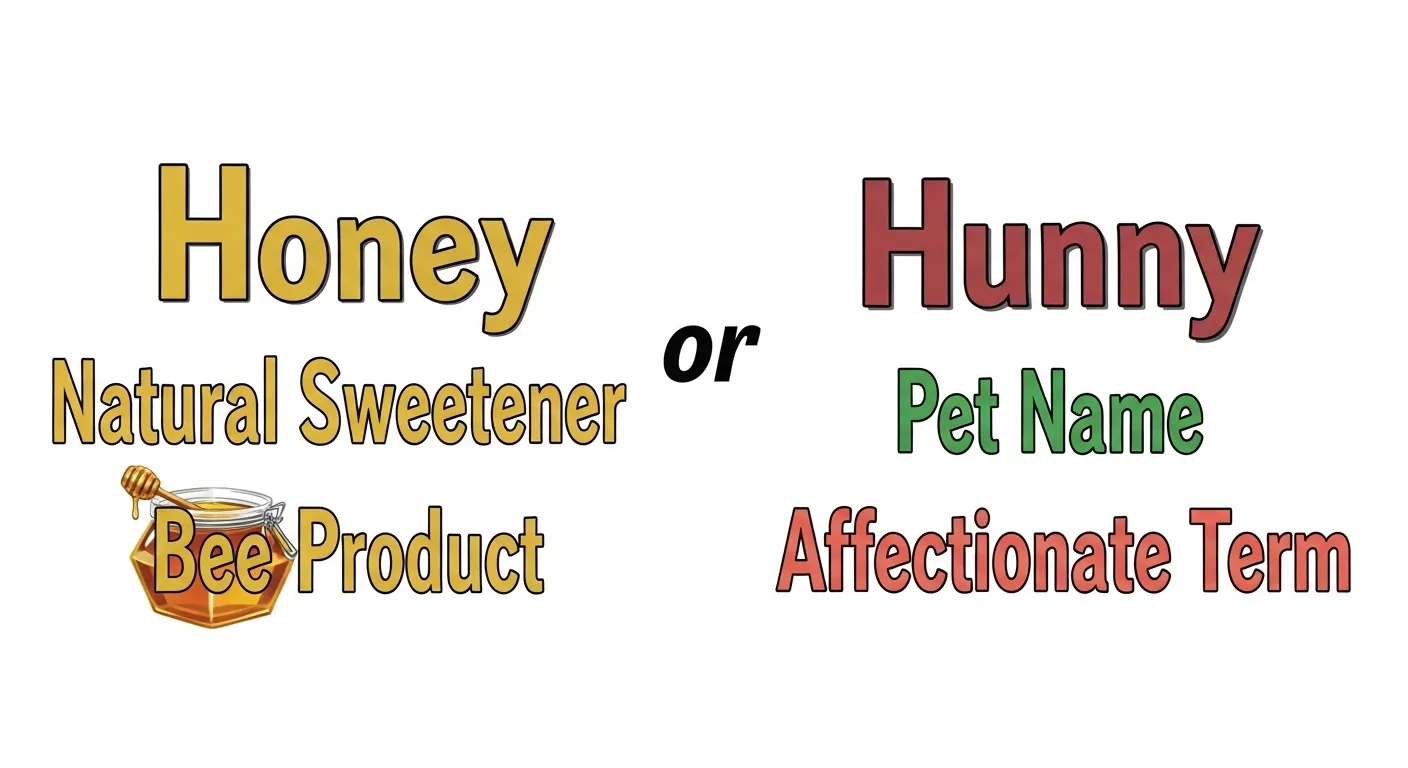
- Honey → The correct and standard English spelling
- Hunny → An informal or playful spelling, mostly used in cartoons or casual text
Examples:
- Can you pass the honey for my tea?
- Good morning, honey!
Informal example:
- Miss you, hunny! (casual text message)
Key point:
Use honey in almost all writing. Hunny is only used informally or stylistically.
The Origin of Honey or Hunny
To understand honey or hunny, it helps to look at the history of the word.
The word honey comes from the Old English word hunig. It referred to the sweet substance produced by bees. Over time, the spelling changed slightly, but the meaning remained the same.
Historically, honey was not only used for food. People also used it as a term of affection. For example:
- Parents called children honey.
- Couples used it as a nickname.
This affectionate use became common in English-speaking cultures.
Where Did Hunny Come From?
The spelling hunny appeared much later. It became popular mainly because of fictional characters and playful writing styles.
One famous example is the cartoon character who spells the word hunny on a honey pot. The misspelling represents a childlike or cute way of writing the word.
Because of this influence, many people now use hunny in:
- Text messages
- Memes
- Social media captions
However, hunny is not considered standard English spelling.
So when comparing honey or hunny, remember:
- Honey → traditional, correct spelling
- Hunny → playful, informal version
British English vs American English Spelling
Unlike many English words, honey or hunny is not actually a British vs American spelling difference.
Both British English and American English use the same correct spelling: honey.
The spelling hunny is informal in both regions.
Examples
British English:
- She added honey to her tea.
American English:
- He bought a jar of honey from the store.
Informal message:
- Love you, hunny!
Comparison Table
| Feature | Honey | Hunny |
| Correct spelling | Yes | No |
| Used in dictionaries | Yes | Rarely |
| Formal writing | Yes | No |
| Informal texting | Sometimes | Yes |
| British English | Honey | Hunny (informal) |
| American English | Honey | Hunny (informal) |
Key rule:
Both British and American English prefer honey.
Which Spelling Should You Use?
When choosing between honey or hunny, your audience and context matter.
Use Honey for
- Professional writing
- Emails
- Articles
- School assignments
- Books and reports
- News writing
Examples:
- This recipe uses organic honey.
- Thank you, honey, for your help.
Use Hunny only for
- Casual text messages
- Social media jokes
- Playful captions
- Memes
Examples:
- Miss you, hunny!
- Come home soon, hunny.
Global Writing Tip
If your audience is global, always choose honey.
Reasons:
- It is universally recognized
- It looks professional
- It avoids confusion
So in the debate honey or hunny, the safe choice is almost always honey.
Common Mistakes with Honey or Hunny
Even simple words can cause mistakes. Here are common errors people make with honey or hunny.
1. Using hunny in formal writing
Incorrect:
- The recipe requires two tablespoons of hunny.
Correct:
- The recipe requires two tablespoons of honey.
2. Mixing casual and formal language
Incorrect:
- Dear hunny, please review the attached document.
Correct:
- Dear Sarah, please review the attached document.
3. Assuming hunny is a correct spelling
Incorrect belief:
- Hunny is just another spelling like colour/color.
Reality:
- Hunny is informal and non-standard.
4. Overusing affectionate words in professional writing
Incorrect:
- Thank you for your order, honey.
Correct:
- Thank you for your order.
Tip:
Use affectionate terms only with people you know personally.
Honey or Hunny in Everyday Examples
Seeing honey or hunny in real-life contexts helps clarify their usage.
Emails
Professional email:
- Please add one teaspoon of honey to the mixture.
Personal email:
- Hi honey, hope you’re having a great day.
News Articles
- Farmers reported higher honey production this year.
- Local markets sell organic honey products.
Social Media
Caption:
- Tea and honey make the perfect winter drink.
Playful caption:
- Love you, hunny!
Text Messages
Casual:
- Good night, hunny.
More natural:
- Good night, honey.
Formal Writing
- The study examined the health benefits of honey.
Formal writing almost never uses hunny.
Honey or Hunny – Google Trends & Usage Data
Search data helps explain why people ask about honey or hunny.
Global Popularity
- Honey is searched far more often.
- Hunny appears mostly in entertainment or informal contexts.
Popular Countries Searching Honey
High usage:
- United States
- United Kingdom
- Canada
- Australia
- India
These countries use honey in both food and affectionate contexts.
Where Hunny Appears More
The spelling hunny is common in:
- Memes
- Fan communities
- Cartoon references
- Social media captions
However, it rarely appears in:
- News
- Academic writing
- Professional documents
Context Usage
| Context | Preferred Word |
| Recipes | Honey |
| Health articles | Honey |
| Romantic texts | Honey or Hunny |
| Social media jokes | Hunny |
| Professional writing | Honey |
Key takeaway:
Search trends strongly favor honey.
Keyword Variations Comparison
Here are common variations related to honey or hunny.
| Variation | Meaning | Usage |
| honey | Sweet substance from bees | Standard English |
| hunny | Informal spelling | Casual text |
| honey jar | Container for honey | Cooking context |
| honey bee | Bee that produces honey | Scientific |
| honey (nickname) | Term of affection | Personal conversation |
This table helps writers choose the correct variation.
FAQs
1. Is hunny a real word?
Hunny exists in informal writing, but it is not the standard spelling. Dictionaries recognize honey as the correct word.
2. Why do people write hunny?
People write hunny to sound cute, playful, or affectionate. It is common in text messages and memes.
3. Is hunny wrong?
It is not wrong in casual conversation, but it is incorrect in formal writing.
4. Do British and American English spell it differently?
No. Both British and American English use honey as the correct spelling.
5. Can I use honey as a nickname?
Yes. Honey is a common affectionate nickname used for:
- Partners
- Children
- Close friends
6. Is hunny used in books?
Most books use honey. The spelling hunny appears mainly in children’s stories or playful dialogue.
7. Which spelling is better for online writing?
For blogs, articles, and websites, honey is the best choice because it is correct and widely recognized.
Conclusion
The debate between honey or hunny is simpler than it first appears. The correct and standard spelling is honey.
It refers to the sweet food made by bees and is also widely used as a term of affection.
The spelling hunny is mostly informal. People use it in text messages, jokes, or playful writing.
While it may appear cute or friendly, it is not appropriate for professional or formal communication.
Both British and American English agree on the same spelling: honey. This makes the word easier to use globally.
Whether you are writing a recipe, an article, or a school assignment, honey is always the correct choice.
If you are chatting with friends or sending a romantic message, you might occasionally see hunny used for style or humor.
Still, it is best to remember that it is not standard English.
The safest approach is simple:
- Use honey in almost every situation.
- Use hunny only in casual, playful contexts.
By understanding the difference between honey or hunny, you can write clearly, avoid spelling mistakes, and communicate more confidently in both personal and professional situations.
Read More:
Lieing or Lying – Which Spelling Is Correct? (Complete Guide)
Belive or Believe – Which Spelling Is Correct? (Complete Guide)

I’m Daniel Whitmore, a content writer who focuses on English grammar, spelling mistakes, and word usage. I write clear, simple, and helpful articles to make English easier for students, writers, and everyday readers.