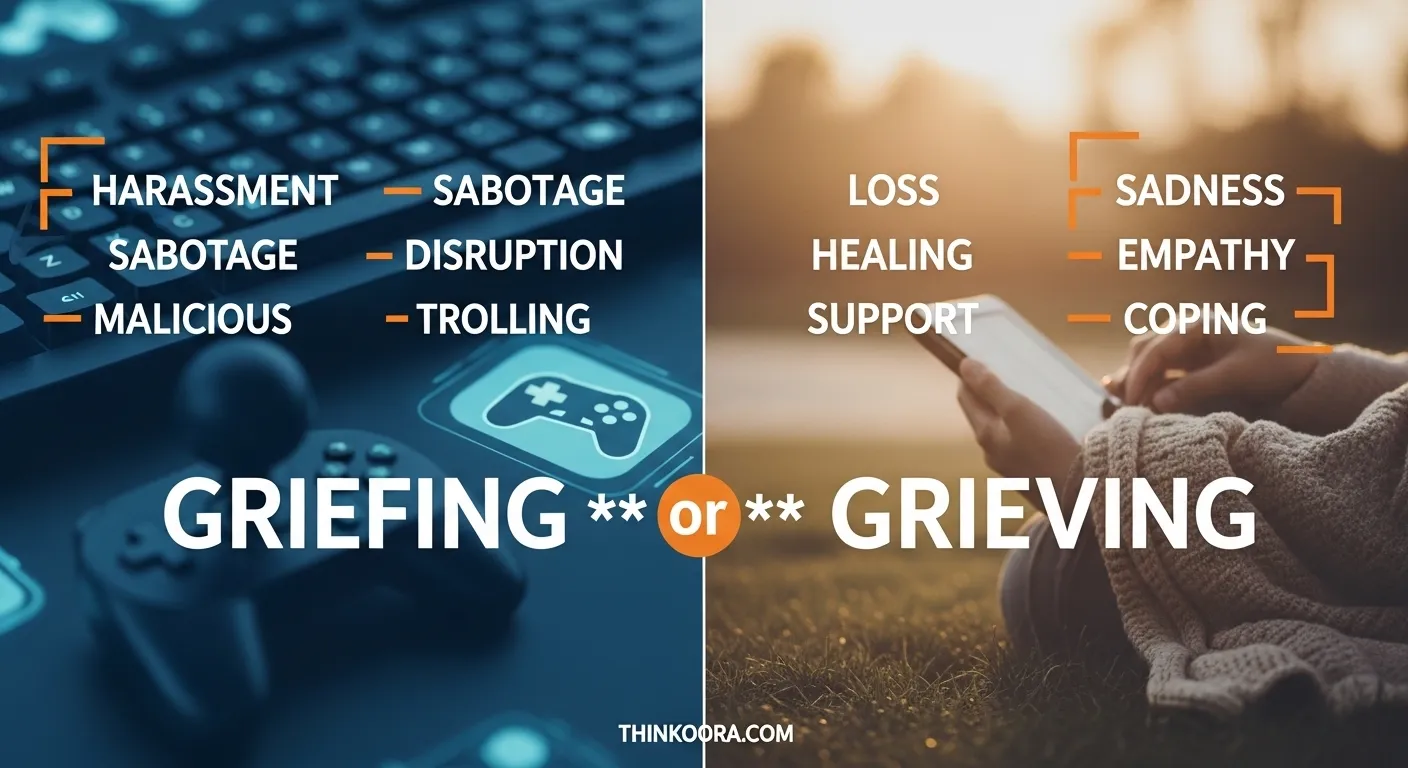
Many people search for griefing or grieving because the two words look very similar but have very different meanings.
One small spelling change can completely change what you are trying to say.
This confusion is common among English learners, students, gamers, writers, and even native speakers.
The problem usually appears when someone wants to talk about sadness, loss, or emotions, but accidentally uses a word related to harassment or online behavior.
In emails, social media posts, news articles, or formal writing, mixing up griefing and grieving can cause serious misunderstandings and make your message unclear or even inappropriate.
People search for griefing or grieving to find the correct spelling, understand the meaning of each word, and learn when to use one instead of the other.
This article solves that confusion step by step. You will learn the quick answer, word origins, British vs American usage, common mistakes, real-life examples, Google Trends insights, and FAQs.
By the end, you will confidently know whether to use griefing or grieving in any situation.
Griefing or Grieving – Quick Answer
✅ Grieving = feeling deep sadness, usually after loss or death
❌ Griefing = intentionally annoying, harassing, or ruining someone’s experience (mostly online or in games)
Examples:
- She is grieving after the loss of her father.
- The player was banned for griefing other users.
They are not interchangeable.
The Origin of Griefing vs Grieving
The word grieve comes from the Old French grever, meaning to cause sorrow or pain. Over time, grieving became the standard word used to describe emotional suffering, especially after loss.
Griefing, however, has a very different origin. It developed in modern digital culture, especially in online gaming communities. The word comes from grief, but instead of meaning sadness, it refers to causing grief to others on purpose. This term became popular in multiplayer games and online platforms to describe disruptive behavior.
The spelling difference exists because:
- Grieving follows traditional English emotional vocabulary
- Griefing is a modern verb formed from online slang and gaming culture
Despite similar spelling, their meanings are completely different.
British English vs American English Spelling
There is no spelling difference between British and American English for these words.
| Word | British English | American English |
| Grieving | ✅ Correct | ✅ Correct |
| Griefing | ✅ Correct | ✅ Correct |
The difference is meaning, not spelling.
Which Spelling Should You Use?
Use grieving when talking about:
- Loss
- Sadness
- Emotional pain
- Death or tragedy
Use griefing when talking about:
- Online games
- Digital communities
- Harassment or trolling
Audience guide:
- 🇺🇸 US → same usage
- 🇬🇧 UK → same usage
- 🌍 Global → same usage
Always choose based on context, not region.
Common Mistakes with Griefing or Grieving
❌ Frequent Errors
- Writing griefing when discussing death or loss
- Using grieving to describe online harassment
- Assuming both words mean emotional pain
✅ Correct Usage
- Grieving after a loved one dies
- Griefing when a player ruins a game
💡 Tip:
If emotions are involved → grieving
If online behavior is involved → griefing
Griefing or Grieving in Everyday Examples
📧 Emails
- She is still grieving and may need time off.
📰 News
- The community is grieving after the tragic event.
- The platform introduced rules to stop griefing.
📱 Social Media
- Please respect families who are grieving.
- Stop griefing new players.
📄 Formal Writing
- Grieving is a natural emotional response to loss.
- Griefing negatively impacts online communities.
Griefing or Grieving – Google Trends & Usage Data
Search data shows:
- Grieving is searched globally in emotional, health, and news contexts
- Griefing spikes in gaming, tech, and online forums
- Most confusion searches combine both words as griefing or grieving
Top regions:
- United States
- United Kingdom
- Canada
- Australia
This confirms strong user intent to understand the difference.
Comparison Table: Griefing vs Grieving
| Word | Meaning | Context | Formal Use |
| Grieving | Emotional pain or sorrow | Loss, death, sadness | ✅ Yes |
| Griefing | Harassing behavior | Games, online spaces | ❌ Informal |
FAQs
1. Are griefing and grieving the same?
No. Their meanings are completely different.
2. Is griefing a real English word?
Yes, but it is informal and modern.
3. Can griefing be used in formal writing?
Only in tech or gaming contexts.
4. Is grieving related to death only?
Mostly, but it can also mean emotional loss.
5. Do British and American English use these words differently?
No, usage is the same.
6. Can I say “griefing someone”?
Yes, in gaming or online behavior contexts.
7. Which word should I use in condolences?
Always grieving, never griefing.
Conclusion
The confusion between griefing or grieving is understandable because the words look similar, but their meanings are very different.
Grieving is a serious and emotional word used to describe sadness, loss, and emotional pain, often after death or tragedy.
Griefing, on the other hand, is a modern term mostly used in online and gaming spaces to describe intentional harassment or disruptive behavior.
There is no British or American spelling difference, so the choice depends only on context.
Using the wrong word can completely change the meaning of your sentence and may cause confusion or offense.
That is why understanding this difference is important for clear and respectful communication.
If you remember one simple rule, remember this:
👉 Emotions and loss = grieving
👉 Online harassment = griefing
Mastering small spelling differences like this improves clarity, professionalism, and confidence in your English writing.
Read more:
Nosey or Nosy: Which Spelling is Correct?

I’m Daniel Whitmore, a content writer who focuses on English grammar, spelling mistakes, and word usage. I write clear, simple, and helpful articles to make English easier for students, writers, and everyday readers.