Many people search for forward or foreword because these two words look almost the same but mean very different things.
The confusion often appears when writing emails, books, documents, or formal messages. One small spelling mistake can change the meaning of an entire sentence.
For example, you might write Please read the forward of the book when you actually mean foreword.
Spellcheck may not help because both words are correct English words. That is why writers, students, professionals, and bloggers often stop and double-check this pair.
The confusion exists because both words come from similar roots and sound alike when spoken. However, their usage is completely different.
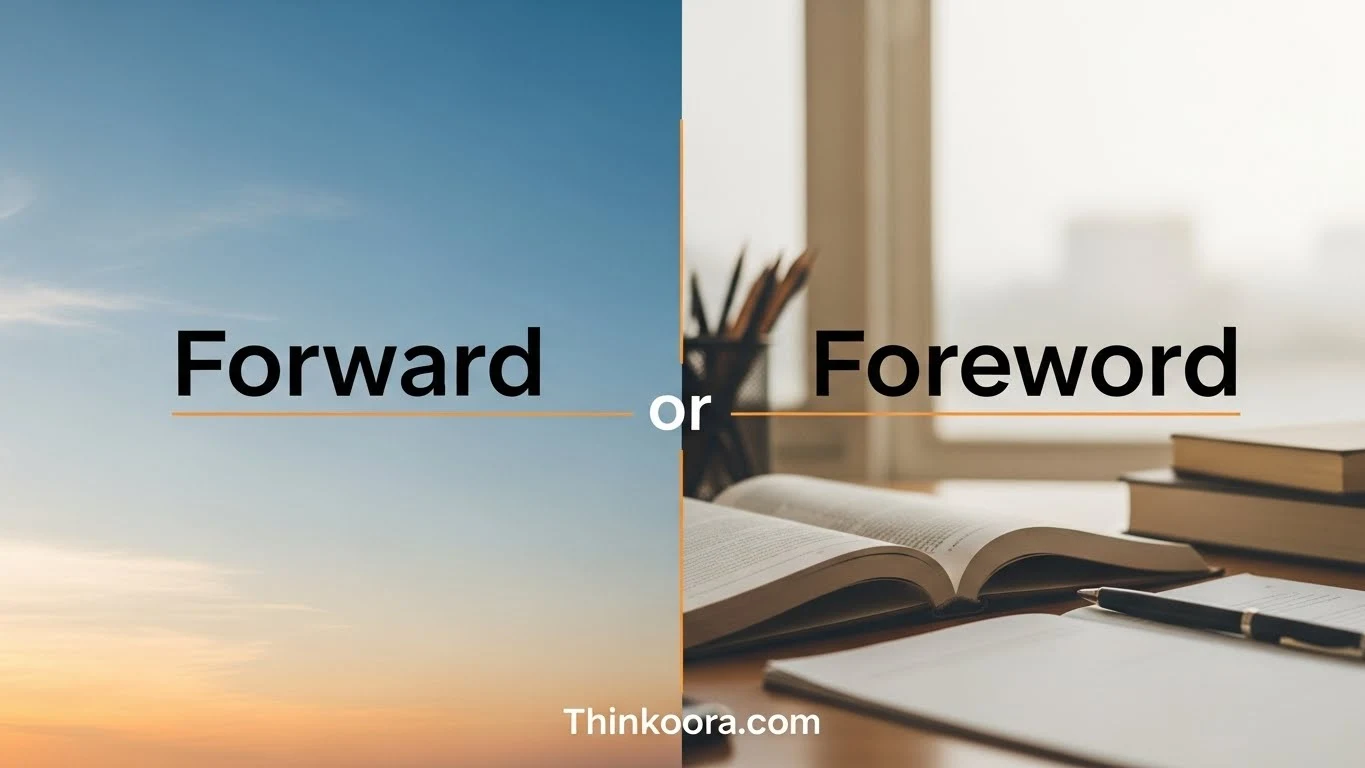
Forward is usually about direction, movement, or sending something ahead. Foreword is a noun that refers to the introduction of a book.
This article solves the confusion clearly and simply. You’ll get a quick answer, easy rules, real-life examples, spelling history, and practical advice. By the end, you will confidently know when to use forward and when foreword is the only correct choice.
Forward or Foreword – Quick Answer
Forward is usually an adjective, verb, or adverb meaning ahead, onward, or to send something.
Foreword is a noun that means the introduction section of a book, usually written by someone other than the author.
Examples:
- Please forward this email to your manager.
- The book has a foreword written by a famous author.
👉 Rule to remember:
Movement = forward
Book introduction = foreword
The Origin of Forward or Foreword
The word forward comes from Old English forweard, meaning toward the front or ahead. Over time, it came to mean movement, progress, or sending something onward.
The word foreword is a combination of fore (before) and word. It was created to describe words written before the main content of a book. It became common in publishing during the 17th century.
Although the spellings look similar, they developed for different purposes. That history explains why they are not interchangeable, even though they sound alike.
British English vs American English Spelling
There is no spelling difference between British and American English for these words. Both varieties use the same forms.
| Term | British English | American English | Meaning |
| Forward | Forward | Forward | Direction, movement, sending |
| Foreword | Foreword | Foreword | Book introduction |
The confusion is about meaning, not regional spelling.
Which Spelling Should You Use?
Use forward if:
- You are talking about direction or progress
- You are sending an email or message
- You mean ahead or onward
Use foreword if:
- You are writing about a book
- You mean the introduction section
- You refer to text written before the main content
Audience advice:
- US audience: Same rules apply
- UK/Commonwealth: Same rules apply
- Global writing: Use the same standard meanings
Common Mistakes with Forward or Foreword
❌ kindly read the forward of this book
✅ Please read the foreword of this book
She wrote a forward for the novel
✅ her wrote a foreword for the novel
❌ The foreword this email to HR
✅ Forward this email to HR
Forward or Foreword in Everyday Examples
Emails:
- Please forward the document to the team.
Books & Publishing:
- The foreword explains the author’s inspiration.
News:
- The company is moving forward with its plan.
Social Media:
- Forward this post to your friends.
Formal Writing:
- The foreword was written by a respected expert.
Forward or Foreword – Google Trends & Usage Data
Search data shows that:
- Forward is searched far more often because it is used daily in emails and messages.
- Foreword spikes in searches during exams, publishing tasks, and academic writing.
- The confusion is global, with similar search patterns in the US, UK, Canada, and Australia.
This proves that users want a quick answer first, then a clear explanation—exactly what this guide provides.
Forward vs Foreword Comparison Table
| Feature | Forward | Foreword |
| Part of speech | Verb, adjective, adverb | Noun |
| Meaning | Ahead, send, progress | Book introduction |
| Used in emails | Yes | No |
| Used in books | No | Yes |
| Interchangeable | ❌ No | ❌ No |
FAQs: Forward or Foreword
1. Is the foreword the same as the introduction?
Not exactly. A foreword is written by someone other than the author.
2. Can I use forward instead of foreword?
No. That is a spelling and meaning error.
3. Is the foreword used outside books?
Rarely. It is mainly used in publishing.
4. Why do people confuse forward and foreword?
They sound alike and look similar.
5. Does spellcheck catch this mistake?
Often no, because both words are correct.
6. Is there a British vs American difference?
No. Both use the same spellings.
7. Which word is more common?
Forward is much more common in daily use.
Conclusion
The difference between forward and foreword is simple once you know their roles. Forward relates to movement, direction, or sending something ahead. Foreword refers only to the introduction of a book. They may sound alike, but they serve completely different purposes.
This confusion is common because both words are real English terms and spellcheck may not warn you. That is why understanding meaning not just spelling is important. Remember this easy rule: emails go forward, books have a foreword.
Whether you are writing professionally, academically, or casually, using the correct word improves clarity and credibility. Now that you understand the difference, you can confidently choose the right spelling every time without guessing or hesitation.

Hi, I’m Ethan Hawkesley. I love writing and exploring the English language. On Thinkoora.com, I share tips, insights, and explanations to help readers understand words and writing more easily.