English spelling can be confusing, and drier or dryer is a perfect example.
Both words look correct. Both are used in real sentences. Yet many people are unsure which one to choose.
Is it about clothes? Weather? Grammar rules? Or British vs American English?
People search for drier or dryer because they want a fast answer without reading complex grammar books.
This confusion often appears in daily writing emails, product descriptions, school work, news articles, and even professional reports.
Using the wrong word may not stop understanding, but it can reduce clarity and credibility.
This article solves that problem clearly.
You’ll get a quick rule, real examples, spelling differences between British and American English, common mistakes, and expert advice on which spelling to use for your audience.
By the end, you will confidently choose a drier or dryer every time without guessing.
Drier or Dryer – Quick Answer
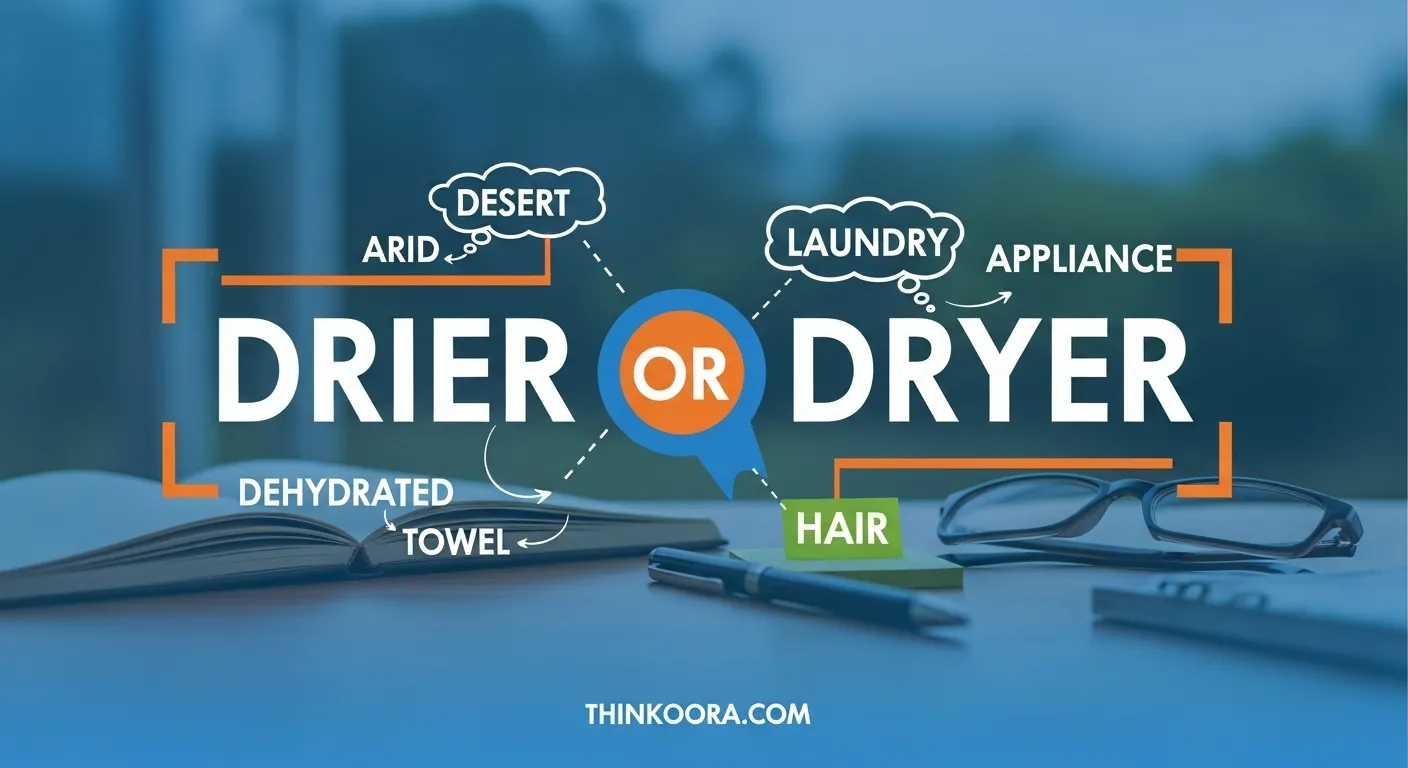
- Drier → Comparative form of dry (less wet)
- Example: Today is drier than yesterday.
- Dryer → A machine that dries things (like clothes or hair)
- Example: The clothes are in the dryer.
Simple rule:
➡️ Weather or condition → drier
➡️ Machine → dryer
TThe Origin of Drier or Dryer
Both drier and dryer come from the Old English word dryge, which means free from moisture or not wet. Over time, English evolved and created two different spellings to serve two different grammatical roles, even though both words sound the same.
Drier developed according to standard English grammar rules for comparison. When forming the comparative degree of the adjective dry, English adds -er, resulting in dry → drier. This form is used to describe a condition or state, such as something becoming less wet than before.
Dryer, on the other hand, emerged later as a noun. It was created to name machines or devices designed to remove moisture, such as a hair dryer or clothes dryer. English often modifies spelling slightly when a word shifts from describing a quality to naming a physical object, which is why dryer gained a separate identity.
The spelling difference exists because English tends to separate descriptive forms from object names, even when pronunciation remains the same. This distinction helps readers instantly understand whether the word is describing a condition (drier) or referring to a device (dryer), reducing ambiguity in written communication.
British English vs American English Spelling
British and American English use both words, but frequency differs.
| Usage Type | British English | American English |
| Comparison | drier | drier |
| Machine | tumble dryer | dryer |
| Weather | drier climate | drier climate |
Key note:
British English often says tumble dryer, while American English simply uses dryer.
Which Spelling Should You Use?
- US audience:
Use dryer for machines, drier for comparisons. - UK / Commonwealth:
Use drier for weather and condition, tumble dryer for machines. - Global audience:
Follow meaning, not accent. Context matters more than region.
Common Mistakes with Drier or Dryer
The weather is dryer today.
The weather is drier today.
Put clothes in the drier.
Put clothes in the dryer.
This towel feels dryer.
This towel feels drier.
Tip: If you can touch or plug it in, it’s probably dryer.
Drier or Dryer in Everyday Examples
- Emails:
The air feels drier this week. - News:
The region expects drier weather conditions. - Social Media:
My dryer finally stopped making noise! - Formal Writing:
A drier climate reduces mold growth.
Drier or Dryer – Google Trends & Usage Data
- Dryer is searched more in the United States (appliances).
- Drier is common in weather and climate topics worldwide.
- Searches spike during:
- Laundry seasons
- Weather changes
- Academic writing periods
SEO Insight:
Intent decides usage tools vs conditions.
Comparison Table: Drier vs Dryer
| Word | Type | Meaning | Example |
| Drier | Adjective | Less wet | The air is drier today |
| Dryer | Noun | Drying machine | The dryer is running |
FAQs
1. Is dryer always a machine?
Yes, in modern English, dryer usually means a machine.
2. Can a dryer describe weather?
No. The weather is drier, not dryer.
3. Which is correct: hair drier or hair dryer?
American: hair dryer
British: hair dryer (also common)
4. Why do both words sound the same?
They are homophones with the same sound, different meanings.
5. Is drier a real word?
Yes. It is the correct comparative form of dry.
6. Which word is better for SEO?
Use both naturally, based on context.
Conclusion
The difference between drier or dryer is simple once you focus on meaning.
Drier compares the dryness. Dryer names a machine. That’s it. No complex rules needed.
Writers often confuse these words because they sound the same.
But English spelling depends on function, not sound. Weather, climate, towels, and air become drier. Clothes, hair, and laundry go into a dryer.
Both British and American English follow the same logic, even if word preference changes slightly.
If you write for a global audience, clarity is key. Choose the word that matches your message.
Remember: condition = drier, machine = dryer. Follow this rule and your writing will always be correct, clear, and professional.
Read More:
Women or Woman – Know the Difference (2026)

Hi, I’m Ethan Hawkesley. I love writing and exploring the English language. On Thinkoora.com, I share tips, insights, and explanations to help readers understand words and writing more easily.