Spelling in English can be tricky, especially when small differences change depending on where you are.
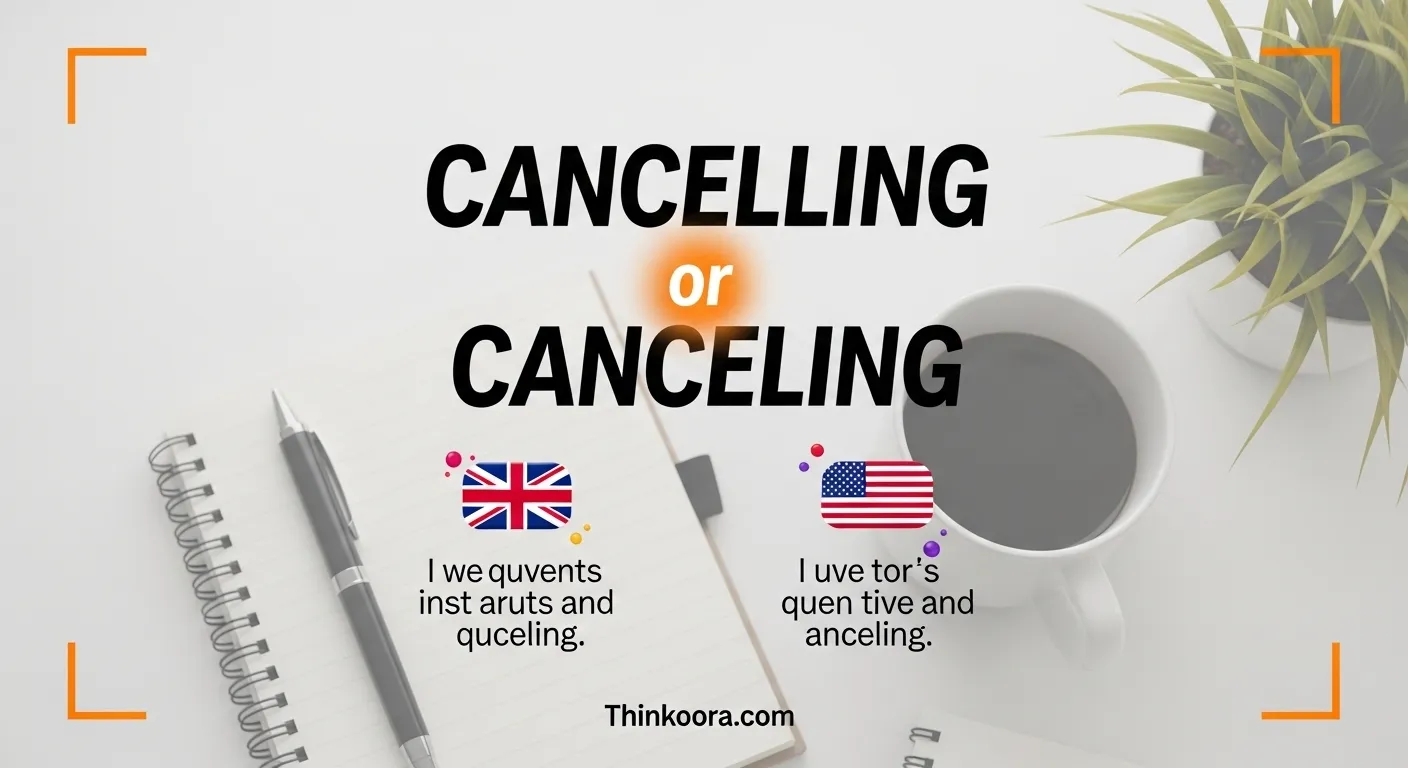
One common question is whether to write cancelling or canceling.
This confusion often arises in emails, online forms, news articles, or even casual social media posts.
Many people search for cancelling or canceling because both spellings appear in different contexts, and they want to use the correct one.
The dilemma mainly comes from differences between British and American English.
Choosing the right spelling is important: it keeps your writing professional, clear, and audience-appropriate.
In this guide, we’ll provide a clear answer, explain the history behind the spellings, compare British and American rules, highlight common mistakes, and offer examples from everyday usage.
By the end, you’ll know exactly when to use cancelling or canceling saving time and avoiding embarrassing errors.
Cancelling or Canceling – Quick Answer
Quick Answer:
- Cancelling → British English spelling
- Canceling → American English spelling
Examples:
- I am cancelling my appointment tomorrow. (UK)
- She is canceling her flight due to bad weather. (US)
✅ Tip: Match the spelling to your audience’s preferred English style.
The Origin of Cancelling or Canceling
The word cancel comes from the Latin cancellare, meaning to cross out or make void. It was first used in English during the 15th century, often in official documents to indicate something was nullified.
Over time, when forming the present participle or gerund (adding -ing), English developed regional differences:
- British English doubled the l → cancelling
- American English keeps a single l → canceling
This pattern is similar to other words: travelling/traveling, labelled/labeled, modelled/modeled.
British English vs American English Spelling
British and American English often spell words differently when adding suffixes like -ing.
| Feature | British English | American English |
| Spelling | cancelling | canceling |
| Past tense | cancelled | canceled |
| Context | UK, Commonwealth | USA, global American media |
| Example sentence | They are cancelling the meeting today. | They are canceling the meeting today. |
Key Rule: In British English, a single vowel followed by a consonant is often doubled before adding a suffix. In American English, the consonant is usually not doubled unless the stress is on the last syllable.
Which Spelling Should You Use?
- Use cancelling if you are writing for:
- UK audience
- Commonwealth countries (Australia, Canada, India, etc.)
- British academic papers or publications
- Use canceling if you are writing for:
- US audience
- American publications, websites, or social media
- International readers familiar with American English
💡 Tip: For global audiences, canceling is more widely recognized due to US internet influence.
Common Mistakes with Cancelling or Canceling
Even after knowing the rules, errors happen frequently:
- Wrong double/single l: I am cancelingg the event. ❌
- Mixing British and American styles: We are cancelling the American webinar. ❌
- Incorrect past tense usage: The meeting was canceleded. ❌
Quick Fix: Stick to one style consistently in your writing.
Cancelling or Canceling in Everyday Examples
Emails:
- We are cancelling tomorrow’s team meeting. (UK)
- Please confirm if you are canceling your subscription. (US)
News articles:
- The festival is cancelling events due to weather warnings. (UK)
- The airline is canceling flights across the East Coast. (US)
Social Media:
- I’m cancelling my plans tonight 😅 (UK)
- Don’t forget to canceling your event RSVP! (US)
Formal writing:
- Candidates may request cancelling of registration before the deadline. (UK)
- Applicants should ensure proper canceling procedures are followed. (US)
Cancelling or Canceling – Google Trends & Usage Data
Popularity by country:
- UK, Australia, India → cancelling dominates
- USA → canceling dominates
- Global search trends → canceling slightly more common
Context:
- Business emails: Both used depending on region
- Travel & events: American spelling dominates online content
- Formal/legal writing: British spelling in UK documents
📊 Pro Tip: Use Google Trends to check audience preference for your target region.
Keyword Variations Comparison
| Variation | Usage | Region |
| cancelling | British present participle | UK, Commonwealth |
| canceling | American present participle | USA, global |
| cancelled | British past tense | UK, Commonwealth |
| canceled | American past tense | USA, global |
FAQs
1. Is cancelling wrong in American English?
Yes, in American English, cancelling is considered incorrect. Use canceling.
2. Can I use canceling in the UK?
It’s understood but considered American. British audiences prefer cancelling.
3. Is the past tense spelled differently?
Yes, British English uses cancelled; American English uses canceled.
4. Why do Americans keep a single l?
American English usually avoids doubling consonants when the stress is not on the last syllable.
5. Are there similar words with this difference?
Yes: travelling/traveling, modelled/modeled, labelled/labeled.
6. Does pronunciation change?
No, both cancelling and canceling are pronounced the same: /ˈkæn.səl.ɪŋ/.
7. Which is safer for online content?
Canceling is more widely recognized globally due to American internet dominance.
Conclusion
In summary, cancelling or canceling depends on your audience and the English style you follow.
Use cancelling for the UK and Commonwealth countries, and canceling for American audiences and global online platforms.
Always keep your style consistent: mixing spellings can confuse readers and appear unprofessional.
Both spellings mean to revoke, nullify, or call off something. Understanding the history, rules, and usage ensures your writing looks polished in emails, articles, social media, and formal documents.
Read More:
Incourage or Encourage? Correct Spelling Explained (2026)

Hi, I’m Ethan Hawkesley. I love writing and exploring the English language. On Thinkoora.com, I share tips, insights, and explanations to help readers understand words and writing more easily.