Many people often confuse BV (Bacterial Vaginosis) with a UTI (Urinary Tract Infection).
Both affect the female reproductive and urinary systems, but they are very different conditions.
Misunderstanding the difference can lead to incorrect treatment, prolonged discomfort, and frustration.
That’s why searches for bv or uti are common, as people look for quick explanations, symptoms, and treatment options.
In this guide, we’ll break down BV vs UTI in simple terms.
You’ll learn what each condition is, how to identify symptoms, and when to see a healthcare professional.
We’ll also explore spelling variations, common mistakes, real-world usage, and trending data.
Whether you’re reading medical articles, searching online, or checking social media, this article will clarify everything you need to know about BV or UTI.
BV or UTI – Quick Answer
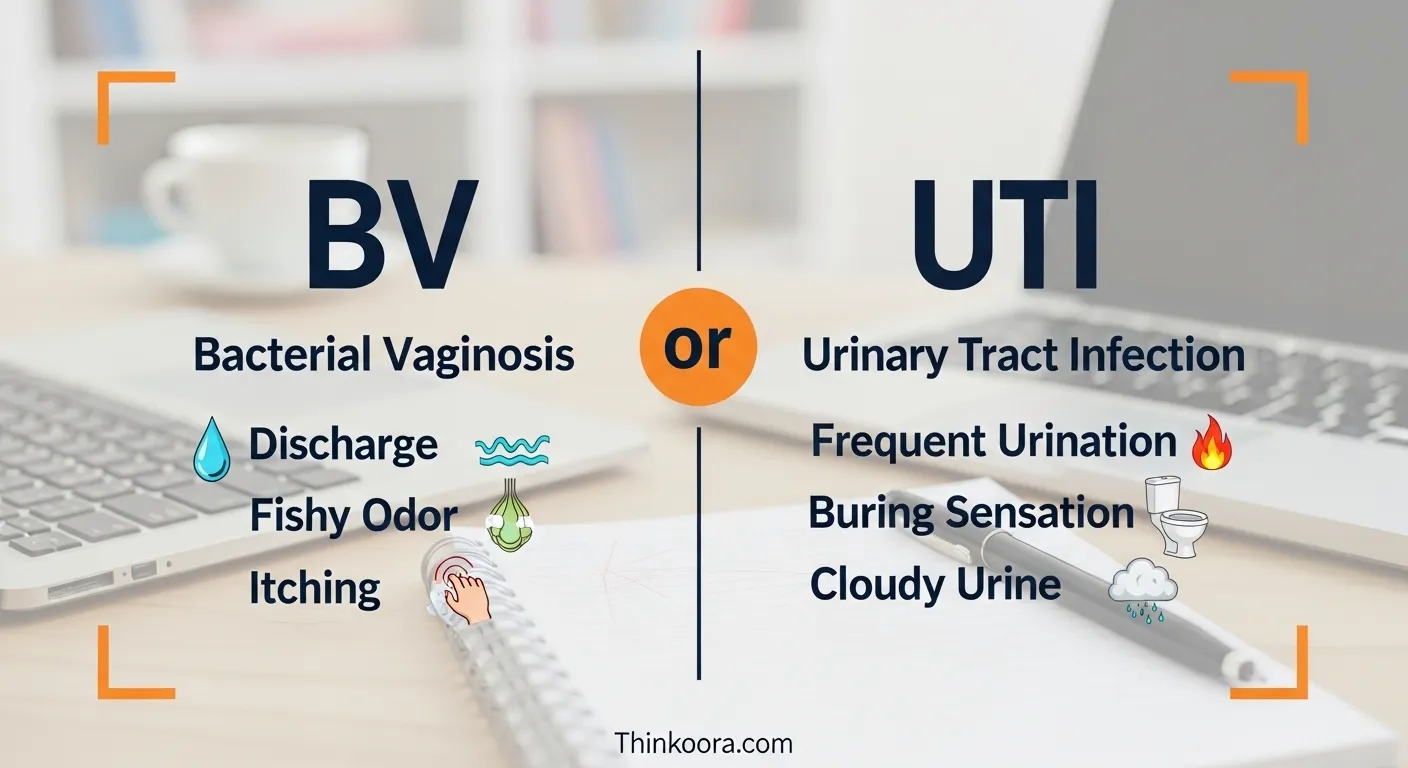
- BV (Bacterial Vaginosis):
- Caused by an imbalance of bacteria in the vagina.
- Symptoms: Thin, grayish discharge, fishy odor, mild irritation.
- Does not usually cause burning during urination.
- UTI (Urinary Tract Infection):
- Caused by bacteria in the urinary tract.
- Symptoms: Burning during urination, frequent urge to urinate, cloudy urine.
- Does not usually produce vaginal odor.
Example:
A woman notices a strong vaginal odor with light discharge → likely BV.
A woman experiences burning urination and frequent peeing → likely UTI.
The Origin of BV or UTI
The terms BV and UTI originate from medical descriptions:
- Bacterial Vaginosis (BV):
- Coined in the 1950s to describe bacterial imbalance in the vagina.
- Vaginosis means a condition affecting the vagina without inflammation.
- Urinary Tract Infection (UTI):
- First used in the 19th century to describe bacterial infections in the urinary tract.
- The term covers infections of the bladder (cystitis), kidneys (pyelonephritis), and urethra (urethritis).
Despite medical origins, both terms have entered public language due to common health searches.
British English vs American English Spelling
While BV and UTI are abbreviations and spelled the same globally, related terms like vaginosis or infection may have minor spelling variations:
| Term | British English | American English |
| Vaginosis | Vaginosis | Vaginosis |
| Infection | Infection | Infection |
| Urethra | Urethra | Urethra |
| Gynaecology | Gynaecology | Gynecology |
| Haematuria | Haematuria | Hematuria |
Tip: BV and UTI abbreviations are consistent across English variants. Only full medical terms may differ in spelling.
Which Spelling Should You Use?
- US audience: Use American English (Gynecology, Hematuria).
- UK & Commonwealth: Use British English (Gynaecology, Haematuria).
- Global medical content: Abbreviations like BV and UTI are universal and safe to use.
Rule of thumb: Keep abbreviations consistent. Clarify once in the article or email: e.g., Bacterial Vaginosis (BV).
Common Mistakes with BV or UTI
- Mixing symptoms: Assuming discharge always means UTI.
- Incorrect abbreviations: Writing Uv instead of UTI or VB instead of BV.
- Ignoring medical advice: Over-the-counter treatments may not work for BV.
- Confusing causes: BV is not sexually transmitted, but UTI can be influenced by sexual activity.
BV or UTI in Everyday Examples
Emails:
- Doctor, I’m unsure if this is BV or UTI. Please advise on tests.
Social Media:
- Ladies, how do you know if it’s BV or UTI? I’ve got discharge + burning.
News Articles:
- Health sections clarify BV and UTI symptoms to reduce misdiagnosis.
Formal Writing:
- Medical papers reference BV and UTI with precise diagnostic criteria.
BV or UTI – Google Trends & Usage Data
Search data shows:
- US & UK: High searches for UTI symptoms during summer months.
- India & Pakistan: Increasing searches for BV or UTI among young women seeking home remedies.
- Trending pattern: UTI is searched more frequently than BV, but combined queries like BV or UTI spike when women experience overlapping symptoms.
Usage insight: People mainly search to distinguish between the two conditions and seek treatment.
BV vs UTI – Side by Side Comparison
| Feature | BV (Bacterial Vaginosis) | UTI (Urinary Tract Infection) |
| Cause | Vaginal bacterial imbalance | Bacteria in urinary tract |
| Common Symptoms | Grayish discharge, odor | Burning urination, urgency |
| Pain | Mild irritation | Sharp burning |
| Treatment | Antibiotics, probiotics | Antibiotics, hydration |
| Sexual Transmission | Not considered STI | Can be influenced by sexual activity |
| Testing | Vaginal swab | Urine culture |
FAQs
- Can BV turn into a UTI?
No, they are separate conditions but sometimes can occur together. - Is BV contagious?
No, BV is caused by bacterial imbalance, not sexually transmitted infection. - Can men get BV?
Rarely. BV primarily affects people with vaginas. - How long does a UTI last without treatment?
Usually 7–10 days, but antibiotics are recommended to prevent complications. - Can home remedies cure BV or UTI?
Mild BV may respond to probiotics; UTI requires medical treatment. - What’s the best way to tell BV from UTI?
BV → discharge + odor; UTI → burning urination + frequency. - Are BV and UTI dangerous if untreated?
Complications can arise, especially for UTIs that reach kidneys.
Conclusion
Understanding BV or UTI is essential for proper health care. While both involve bacteria, their causes, symptoms, and treatments are distinct.
BV results from a vaginal bacterial imbalance, often causing odor and discharge, whereas UTI is a urinary infection causing burning and frequent urination.
Correct identification prevents unnecessary medication, reduces discomfort, and improves overall wellbeing.
For writing or professional content, BV and UTI abbreviations remain universal across English variants.
Use spelling appropriate for your audience for related terms but keep abbreviations consistent.
Monitoring Google Trends and using symptom comparison tables can improve clarity and awareness.
In short, remember: discharge + odor = BV, burning urination = UTI. Consult a healthcare professional if unsure.
Read More:

Hi, I’m Ethan Hawkesley. I love writing and exploring the English language. On Thinkoora.com, I share tips, insights, and explanations to help readers understand words and writing more easily.